Fashion has long been a mirror of cultural evolution, reflecting not only aesthetic trends but also the values, innovations, and inspirations of the times. From the structured silhouettes of the Victorian era to the minimalist lines of modernist design, clothing and accessories have drawn from a vast reservoir of influences—art, architecture, technology, and, increasingly, the natural world. In recent years, a surprising yet poetic motif has emerged from this interplay between nature and haute couture: the corn shaped heel.
At first glance, the idea of footwear inspired by an ear of corn might seem whimsical, even absurd. After all, corn—golden, plump, and humble—is more commonly associated with harvest festivals, summer barbecues, and agricultural abundance than with high fashion. Yet, in the hands of visionary designers, the corn has undergone a metamorphosis. What was once a symbol of sustenance and rural life now stands as a bold emblem of creative reinvention—its form reimagined into the elegant, sculptural lines of the corn shaped heel.
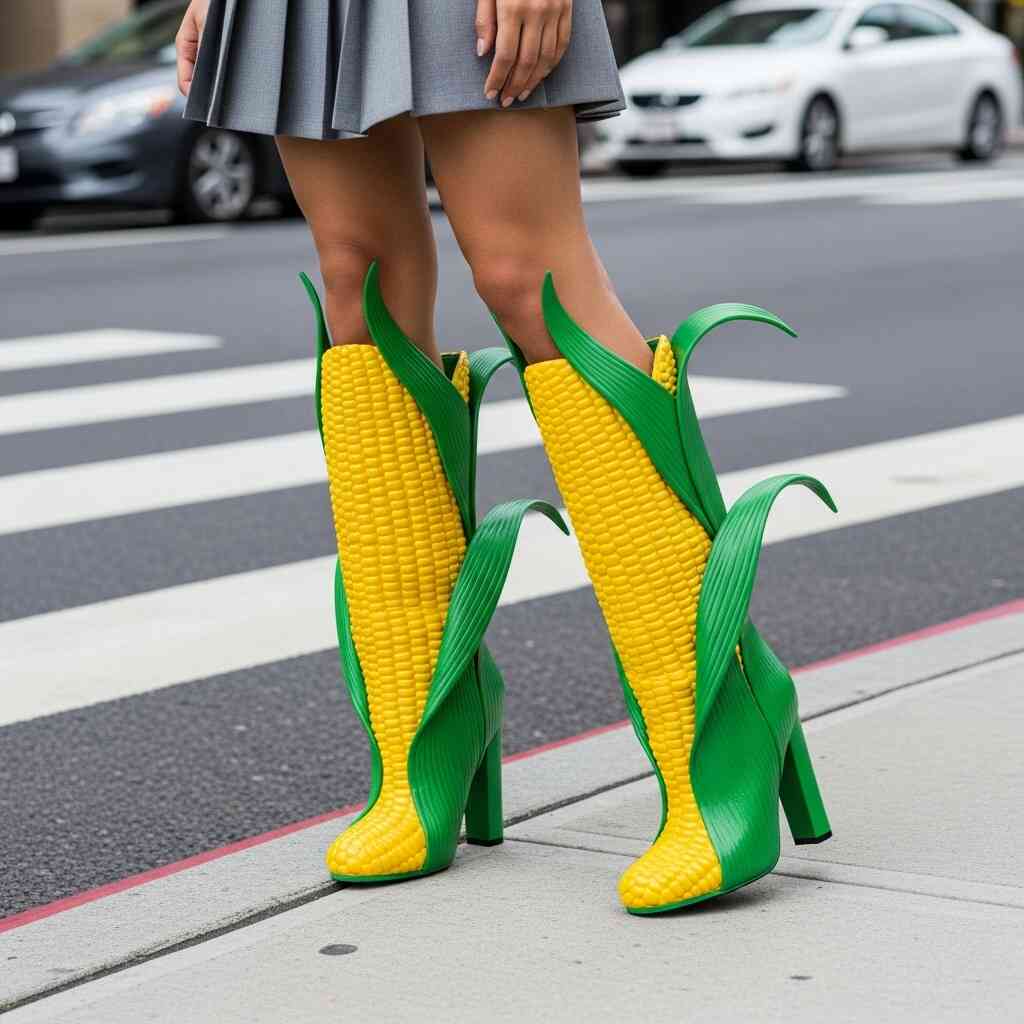
This transformation is not merely about aesthetic novelty. It represents a deeper narrative—one of reclamation, reinterpretation, and the elevation of the ordinary into the extraordinary. The journey from cob to couture is not just about the physical shape of a heel; it is a metaphor for how fashion can find beauty in the most unexpected places, turning the overlooked into objects of desire and admiration. The corn shaped heel is not a gimmick. It is a statement—a fusion of organic inspiration and artisanal craftsmanship that challenges traditional notions of elegance and invites us to reconsider the sources of creative inspiration.
As we explore this phenomenon, we will trace the origins of this design motif, examine its artistic and cultural significance, and consider how it fits into the broader context of sustainable and biomorphic design. This is not a trend that will pass with the season. It is a quiet revolution—one kernel at a time.
The Anatomy of Inspiration: How the Corn Became a Design Icon
To understand the rise of the corn shaped heel, we must first look beyond the surface. What is it about the ear of corn that lends itself so poetically to footwear design? The answer lies in its form, its symbolism, and its unexpected harmony with the principles of organic design.
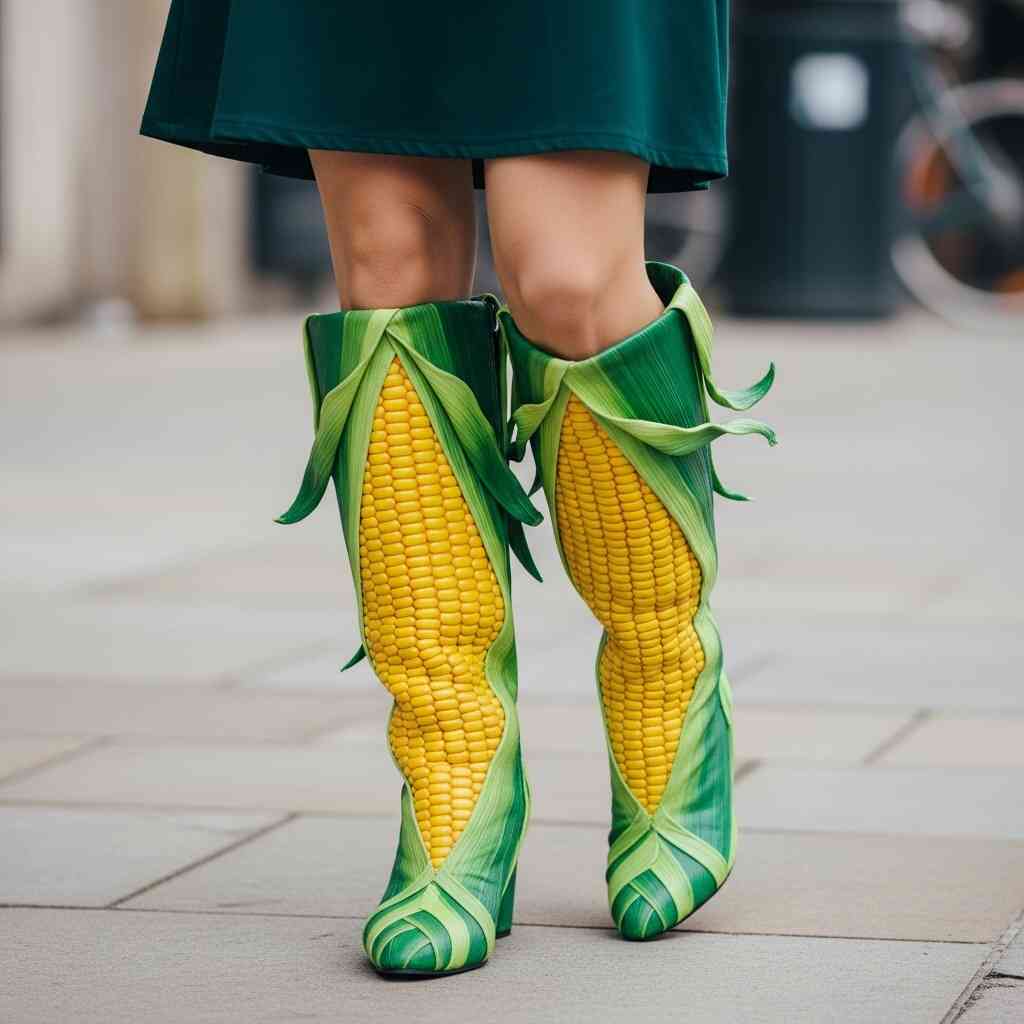
The ear of corn—botanically known as a cob—is a marvel of natural engineering. Its tightly packed rows of kernels spiral in a logarithmic pattern, a phenomenon rooted in the Fibonacci sequence, a mathematical principle that governs growth patterns in nature. This inherent geometry gives the cob a rhythmic, almost architectural quality. When viewed from the side, the tapered, slightly curved profile of the ear resembles a sculpted column—narrow at the base, gently swelling toward the center, and tapering again at the tip. This silhouette, when abstracted and refined, becomes an ideal foundation for a heel’s structure.
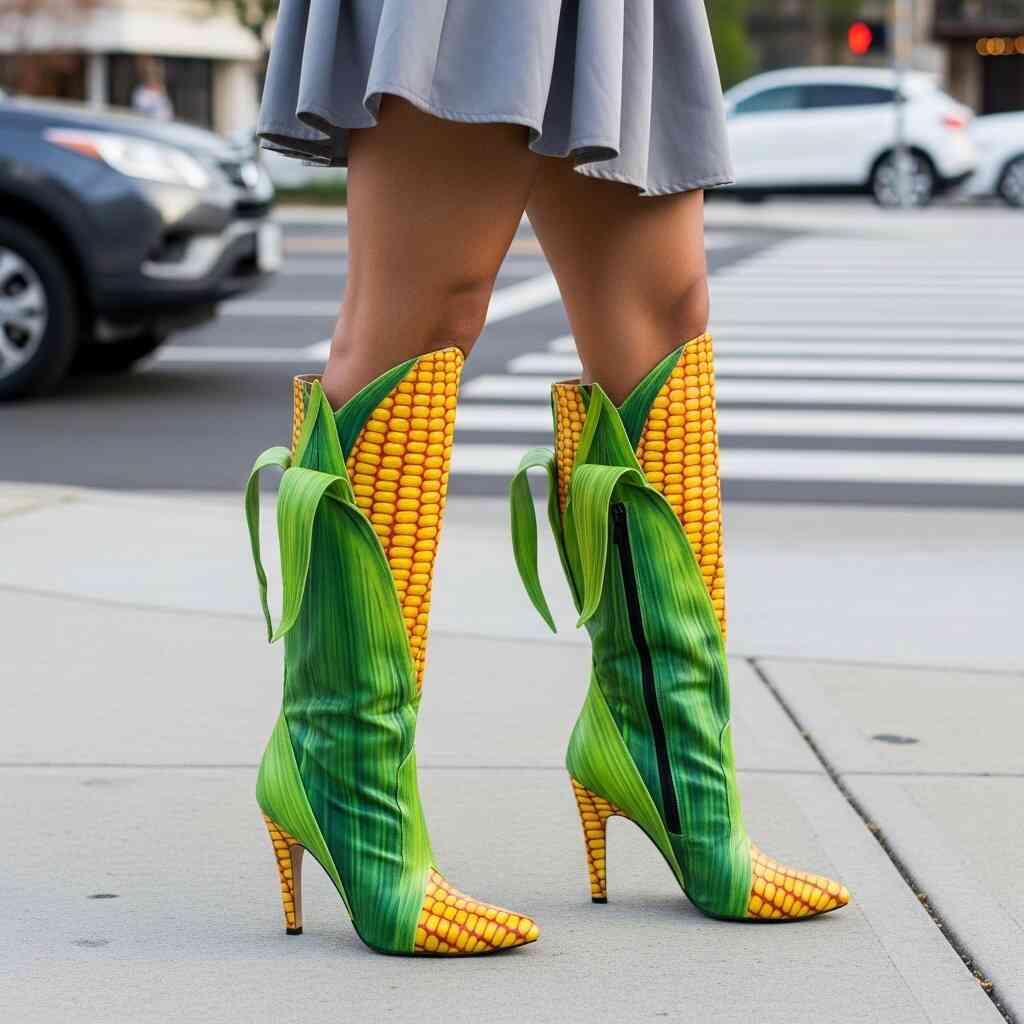
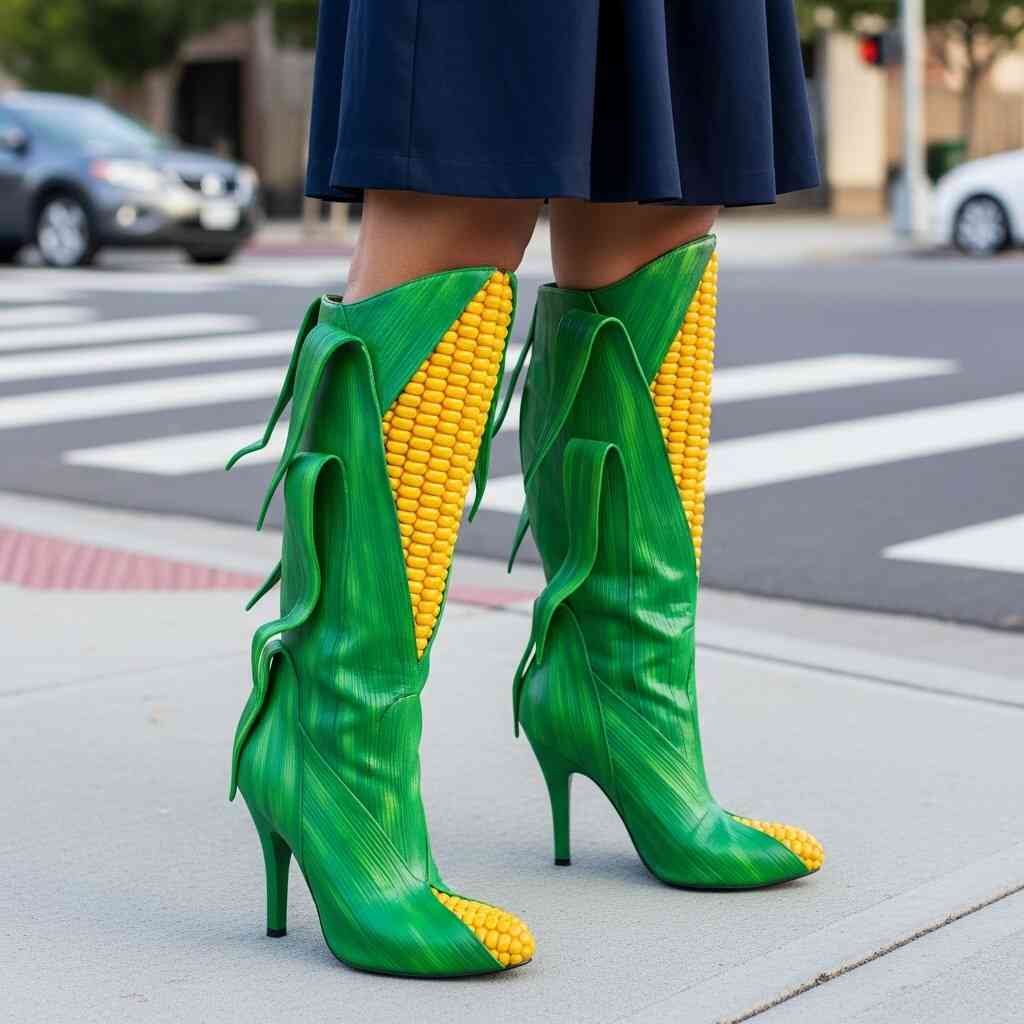
Designers who have embraced the corn shaped heel are not replicating the literal image of a corn cob. Instead, they are distilling its essence—the symmetry, the layered texture, the organic taper—into a wearable form. The result is a heel that feels simultaneously familiar and otherworldly. It may feature a segmented surface that mimics the alignment of kernels, or a gently fluted exterior that echoes the cob’s natural ridges. Some interpretations use translucent materials to suggest the golden hue of ripe corn, while others employ matte finishes to evoke the earthy texture of dried husks.
But the inspiration goes beyond form. Corn carries deep cultural and historical weight. In Mesoamerican civilizations, it was revered as a sacred gift from the gods, central to creation myths and agricultural rituals. In the American Midwest, it symbolizes abundance, resilience, and the cycles of life. By incorporating the corn shaped heel into their collections, designers tap into this rich symbolic reservoir. The heel becomes more than a support for the foot; it becomes a vessel of meaning, connecting the wearer to broader narratives of growth, nourishment, and renewal.
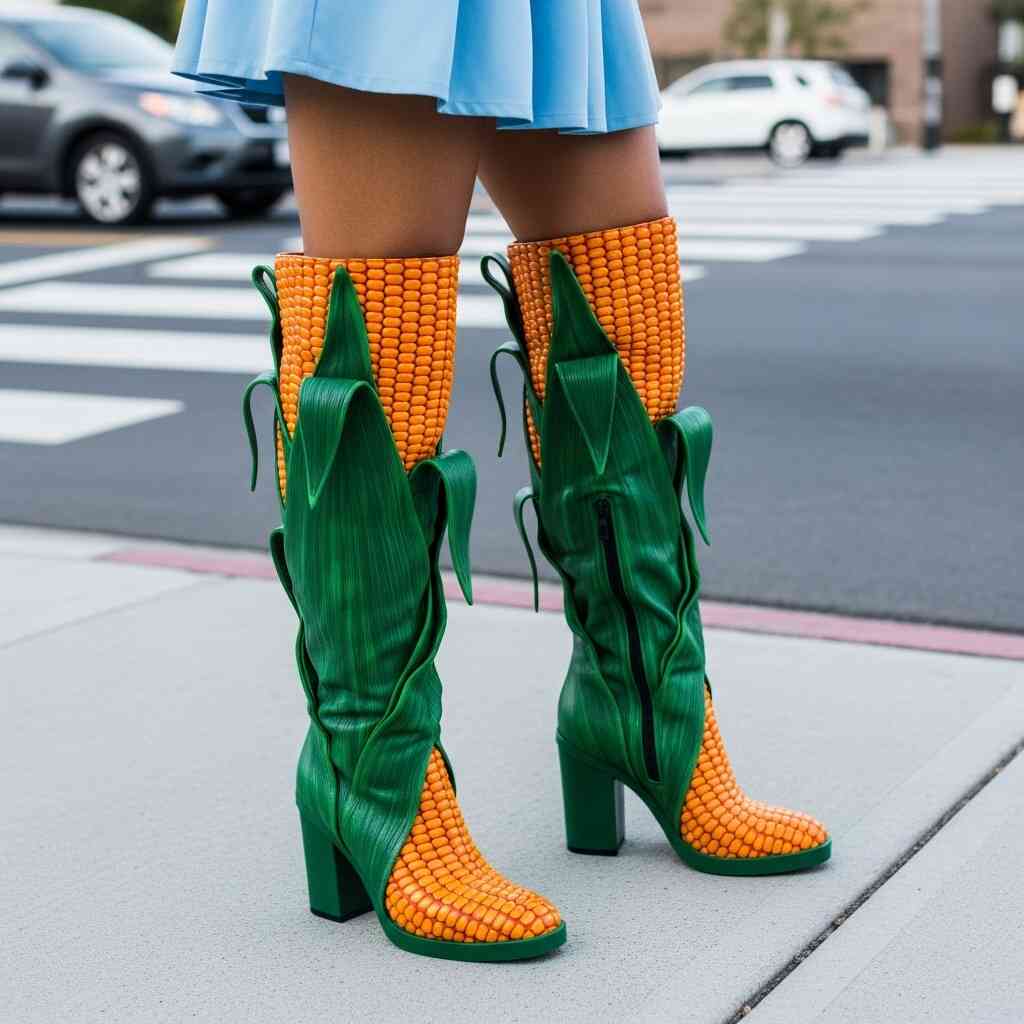
Moreover, the choice of corn as a muse challenges the hierarchy of design inspiration. Fashion has often looked to classical antiquity, exotic animals, or celestial bodies for motifs. The corn, by contrast, is democratic. It grows in fields, not palaces. It feeds communities, not just catwalks. To elevate such a common element into high fashion is an act of democratization—a reminder that beauty and inspiration are not confined to rarefied sources. The corn shaped heel asserts that elegance can emerge from the everyday, that the mundane can be transformed into the magnificent through imagination and intent.
This shift in perspective aligns with a growing movement in fashion toward biophilic design—the integration of natural forms and processes into human-made objects. In a world increasingly dominated by synthetic materials and digital aesthetics, the corn shaped heel offers a tactile, grounded counterpoint. It invites the wearer to feel a connection to the earth, to seasons, to the rhythms of nature. It is not just a shoe; it is a sensory experience, a quiet rebellion against the artificial.
Craftsmanship and Concept: The Making of a Modern Heirloom
The creation of a corn shaped heel is not a matter of simple replication. It is a complex process of translation—transforming a natural object into a functional, wearable piece of art. This requires not only technical precision but also a deep philosophical engagement with the principles of design, balance, and materiality.
At the heart of this process is the designer’s ability to abstract. The corn is not a shoe component; it is a starting point. The challenge lies in preserving the essence of its form while adapting it to the biomechanical demands of footwear. A heel must support weight, maintain stability, and allow for movement. The corn shaped heel must therefore be engineered with both aesthetic and ergonomic considerations in mind.
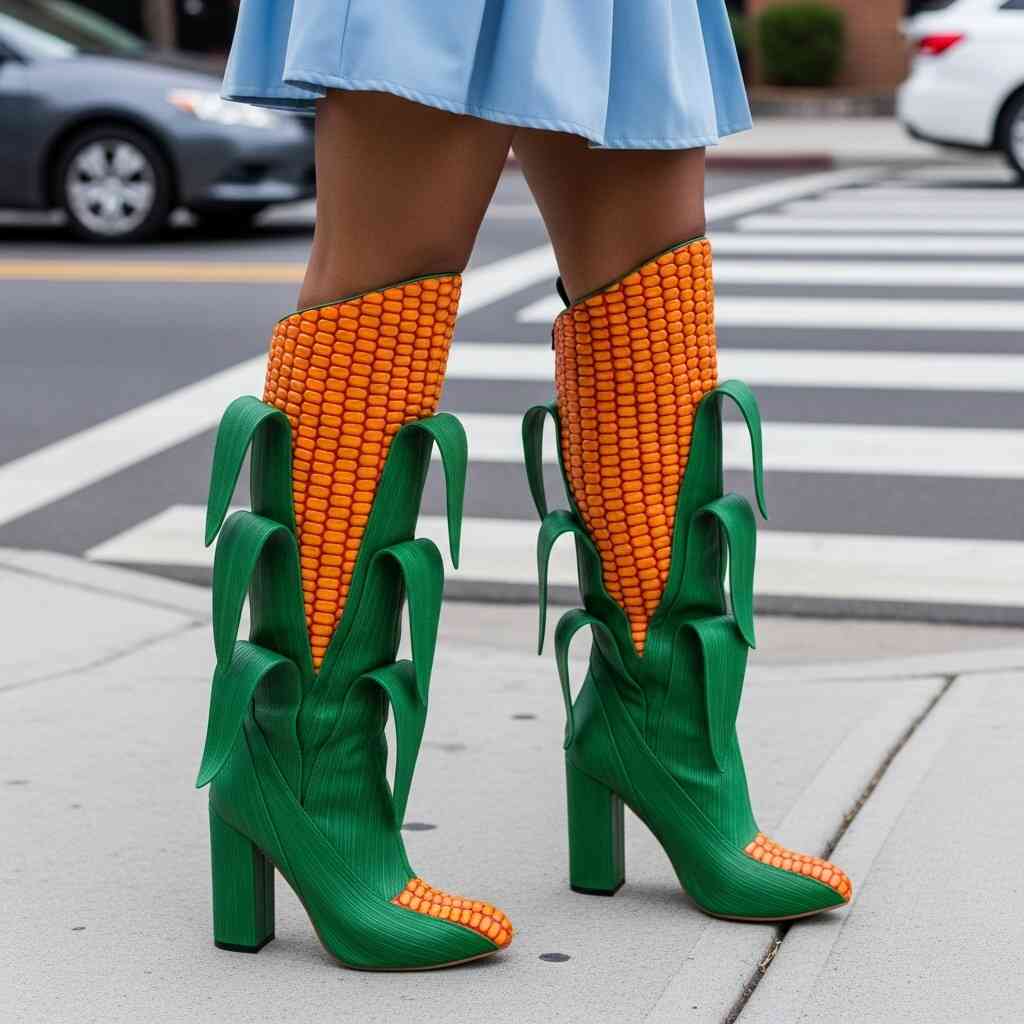
This begins with the selection of materials. Designers may choose sustainable woods, molded resins, or plant-based composites that echo the organic origin of the inspiration. The texture of the heel is often layered or segmented, with grooves or indentations that suggest the rows of kernels without mimicking them literally. Some heels feature a subtle gradation of color—from pale yellow at the base to deep amber at the apex—evoking the ripening process of corn in the sun. Others incorporate subtle metallic accents to suggest the glint of dew on a morning field.
The construction process itself is a blend of digital innovation and artisanal tradition. 3D modeling allows designers to experiment with proportions and curvature, ensuring that the heel’s silhouette maintains visual harmony with the rest of the shoe. Yet, the final realization often involves handcrafting—carving, sanding, polishing—techniques passed down through generations of shoemakers. This fusion of old and new reflects the broader ethos of the corn shaped heel: it is rooted in tradition but unafraid of innovation.
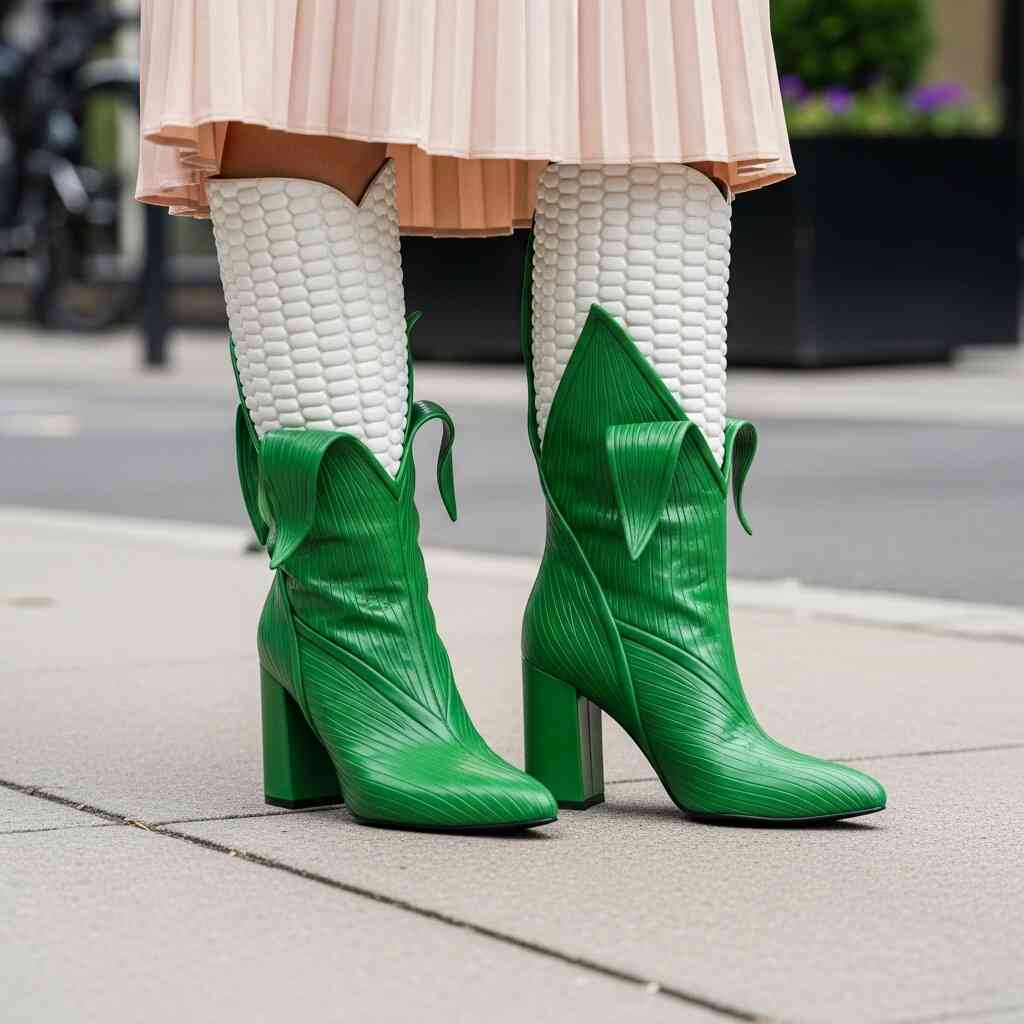
What emerges is not just a functional object but a narrative object. Each corn shaped heel tells a story—not only of its design journey but of its symbolic lineage. It speaks of the fields where corn grows, the hands that harvest it, the cultures that have revered it. When worn, it becomes a silent conversation between the body and the environment, a reminder that fashion is not separate from nature but deeply entwined with it.
Furthermore, the corn shaped heel challenges the notion of fashion as fleeting. In an era of fast trends and disposable style, this design invites slowness, contemplation, and durability. It is not meant to be discarded after a season. Instead, it is crafted to endure, to age gracefully, to become a part of the wearer’s personal history. Like a well-tended garden, it grows in significance over time.

This emphasis on longevity and meaning aligns with a broader cultural shift toward mindful creation. The corn shaped heel does not shout for attention; it whispers. It does not rely on logos or branding; it communicates through form and texture. In doing so, it redefines what it means to be fashionable. Elegance, in this context, is not about conformity or status. It is about authenticity, intention, and a deep respect for the sources of inspiration.
It is also worth noting that the corn shaped heel often appears in collections that explore themes of sustainability, regeneration, and ecological awareness. Designers who incorporate this motif are frequently engaged in broader dialogues about the environmental impact of fashion. The choice of corn—a renewable, biodegradable crop—as a muse is no accident. It is a quiet nod to the possibility of a fashion system that gives back rather than depletes, that honors the earth even as it draws from it.
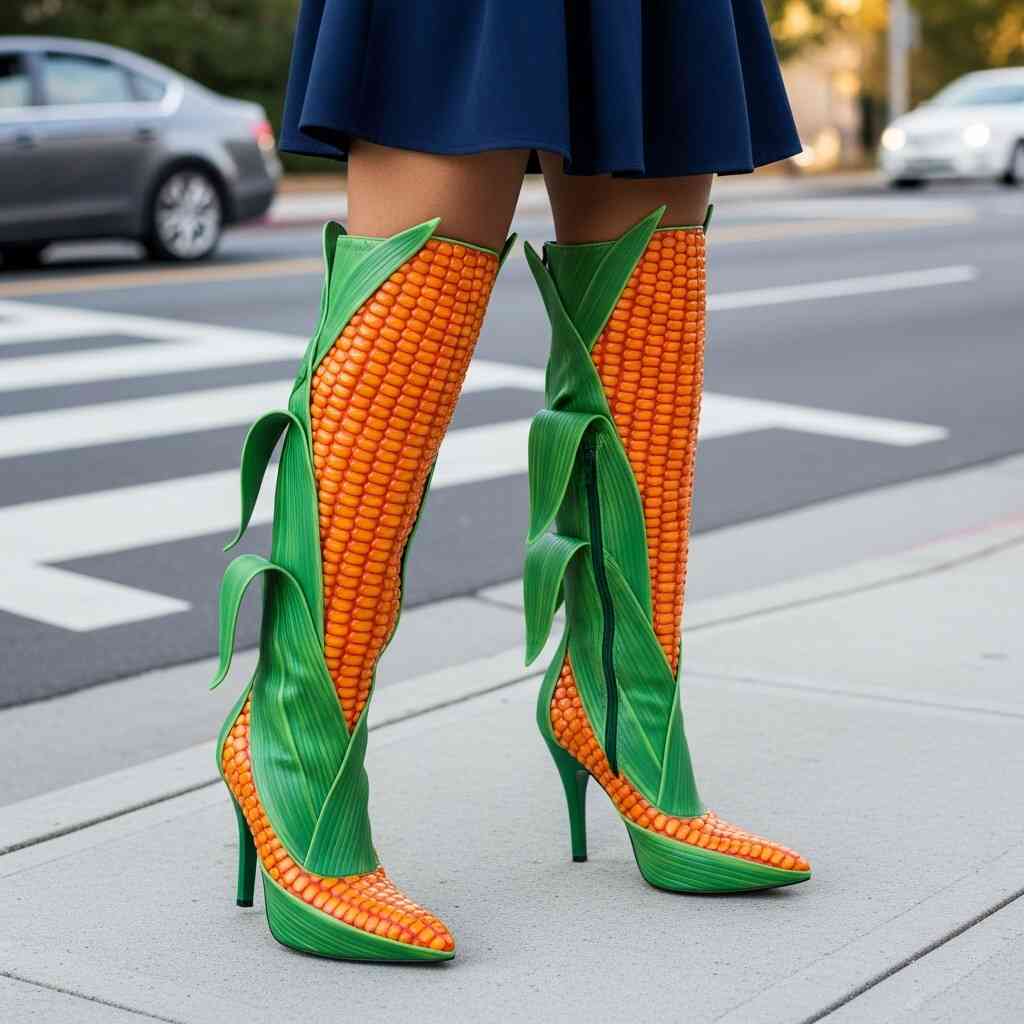
In this light, the corn shaped heel becomes more than a design choice. It is a manifesto—a declaration that beauty and responsibility can coexist, that creativity can be both playful and profound, that the future of fashion may lie not in looking forward, but in looking down—into the soil, into the roots, into the humble things that sustain us.
Cultural Resonance: The Corn Shaped Heel as a Symbol of Transformation
The presence of the corn shaped heel on runways, in editorial spreads, and within avant-garde installations signals more than a passing trend. It reflects a cultural moment—one in which fashion is increasingly called upon to engage with larger questions about identity, sustainability, and our relationship with the natural world.
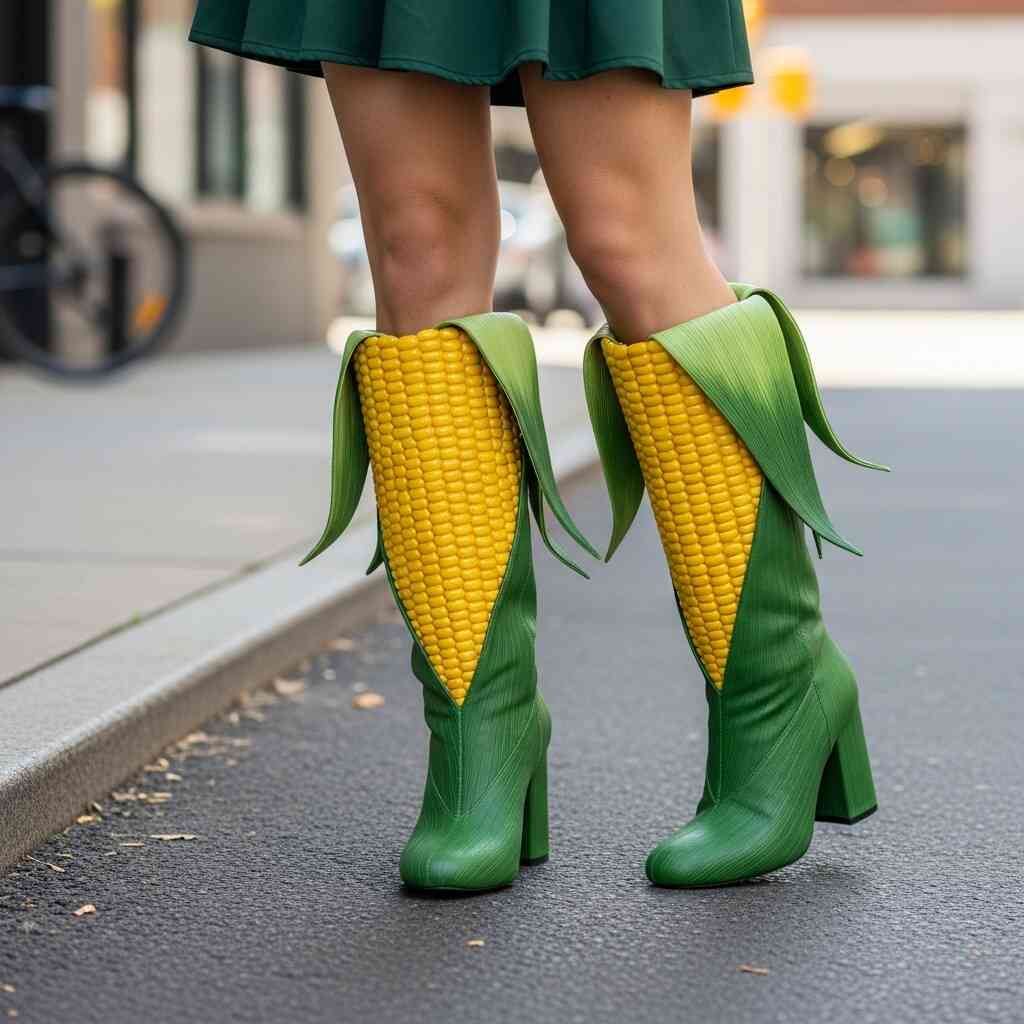
In a time of climate uncertainty and ecological disruption, the corn shaped heel serves as a gentle reminder of our dependence on the earth. Corn, as a crop, is both resilient and vulnerable—capable of thriving in diverse conditions, yet susceptible to drought, pests, and industrial farming practices. By elevating the image of the corn into high fashion, designers draw attention to the fragility and importance of agricultural systems. The heel becomes a symbol not just of beauty, but of stewardship.
This resonance extends into the realm of cultural memory. For many communities, especially Indigenous peoples of the Americas, corn is not merely a food source but a sacred relative, a being with spirit and agency. The corn shaped heel, when approached with reverence, can become a form of homage—an acknowledgment of the deep knowledge and traditions that have cultivated corn for thousands of years. It invites wearers to consider the stories behind the objects they carry on their bodies, to recognize that fashion is never neutral, but always embedded in history and power.
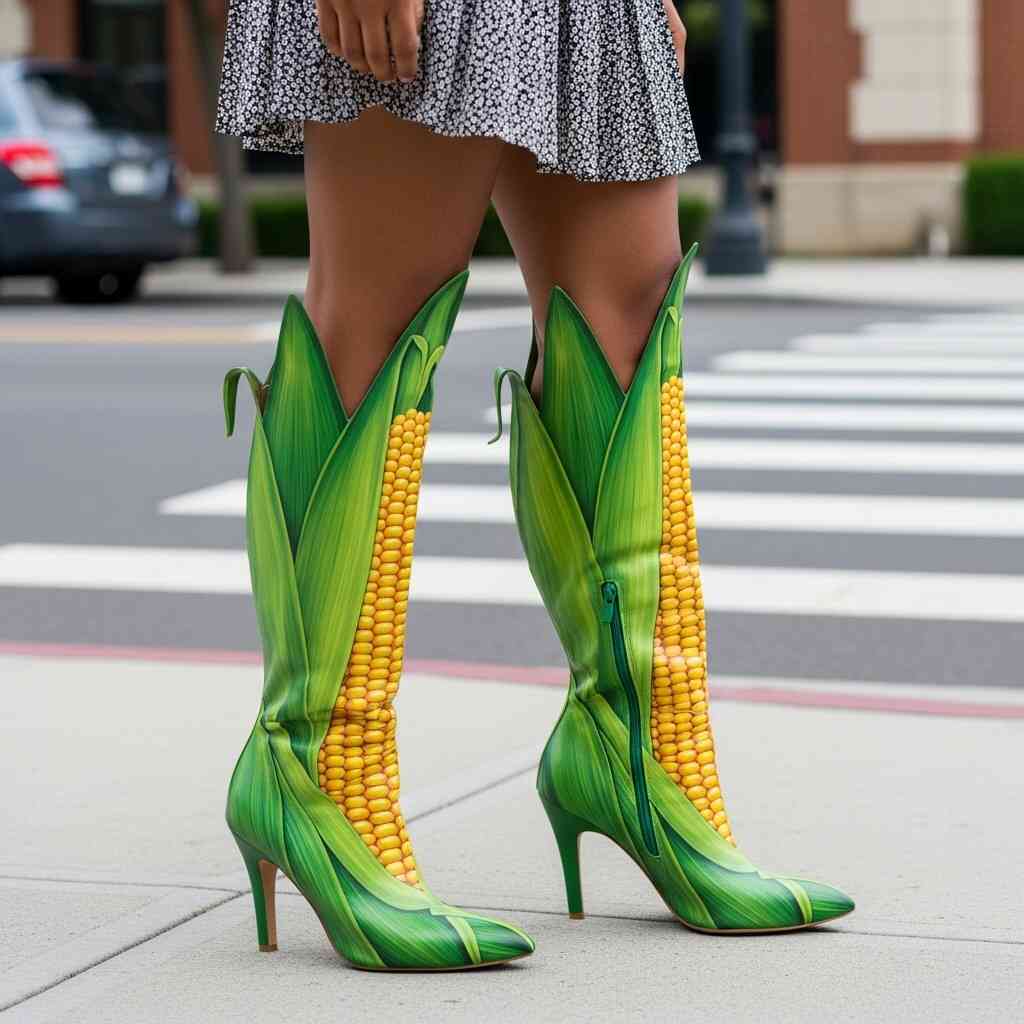
At the same time, the corn shaped heel disrupts traditional hierarchies of taste. It challenges the assumption that elegance must be sleek, minimal, or derived from European aristocratic ideals. Instead, it embraces a different kind of sophistication—one rooted in abundance, fertility, and cyclical growth. This is a femininity that is not delicate or fragile, but robust and generative. It is a masculinity that is not rigid or imposing, but fluid and connected. The corn shaped heel transcends gender, offering a form of expression that is inclusive and expansive.
Moreover, the humor and playfulness inherent in the design should not be underestimated. Fashion has long used irony and absurdity to critique social norms. The corn shaped heel, with its whimsical nod to rural life, can be read as a gentle satire of fashion’s sometimes-pretentious tendencies. It asks: Why must inspiration come from palaces and palmettos? Why can’t it come from a field of corn? In this way, the heel becomes a form of resistance—not loud or confrontational, but quietly subversive.
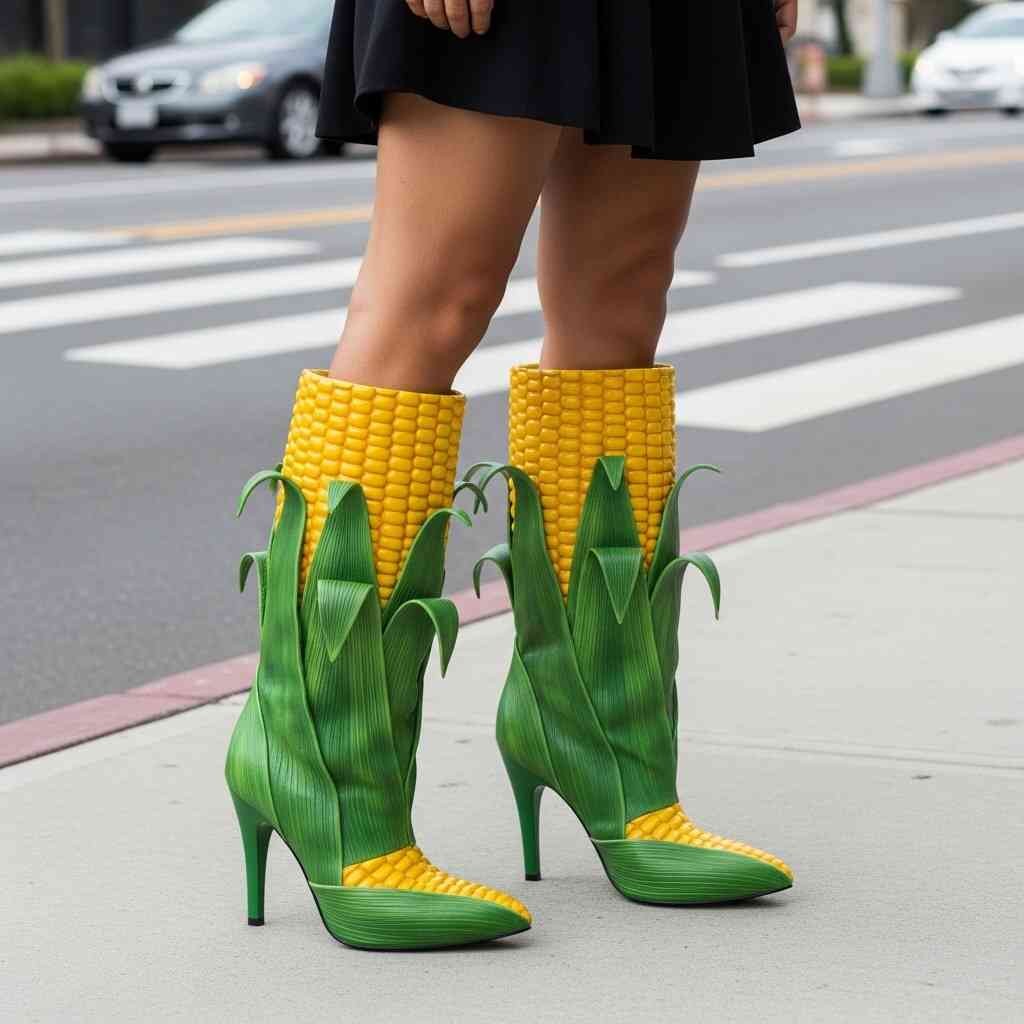
It also reflects a growing desire for authenticity in an age of digital saturation. As virtual influencers and AI-generated designs flood the fashion landscape, the corn shaped heel grounds us in the tangible, the organic, the real. It is a reminder that creativity begins not in code, but in the world around us—in the patterns of seeds, the curve of a stem, the texture of bark. It is a call to look closely, to observe, to be inspired by what is already here.
Perhaps most importantly, the corn shaped heel embodies the principle of transformation. Just as a single kernel can grow into a towering stalk, so too can a simple idea blossom into a powerful cultural statement. The journey from cob to couture is not linear; it is circular, recursive, much like the growth of the corn itself. It reminds us that nothing is truly ordinary, that every object carries the potential for reinvention.
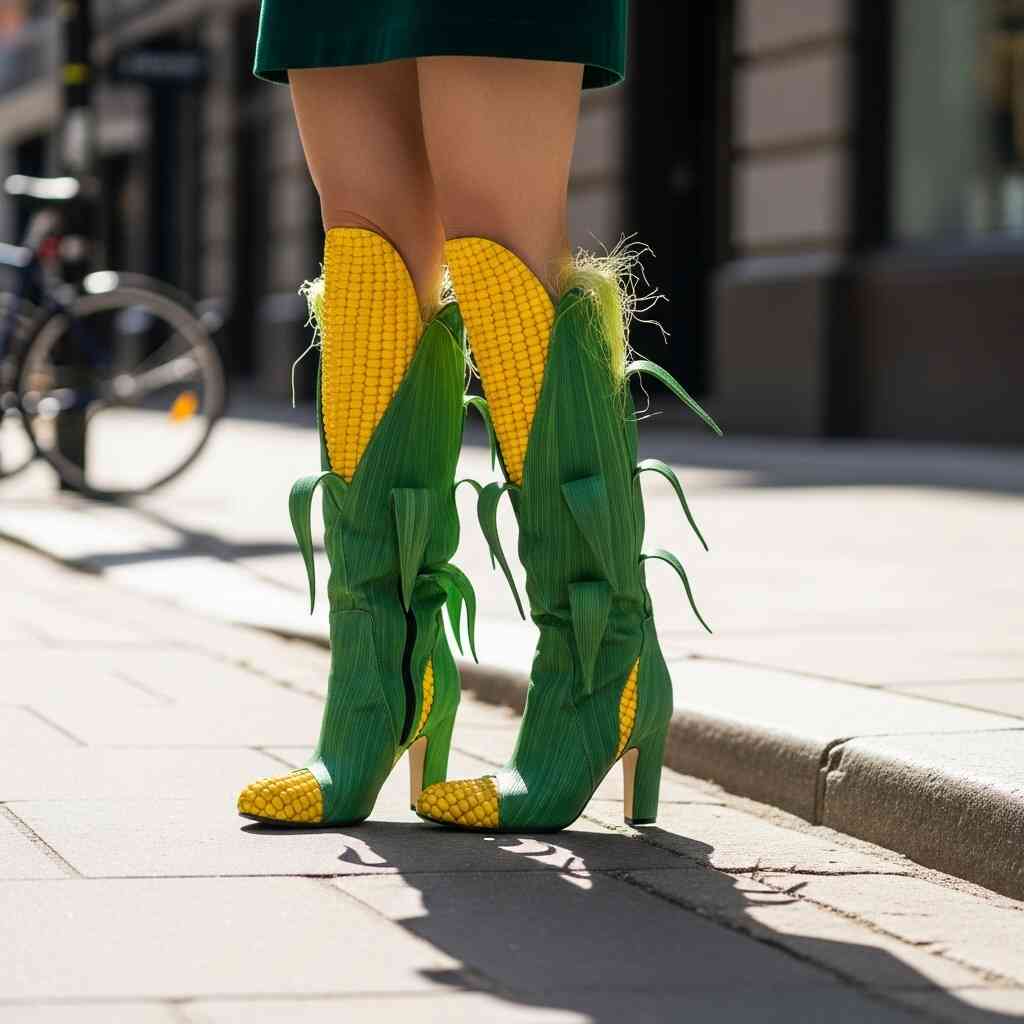
This is the deeper meaning of the title: From Cob to Couture. It is not just about the physical evolution of a design motif. It is about the alchemy of imagination—the ability to see the extraordinary in the everyday, to elevate the humble into the sublime. It is about the courage to be different, to embrace the unexpected, to find elegance in the most unlikely places.
Conclusion: The Lasting Harvest of Creative Vision
The corn shaped heel is more than a footnote in fashion history. It is a testament to the boundless capacity of human creativity to find meaning in the mundane, to transform the familiar into the extraordinary. It stands at the intersection of nature and art, of tradition and innovation, of function and symbolism.
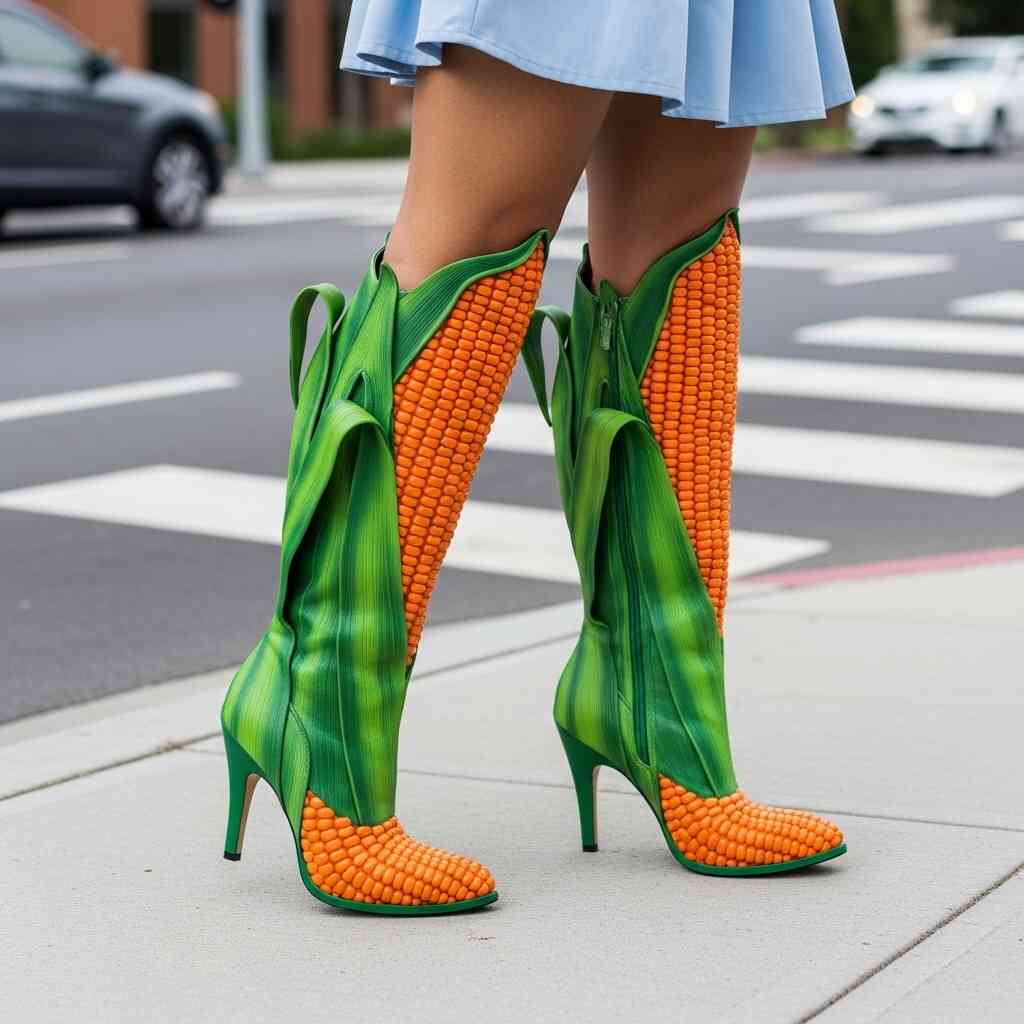
In its sculpted curves and textured surfaces, we see not just a heel, but a philosophy—a belief that beauty is everywhere, if we are willing to look. It challenges us to expand our definitions of elegance, to embrace forms that are not born of luxury alone, but of life, growth, and connection.
The corn shaped heel does not seek to dominate or impress. It invites. It asks the wearer to slow down, to notice, to feel the weight of the earth in the arch of the foot. It is a quiet rebellion against the disposable, the artificial, the overly polished. It celebrates imperfection, asymmetry, and the rhythms of the natural world.
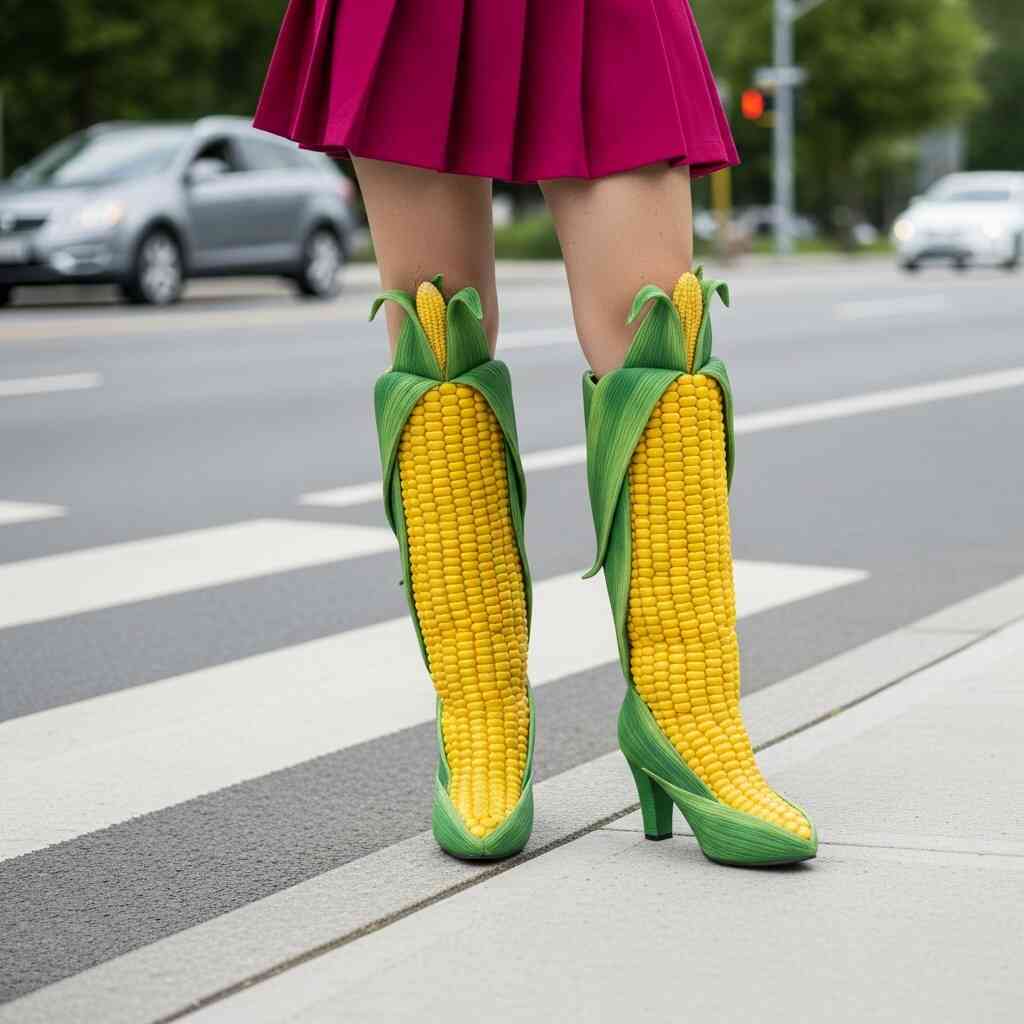
As fashion continues to evolve, the corn shaped heel serves as a reminder that the most enduring ideas are often the ones that surprise us. They come not from chasing trends, but from listening—to the land, to culture, to the quiet whispers of inspiration that arise in the most unexpected moments.
From the humble cob to the heights of couture, this design motif has proven that elegance is not defined by origin, but by intention. It is not about where an idea begins, but where it leads. And in the case of the corn shaped heel, it leads us back—to the soil, to the seasons, to the endless cycle of creation.
In the end, the true power of the corn shaped heel lies not in its form, but in its message: that beauty grows from the ground up, one kernel at a time.