When Fashion Meets Furniture
In the ever-evolving landscape of interior design, boundaries between categories continue to blur. What once was strictly functional is now infused with whimsy, nostalgia, and emotional resonance. Among the most intriguing manifestations of this trend is the emergence of the “Hoodie Shaped Chair”—a piece of furniture that transcends its utilitarian purpose to become a sculptural homage to one of the most iconic garments of modern casual wear: the hoodie. At first glance, the term may evoke curiosity or even skepticism. How can a chair emulate a hoodie? Yet, upon closer inspection, the concept reveals itself as a thoughtful synthesis of form, function, and cultural symbolism.
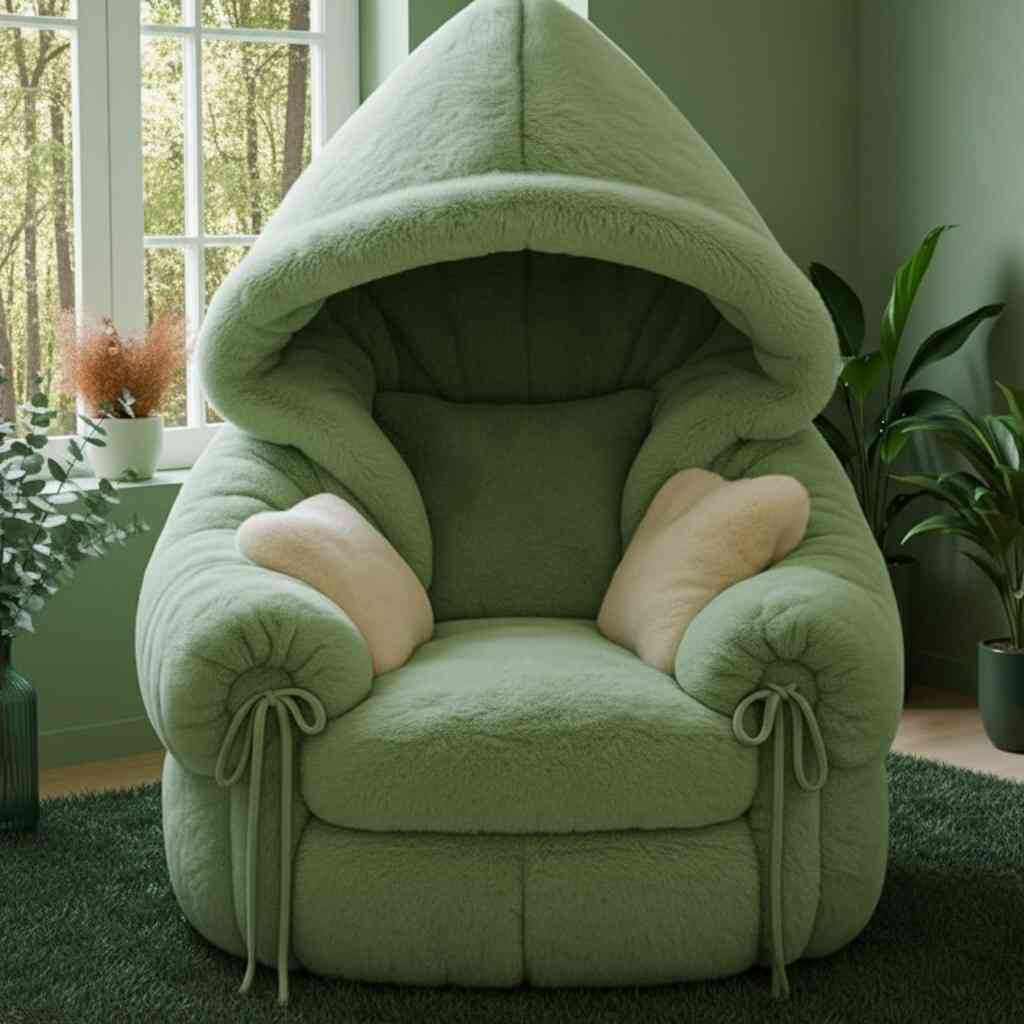
The Hoodie Shaped Chair is not merely a novelty item; it represents a deeper dialogue between clothing and comfort, between the intimate embrace of fabric and the structural support of furniture. It challenges conventional notions of what a chair should look like while offering an experience that feels both familiar and revolutionary. This article delves into the essence of the Hoodie Shaped Chair—its origins, its design philosophy, the sensory and psychological comfort it provides, and its place within contemporary design discourse. Through this exploration, we aim to uncover why such a chair resonates so profoundly in today’s world, where the lines between personal identity, domestic sanctuary, and aesthetic expression are increasingly intertwined.
Part I: The Anatomy of a Hoodie Shaped Chair – Form Follows Feeling
To understand the Hoodie Shaped Chair, one must first deconstruct the hoodie itself. The classic hoodie—a pullover sweatshirt with a hood, often featuring a kangaroo pocket and drawstrings—is more than just apparel. It is a symbol of informality, youth culture, rebellion, and above all, comfort. Its soft fabric drapes over the body like a second skin, and the hood offers a cocoon-like sense of privacy and protection. The Hoodie Shaped Chair translates these qualities into three-dimensional furniture.
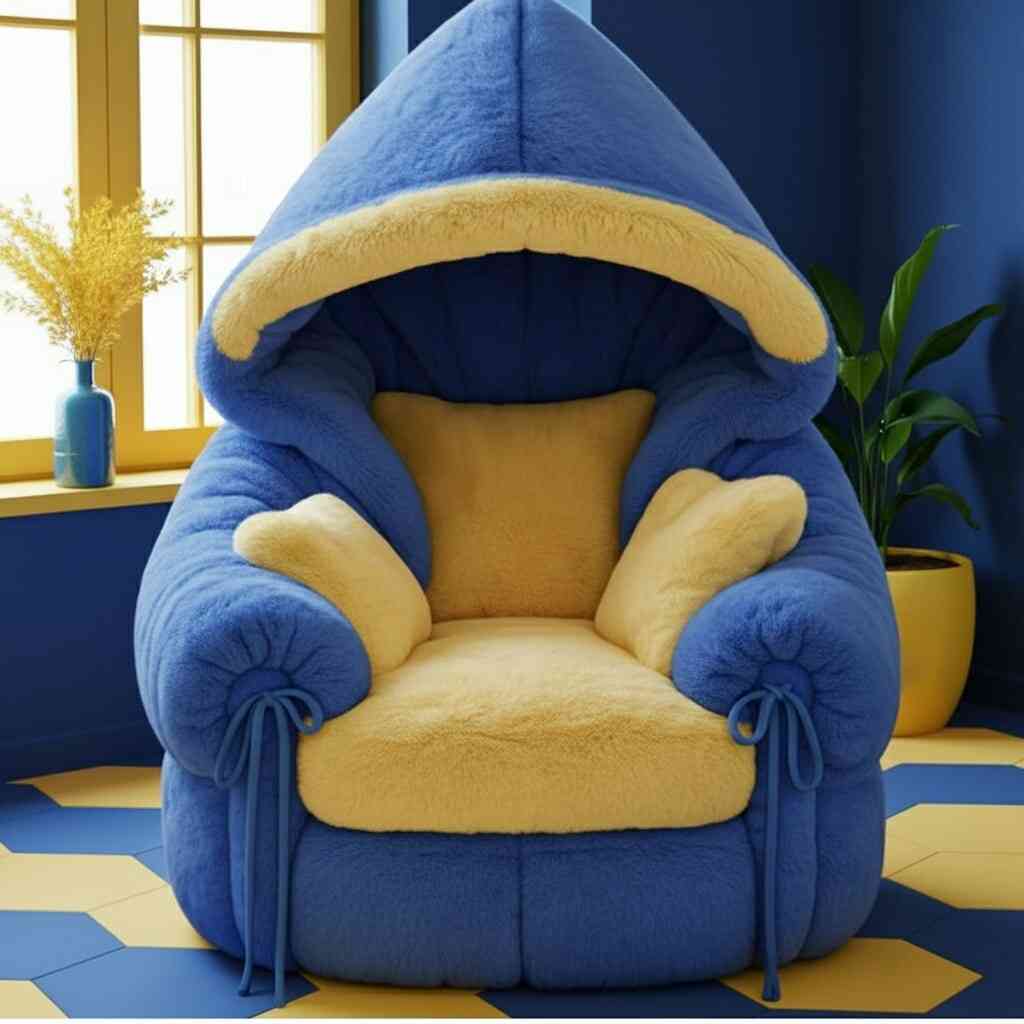
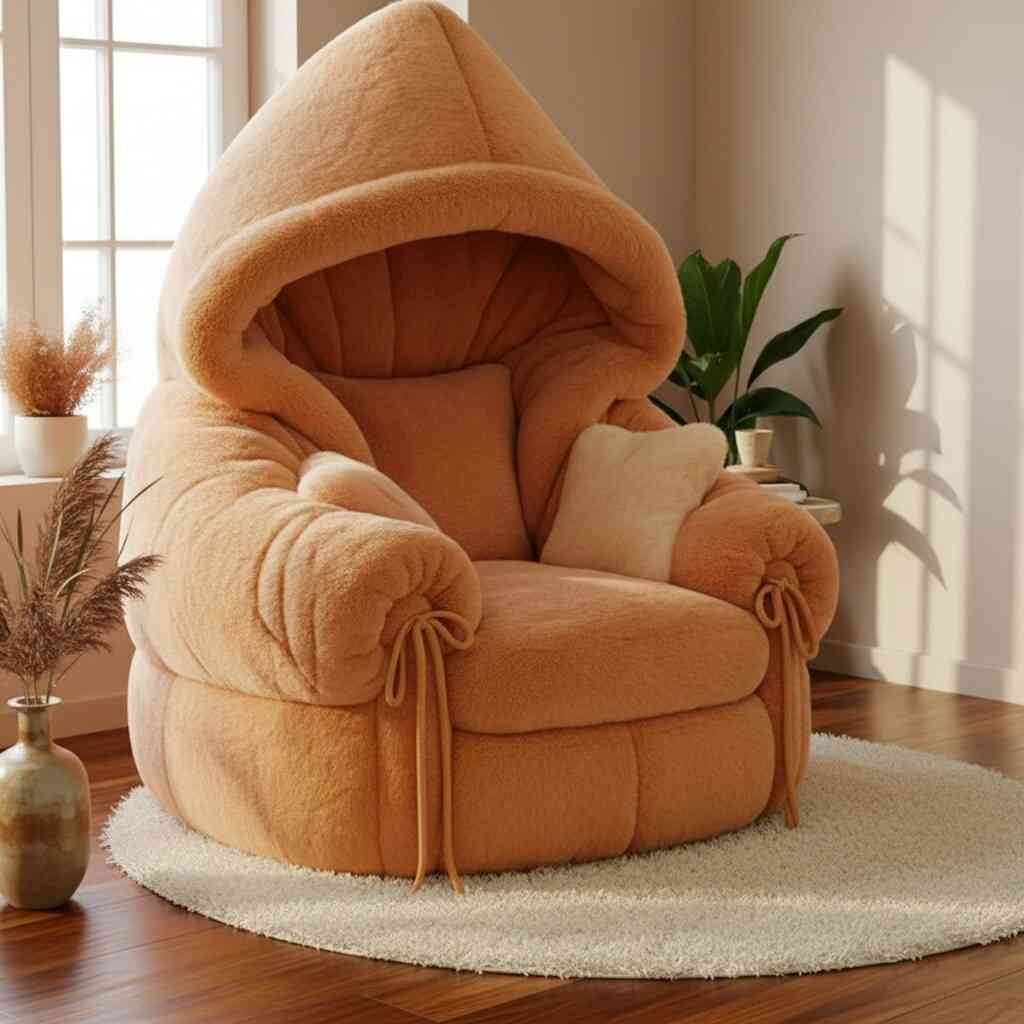
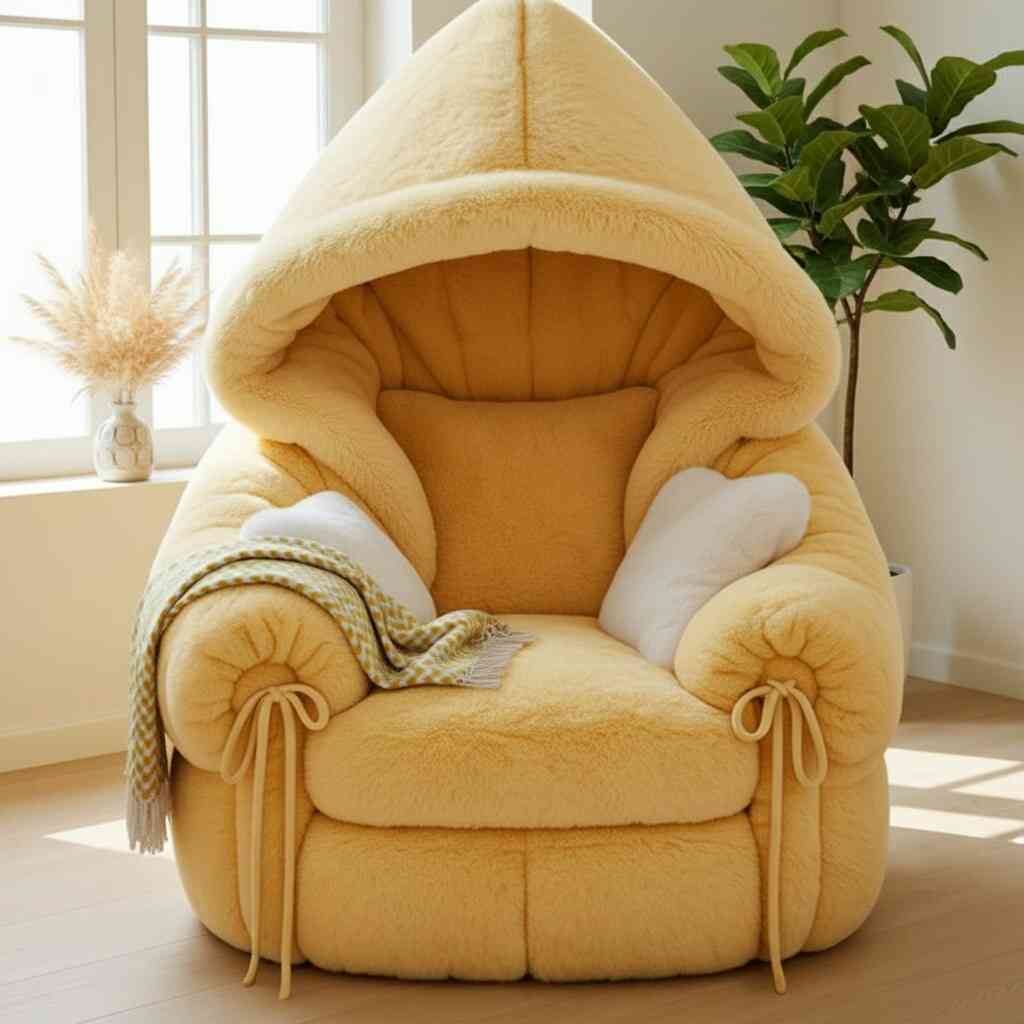
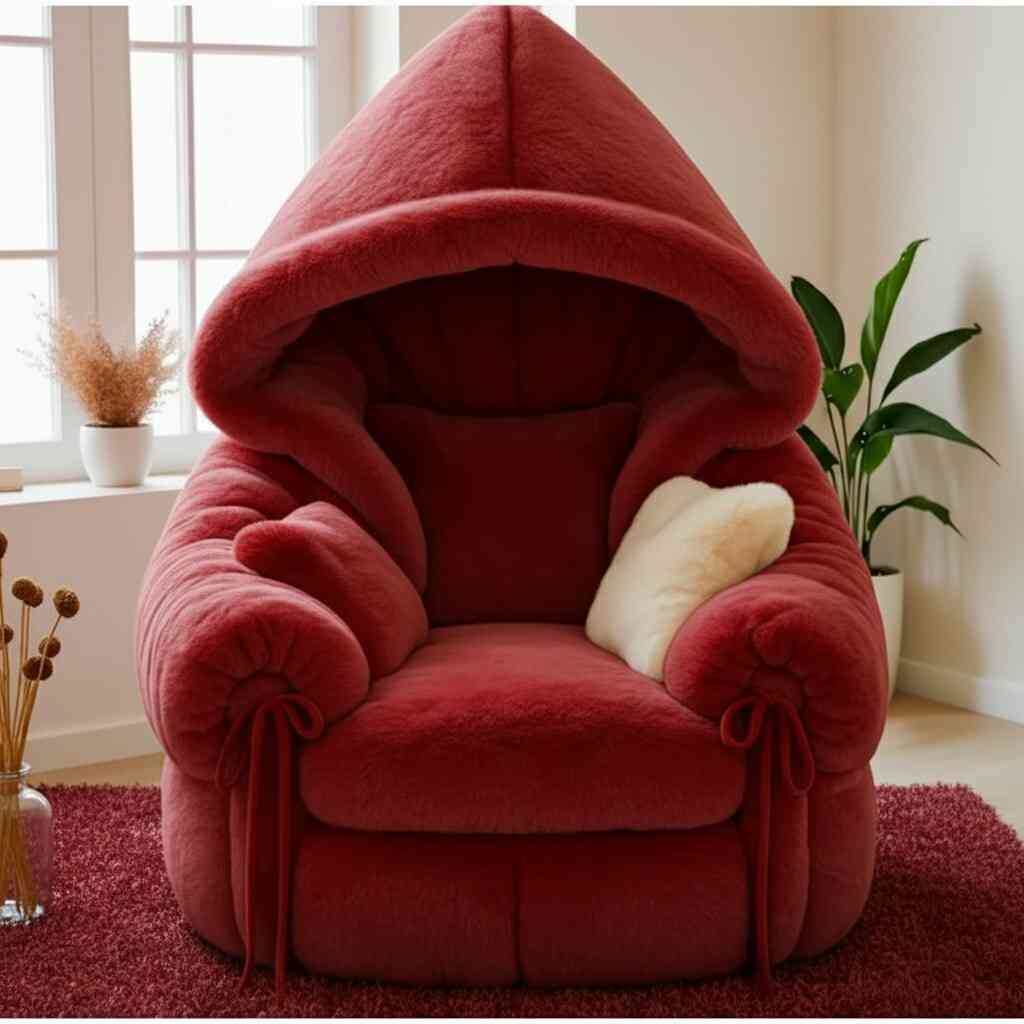
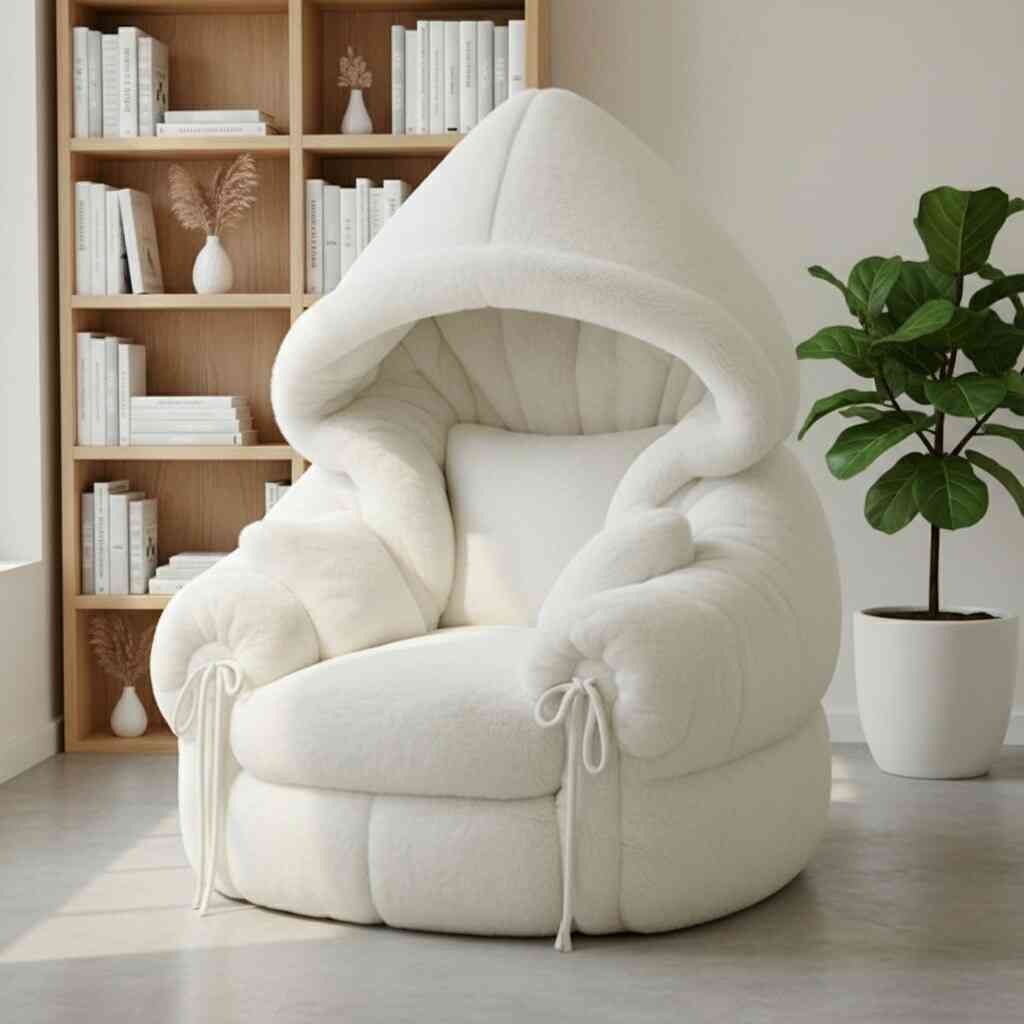
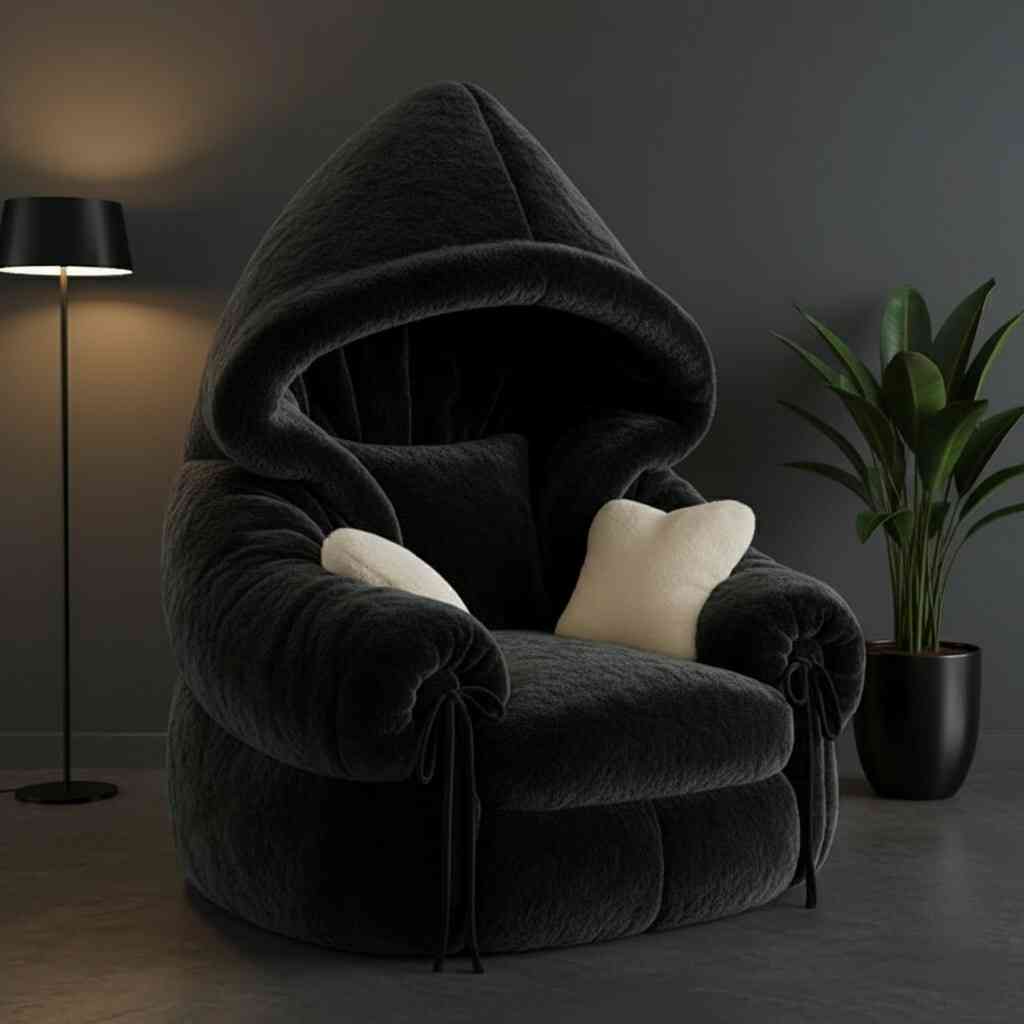
Visually, the chair mimics the silhouette of a hoodie laid flat or gently draped over a human form. The backrest curves upward to form a generous, enveloping hood that arches over the sitter’s head or shoulders, depending on the design. This hood is not merely decorative; it functions as a partial enclosure, creating a micro-environment that filters ambient noise and light, offering a sense of seclusion without full isolation. The armrests often echo the relaxed drape of hoodie sleeves—soft, rounded, and slightly oversized—inviting the user to sink in rather than sit upright.
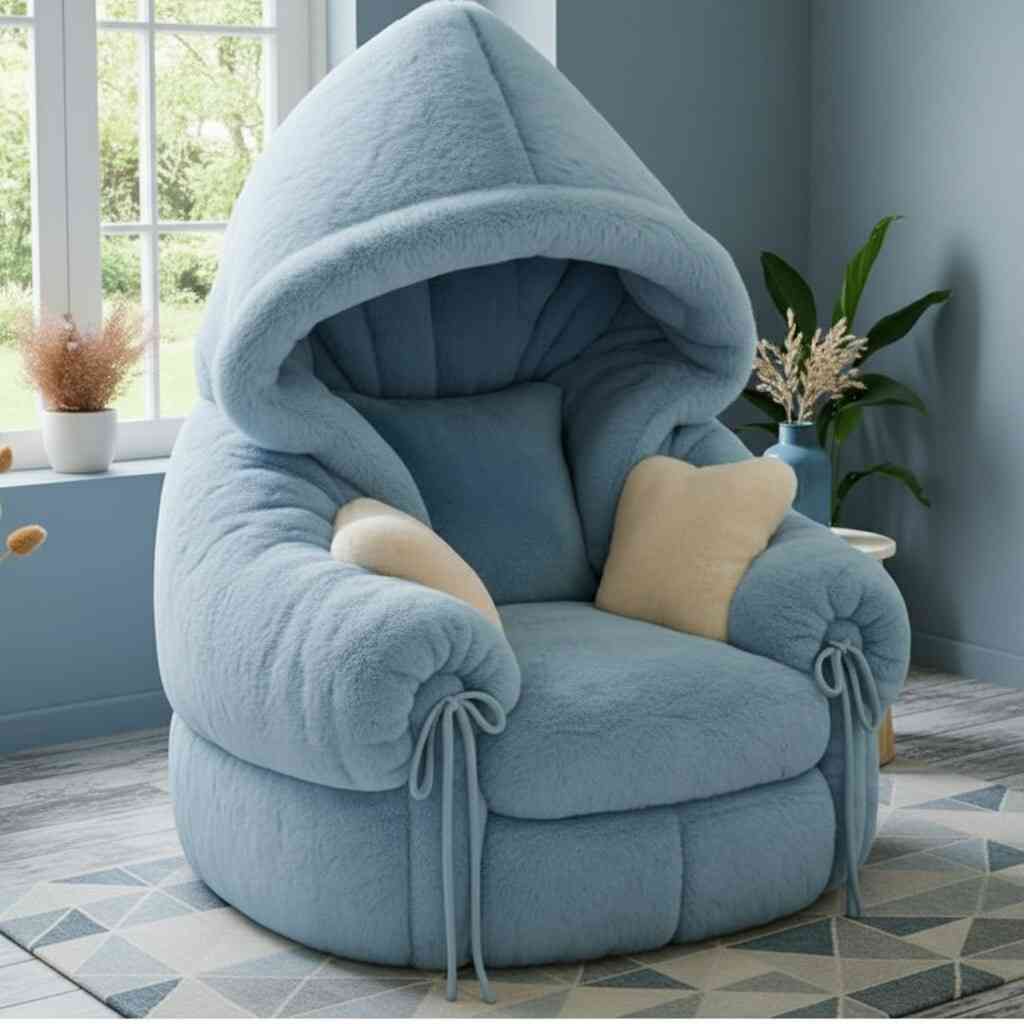
Materiality plays a crucial role. Upholstery typically uses plush, textured fabrics such as bouclé, fleece, or high-pile velvet—materials that replicate the tactile softness of a well-worn hoodie. The color palette tends toward muted, earthy tones or classic neutrals like charcoal gray, heather, and oatmeal, reinforcing the garment’s understated aesthetic. Some designs incorporate subtle details like faux drawstrings along the hood’s edge or ribbed cuffs at the base of the armrests, paying homage to the original garment’s construction without veering into literal costume.
Structurally, the Hoodie Shaped Chair prioritizes ergonomics wrapped in softness. Unlike rigid, minimalist chairs that demand posture and presence, this chair encourages slouching, curling, and nesting. The seat is deep, often with a slight recline, and the cushioning is generous—sometimes layered with memory foam or high-resilience polyurethane to provide both support and sink-in comfort. The frame, though hidden beneath layers of fabric, is engineered to distribute weight evenly while maintaining the illusion of effortless softness.
What makes this design truly unique is its anthropomorphic quality. The chair doesn’t just accommodate the body—it seems to anticipate it. The hood leans forward slightly, as if offering a gentle embrace. The armrests slope inward, cradling the elbows like folded sleeves. In this way, the Hoodie Shaped Chair becomes more than furniture; it becomes a companion, a silent confidant in the domestic space.
Part II: The Psychology of Comfort – Why We Crave the Hoodie Embrace
Beyond its physical attributes, the Hoodie Shaped Chair taps into a profound psychological need: the desire for safe, non-judgmental comfort. In an age marked by digital overload, social performance, and constant connectivity, the home has become a refuge—a place to shed external identities and return to a state of unguarded ease. The hoodie, as a garment, has long symbolized this retreat. Wearing one signals a shift from “public self” to “private self.” The Hoodie Shaped Chair extends this symbolism into the realm of spatial design.
The concept of “enclosure” is central to environmental psychology. Humans are instinctively drawn to spaces that offer partial shelter—nooks, alcoves, canopies—because they provide a sense of security without complete confinement. The hood of the chair acts as such an enclosure. It doesn’t block the world entirely but softens its edges, creating a liminal zone between engagement and withdrawal. This is particularly valuable in open-plan living spaces, where privacy is often sacrificed for aesthetic flow. The chair becomes a portable sanctuary, a personal bubble within a shared environment.
Moreover, the tactile experience of the Hoodie Shaped Chair engages the senses in a deeply calming way. The softness of the fabric triggers what psychologists call “deep pressure touch,” a form of sensory input that can reduce anxiety and promote relaxation. Think of the comfort of being wrapped in a blanket or hugged tightly—this chair simulates that sensation through its enveloping form and plush materials. For individuals who experience sensory sensitivities or seek grounding in chaotic environments, such a chair can serve as a therapeutic object, not through clinical design but through intuitive, human-centered softness.
There’s also a nostalgic dimension. For many, the hoodie is associated with adolescence—a time of self-discovery, late-night conversations, and emotional vulnerability. The Hoodie Shaped Chair evokes that era not through literal replication but through emotional resonance. Sitting in it can feel like revisiting a simpler, more authentic version of oneself. It’s a chair that doesn’t demand productivity or performance; it simply allows you to be.
This emotional accessibility is rare in furniture design, which often prioritizes aesthetics over affect. The Hoodie Shaped Chair flips that script. Its value lies not in how it looks in a magazine spread but in how it makes you feel when you curl up inside it with a book, a cup of tea, or your thoughts. It acknowledges that comfort is not just physical—it’s emotional, psychological, and even existential.
Part III: Cultural Resonance and Design Evolution – From Streetwear to Seating
The rise of the Hoodie Shaped Chair cannot be understood in isolation from broader cultural shifts. The hoodie itself has undergone a remarkable transformation—from its origins as practical workwear in the 1930s (developed by Champion for laborers in cold warehouses) to a staple of athletic culture in the 1970s and 80s, and eventually to a global symbol of youth, rebellion, and digital-age casualness. By the 2010s, the hoodie had become so ubiquitous that it appeared on runways, in boardrooms, and even in political discourse (notably in the aftermath of the Trayvon Martin case, where it became a symbol of racial profiling and resistance).
Furniture design, historically slow to absorb street-level trends, began to shift as the boundaries between high and low culture dissolved. Designers started looking beyond traditional inspirations—nature, geometry, historical styles—and toward everyday objects and garments for creative fuel. The Hoodie Shaped Chair is a product of this democratization of design. It reflects a world where comfort is no longer seen as antithetical to sophistication, and where personal expression can manifest through the objects we surround ourselves with.
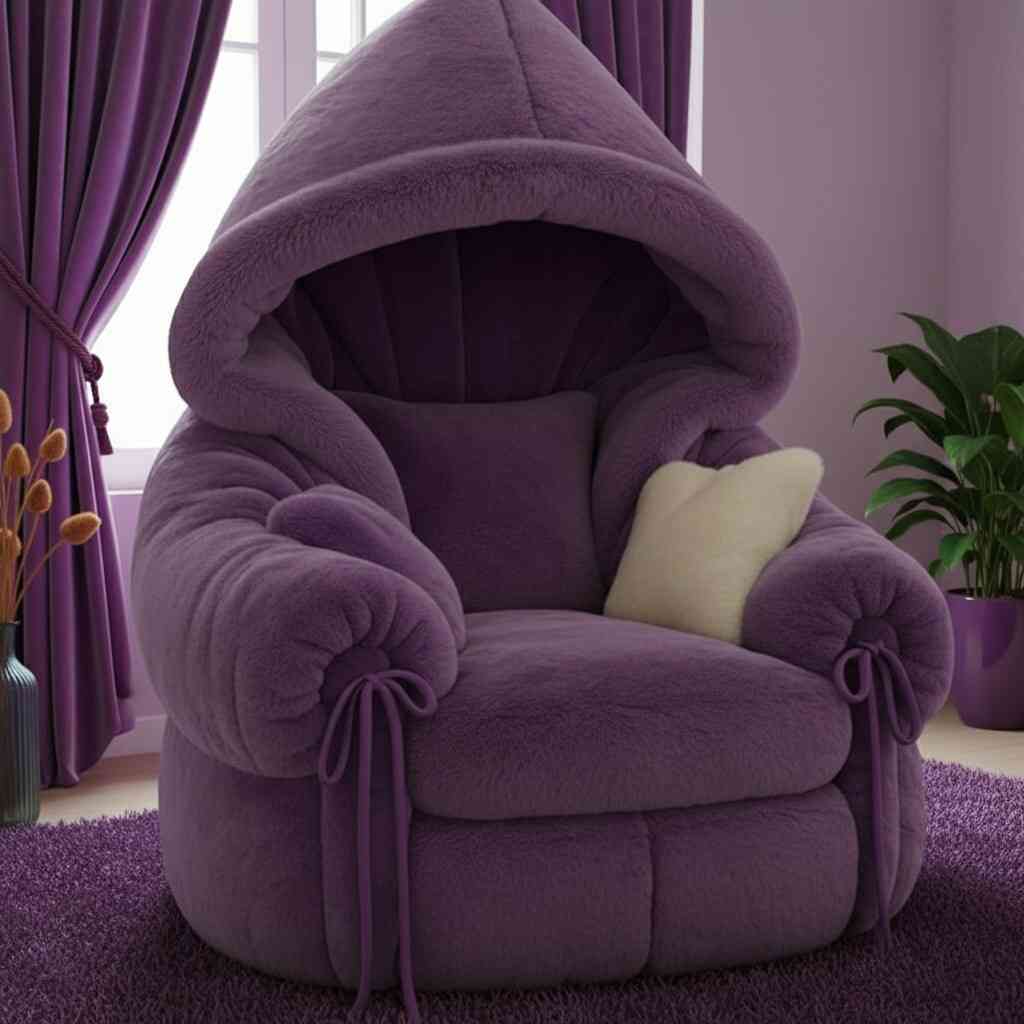
Interestingly, the chair also participates in the “soft design” movement—a counter-response to the hard edges and cold materials of mid-century modernism and industrial minimalism. Where those styles emphasized clarity, structure, and visual austerity, soft design embraces ambiguity, tactility, and emotional warmth. The Hoodie Shaped Chair, with its rounded forms and yielding surfaces, is emblematic of this shift. It doesn’t shout; it whispers. It doesn’t impose; it invites.
Furthermore, the chair speaks to contemporary ideals of inclusivity and informality. Traditional seating often enforces hierarchy—think of the “head of the table” or the rigid posture demanded by a Windsor chair. In contrast, the Hoodie Shaped Chair is inherently egalitarian. It doesn’t care how you sit; it accommodates slouching, lounging, and even napping. It rejects the notion that furniture must discipline the body and instead celebrates the body’s natural desire for ease.
As design continues to evolve, we may see further iterations of the Hoodie Shaped Chair—perhaps with adaptive materials that respond to body heat, or modular components that allow users to adjust the hood’s position. But its core appeal will likely remain unchanged: the promise of a gentle, non-intrusive embrace in a world that often feels too sharp, too loud, and too demanding.
Conclusion: More Than a Chair—A Sanctuary in Fabric Form
The Hoodie Shaped Chair is far more than a clever play on words or a fleeting design trend. It is a testament to the human need for comfort that is both physical and emotional, a recognition that the objects we live with shape not only our spaces but our inner lives. By borrowing the language of one of the most beloved garments of our time, it creates a bridge between the personal and the architectural, between the intimate and the communal.
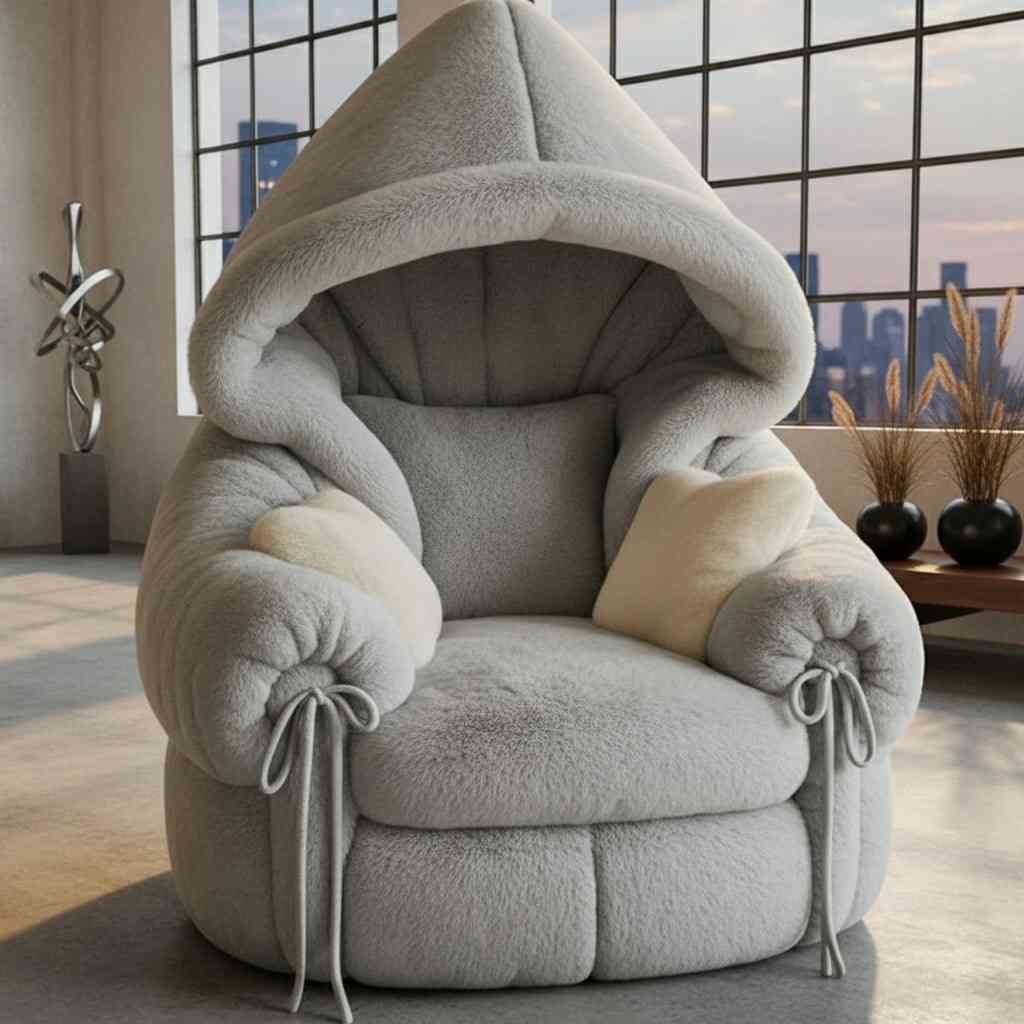
In its soft curves, enveloping hood, and tactile surfaces, the chair offers something increasingly rare: a moment of unguarded stillness. It doesn’t ask you to perform, impress, or optimize. It simply holds space for you—much like a favorite hoodie pulled over your head on a rainy afternoon. In doing so, it redefines what furniture can be: not just a tool for sitting, but a vessel for feeling safe, seen, and softly held.
As we navigate an era defined by uncertainty and rapid change, the Hoodie Shaped Chair stands as a quiet reminder that sometimes, the most radical act is to choose comfort. Not as indulgence, but as necessity. Not as escape, but as restoration. In its humble, hooded form, it offers a sanctuary—one that doesn’t require walls, locks, or silence, but only the willingness to lean back, pull the hood a little closer, and breathe.