Where Myth Meets Material — The Throne of Imagination
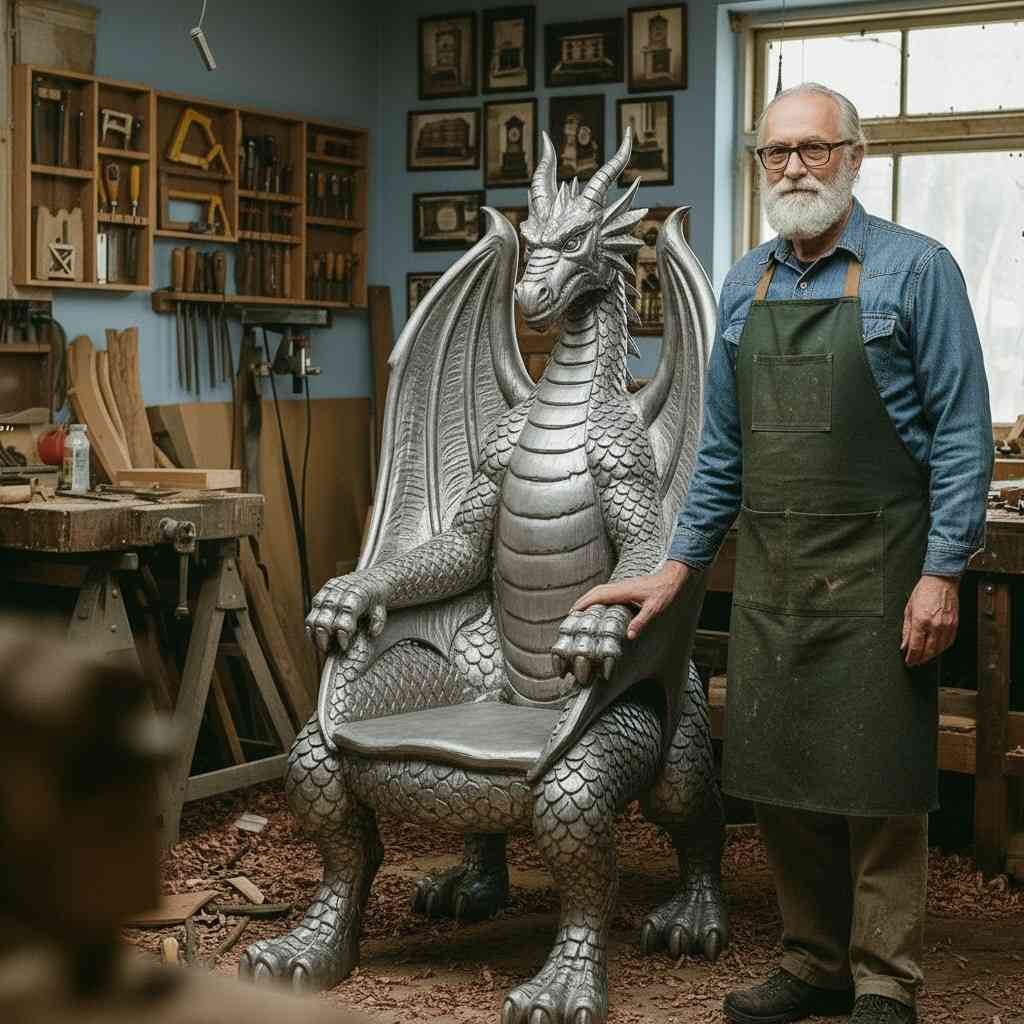
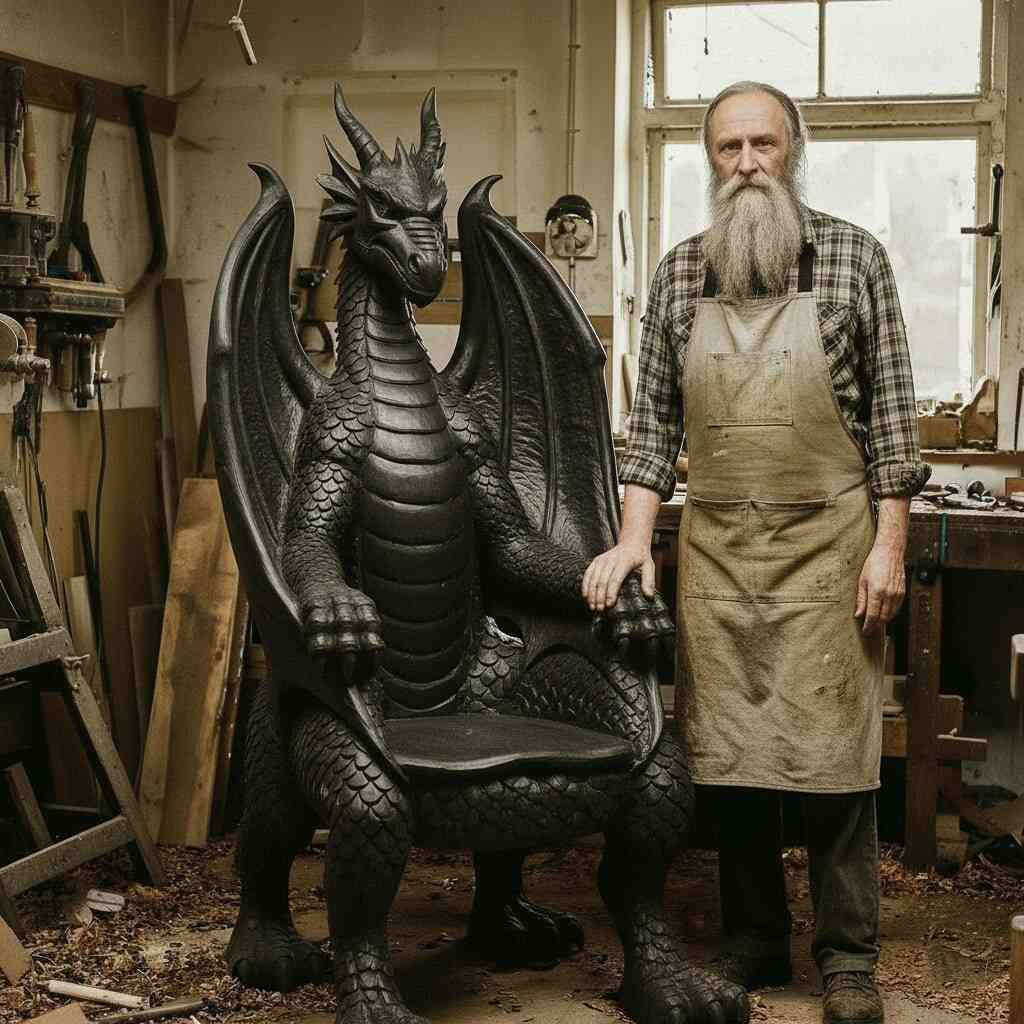
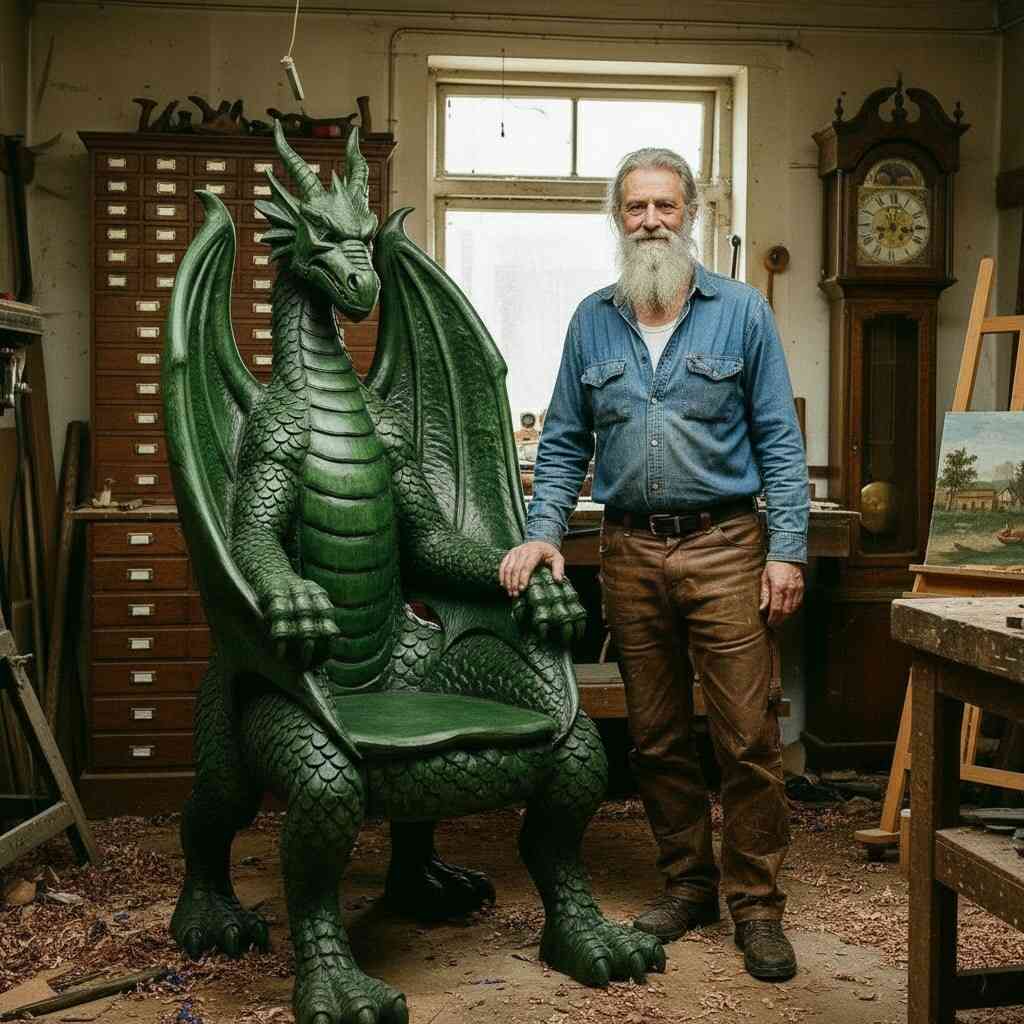
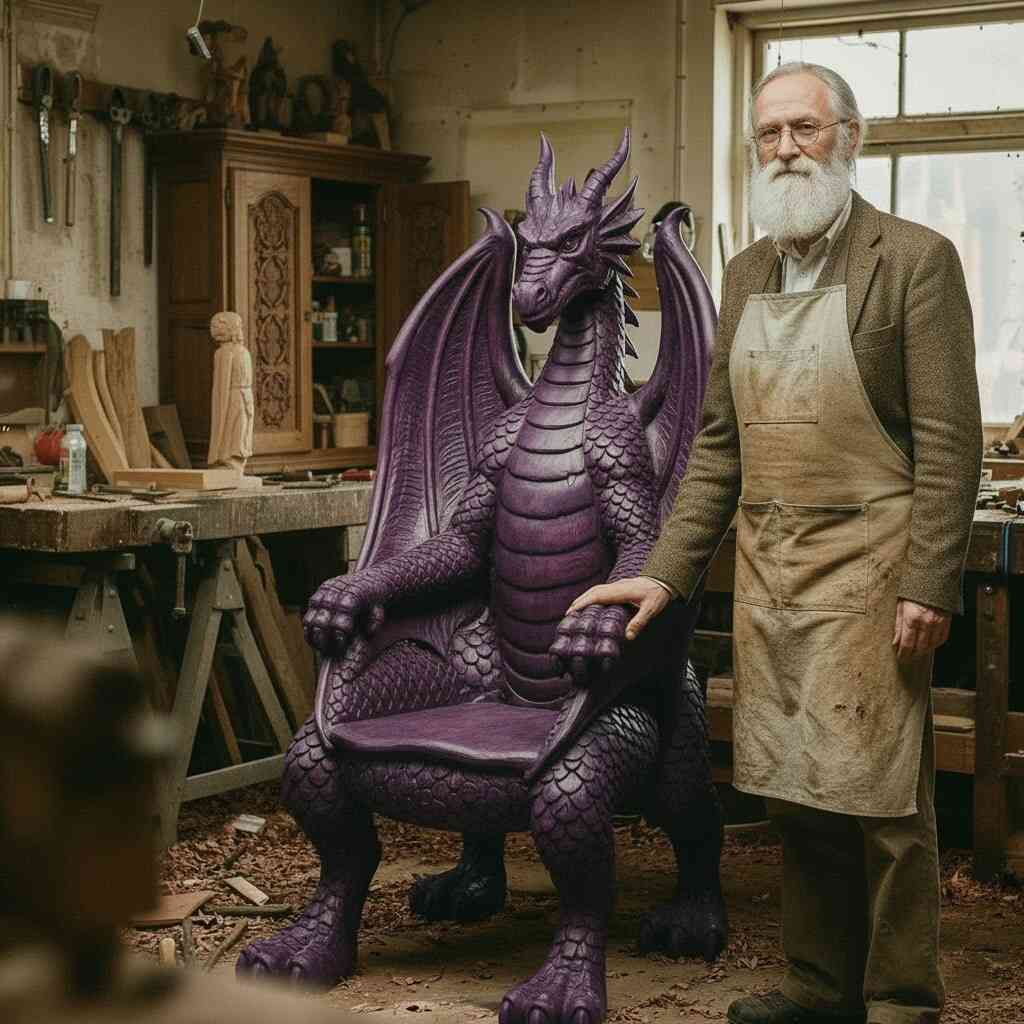
In the quiet corners of artisan workshops—where sawdust hangs in the air like incense and the scent of sandalwood or teak lingers long after the chisel has rested—a singular object emerges, not merely as furniture, but as a vessel of cultural memory: the Dragon Themed Wooden Chair. More than a functional seat, it is a convergence of cosmology, craftsmanship, and continuity. Its presence commands reverence, not for ostentation, but for the layers of meaning embedded in every curve of its backrest, every sinuous coil wrapped around its legs. To sit upon such a chair is to occupy a liminal space—between earth and sky, history and myth, the human and the divine.
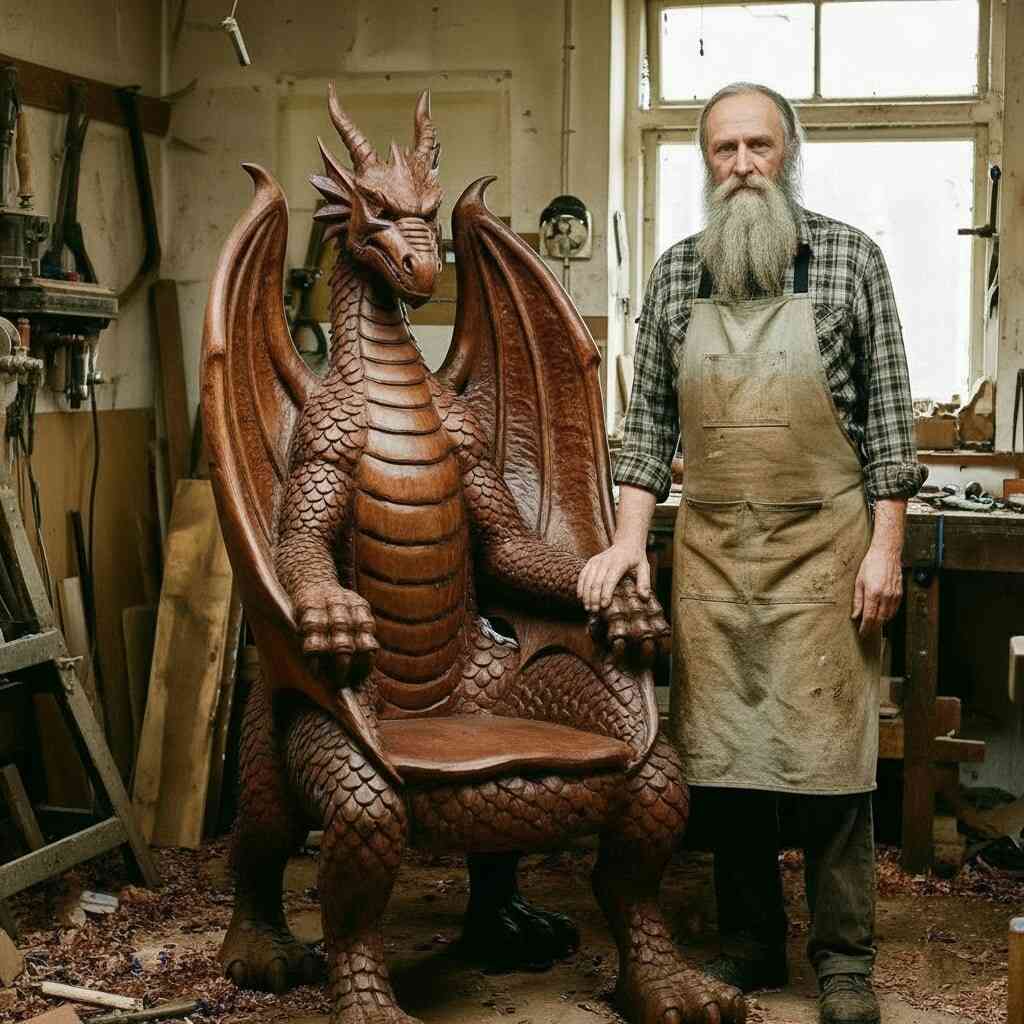
The dragon, across civilizations, is never just a creature. In the West, it may evoke hoards and heroism; in the East, it breathes cosmic balance, imperial authority, and auspicious transformation. When this emblematic being is translated into wood—through the patient, reverent hands of a master carver—it ceases to be ornament. It becomes invocation. The Dragon Themed Wooden Chair stands as a testament to humanity’s enduring impulse to materialize the sacred, to give form to the ineffable, and to honor tradition not through replication, but through reinterpretation.
This article explores the Dragon Themed Wooden Chair not as décor, but as cultural artifact. We delve into the profound symbolism animating its design, trace the historical and spiritual lineages from which it draws, and illuminate the meticulous art of hand-carving that lends it soul. In doing so, we affirm that such a chair is not meant to fill a space—but to consecrate it.
Part I: The Dragon’s Breath — Symbolism Woven in Grain and Curve
The power of the Dragon Themed Wooden Chair lies foremost in the resonance of its central motif. The dragon, in its myriad global incarnations, is a polysemous symbol—simultaneously feared and venerated, destructive and generative. Yet when rendered in wood—especially in the context of East and Southeast Asian traditions, where the motif finds its most elaborate expression—the dragon assumes a unifying, benevolent role. Here, it is less beast than force: a guardian, a mediator, a celestial sovereign.
Celestial Sovereignty and Cosmic Harmony
In Chinese cosmology, the dragon (lóng) is the quintessential yang force—active, ascending, life-giving. Unlike the fire-breathing, treasure-hoarding dragons of European lore, the Eastern dragon is a creature of water and sky, associated with rainfall, rivers, and the heavens. It governs the seasons, commands the clouds, and symbolizes the Emperor’s Mandate of Heaven. When a dragon coils around the legs or arms of a wooden chair—its body sinuous, sinewy, yet fluid—it is not merely decorative; it is an assertion of harmony between the seated individual and the cosmic order.
Consider the chair’s backrest: often crowned with a dragon’s head, jaws slightly parted—not in aggression, but in qi-channeling inhalation and exhalation. The dragon’s eyes, meticulously carved and sometimes inlaid with semi-precious stones like jade or obsidian, are not blind; they see. They embody vigilance and wisdom. The placement of the head at the apex of the chair signifies spiritual ascension—the seated figure is not dominant over the dragon, but aligned with it, participating in its celestial authority.
The Five-Clawed Legacy and Hierarchical Nuance
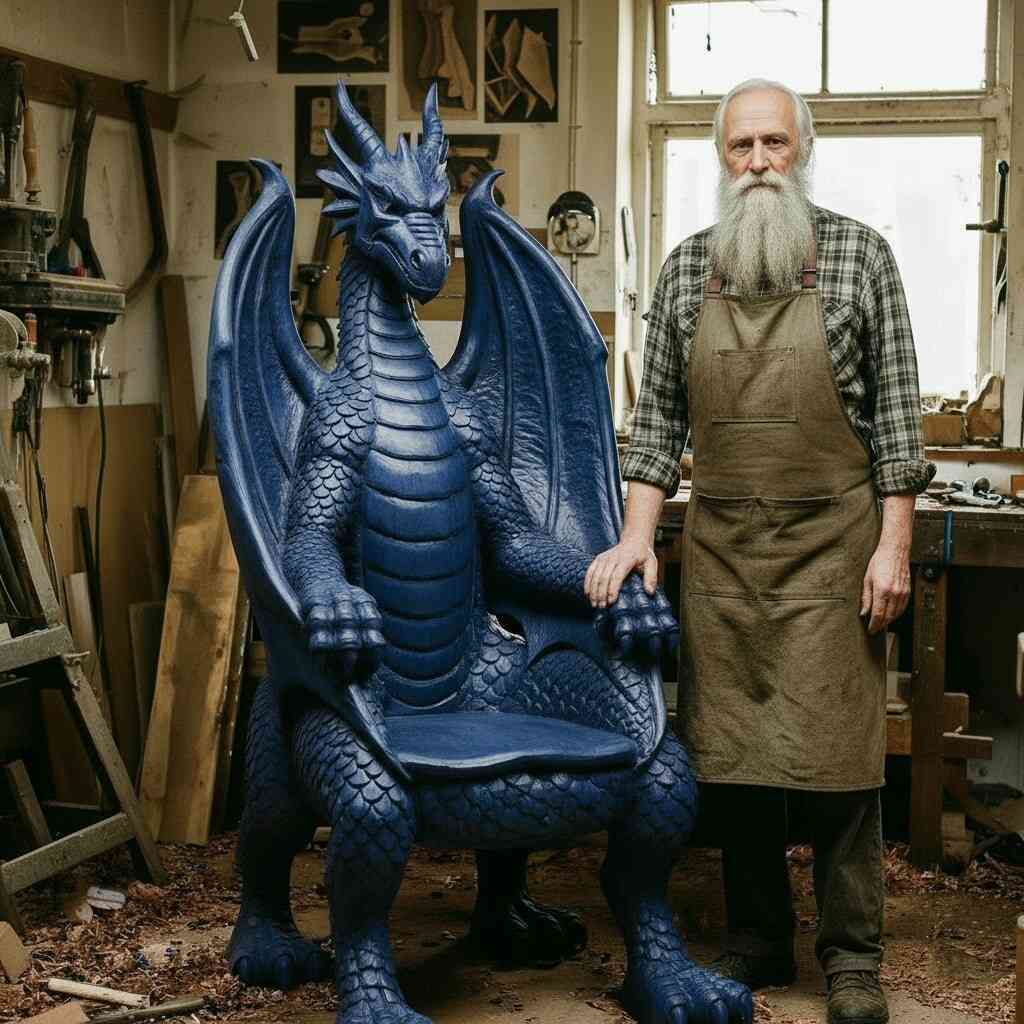
Detail matters deeply. A five-clawed dragon in imperial Chinese tradition was reserved for the Son of Heaven—the Emperor alone. Four claws denoted nobility; three, high-ranking officials. Even today, in the hands of a conscientious artisan, the number and arrangement of claws are not arbitrary. They speak to lineage, to intention. A Dragon Themed Wooden Chair featuring a five-clawed dragon is not a mere aesthetic flourish; it is a quiet homage to sovereignty—not political, perhaps, but inner sovereignty: the mastery of self, the cultivation of virtue.
In Vietnamese and Korean interpretations, dragons retain their celestial status but take on local inflections—the Vietnamese rồng often carries a more serpentine grace, its body elongated like river currents, symbolizing national resilience and rebirth. In Japan, the ryū intertwines with Shinto and Buddhist motifs—sometimes paired with komainu-like guardians or lotus motifs, suggesting protection and enlightenment. These distinctions, preserved in carving style and posture, remind us that the Dragon Themed Wooden Chair is never culturally neutral. It carries the memory of empires, the whispers of sages, and the prayers of generations who looked to the dragon as intercessor between mortal striving and divine grace.
Transformation and the Cycle of Becoming
Crucially, the dragon is a creature of metamorphosis. It sheds no skin like a snake, yet it moves between realms—subterranean waters, mountain peaks, celestial vaults—without fixed abode. This liminality makes it a potent symbol of transformation. The chair, then, becomes more than a place of rest; it becomes a site of potential awakening. To sit in contemplation upon such a seat is to invite change—not disruption, but evolution, the kind that aligns one with deeper rhythms of being.
This symbolism is reinforced by the dragon’s posture in carving. Rarely static, it is in motion: coiling upward along a chair leg (ascending ambition), diving through cloud motifs on the apron (descent into introspection), or entwined with a flaming pearl—the wish-fulfilling jewel representing wisdom, spiritual insight, or the elixir of immortality. When the pearl is clasped between the dragon’s jaws or cradled in its claws, it suggests the hard-won integration of knowledge and power. The chair, thus, subtly becomes a seat of meditation—a throne not for ruling others, but for mastering the self.
Part II: Roots in Time — Tradition and the Continuity of Craft
The Dragon Themed Wooden Chair does not spring from novelty. Its lineage stretches back centuries, rooted in dynastic workshops, temple furnishings, and scholarly studios. Its tradition is inseparable from the evolution of joinery, architectural aesthetics, and philosophical worldviews.
From Imperial Palanquins to Scholar’s Studios
During the Ming (1368–1644) and Qing (1644–1912) dynasties in China, dragon motifs proliferated in court furniture. Thrones (long yi—“dragon chairs”) were masterworks of huanghuali or zitan wood, their surfaces alive with high-relief dragons chasing pearls among scrolling clouds and ruyi scepters. These were not merely seats of power but cosmograms in three dimensions—miniature universes where the Emperor, by sitting, enacted his role as pivot between heaven and earth.
Parallel traditions flourished in Korea’s Joseon era and Vietnam’s Lê and Nguyễn dynasties. In Korea, chairs with dragon motifs—though rarer due to Confucian austerity—appeared in royal altars or ceremonial halls, often paired with phoenixes to balance yin and yang. Vietnamese trường kỷ (long benches) and armchairs featured dragons with distinctively aquiline noses and flowing whiskers, their forms echoing the curves of temple eaves and ceremonial drums.
Yet the dragon chair was not confined to royalty. In scholarly circles, a more restrained version emerged: the taishi chair—named after the Grand Tutor—often graced with a single, elegant dragon on the back splat. Here, the dragon symbolized wisdom and moral authority, not dominion. A scholar sitting upon it was reminded: Lead with virtue. Speak with truth. Move with grace.
The Language of Joinery and Form
Traditional construction eschews nails and glue in favor of mortise-and-tenon joinery—a system where interlocking wooden elements hold firm through tension and precision. This method is more than structural; it is philosophical. Like the dragon itself—segmented yet unified, flexible yet unbreakable—the chair is a study in integrated strength. The absence of metal fasteners speaks to harmony with nature: the chair ages as wood does, expanding and contracting with the seasons, developing patina without decay.
Proportions, too, follow ancient principles. The height of the seat, the angle of the backrest, the depth of the arms—all adhere to ren ti chi cun (“human body measurements”), a pre-modern ergonomic wisdom refined over generations. A well-made Dragon Themed Wooden Chair does not impose itself on the body; it receives it, supporting posture not through rigidity, but through intelligent curvature—much like the dragon’s own spine, capable of both coiling and uncoiling with effortless power.
The Ritual of Making: Carver as Custodian
Most vital to tradition is the role of the artisan. In classical workshops, carving was preceded by ritual—incense offered to Lu Ban, the legendary patron of carpenters; wood selected not just for grain, but for qi (vital energy); tools consecrated before use. The act of carving a dragon was not production—it was participation.
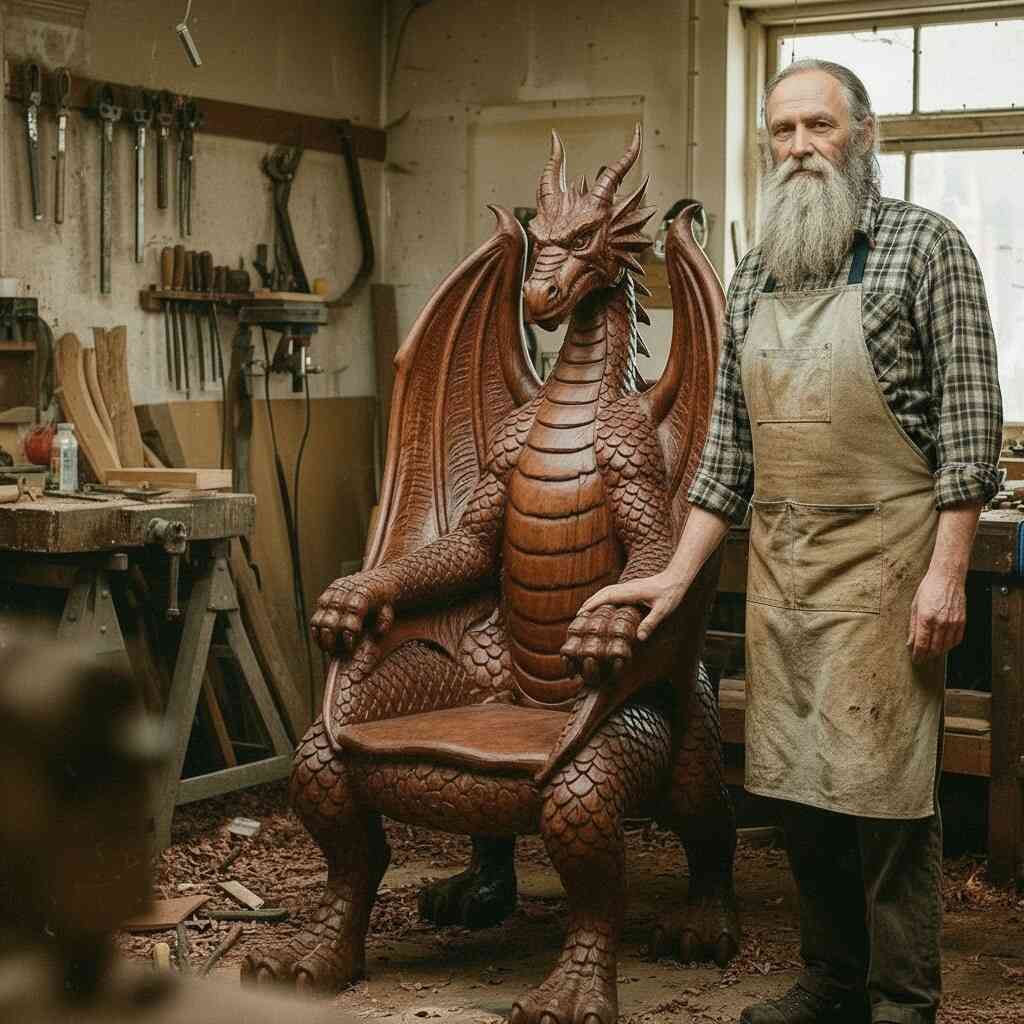
The master carver begins not with a sketch, but with meditation. He studies classical texts—The Classic of Mountains and Seas, Ming dynasty pattern books (yangshi), temple murals—internalizing the dragon’s canonical forms: the camel’s head, stag’s antlers, rabbit’s eyes, ox’s ears, snake’s neck, fish’s scales, eagle’s claws, tiger’s paws, and the nine proportions that distinguish an auspicious dragon. Only then does the chisel meet the wood.
Relief carving techniques vary: fu diao (raised relief) for bold, architectural presence; tong diao (openwork) for ethereal lightness; xian diao (sunken relief) for subtlety and shadow-play. The dragon’s scales are never identical; each is individually shaped—some overlapping like roof tiles, others radiating from a central spine, suggesting growth and dynamism. The whiskers flow like calligraphic strokes; the mane ripples as if stirred by celestial wind.
This is not embellishment. It is embodiment. Every groove, every undercut serves narrative and symbolism. A deep undercut beneath a claw suggests lift-off—imminence of flight. A shallow curve in the tail implies latent energy, coiled but ready. The chair becomes a silent scripture, legible to those who know how to read grain and gesture.
Part III: The Hand’s Memory — Carving as Contemplative Practice
In an age of CNC routers and laser engraving, the hand-carved Dragon Themed Wooden Chair stands as a quiet act of resistance—not against technology, but against amnesia. Hand-carving is a dialogue. Between maker and material. Between tradition and intuition. Between time and timelessness.
The Slowness of Significance
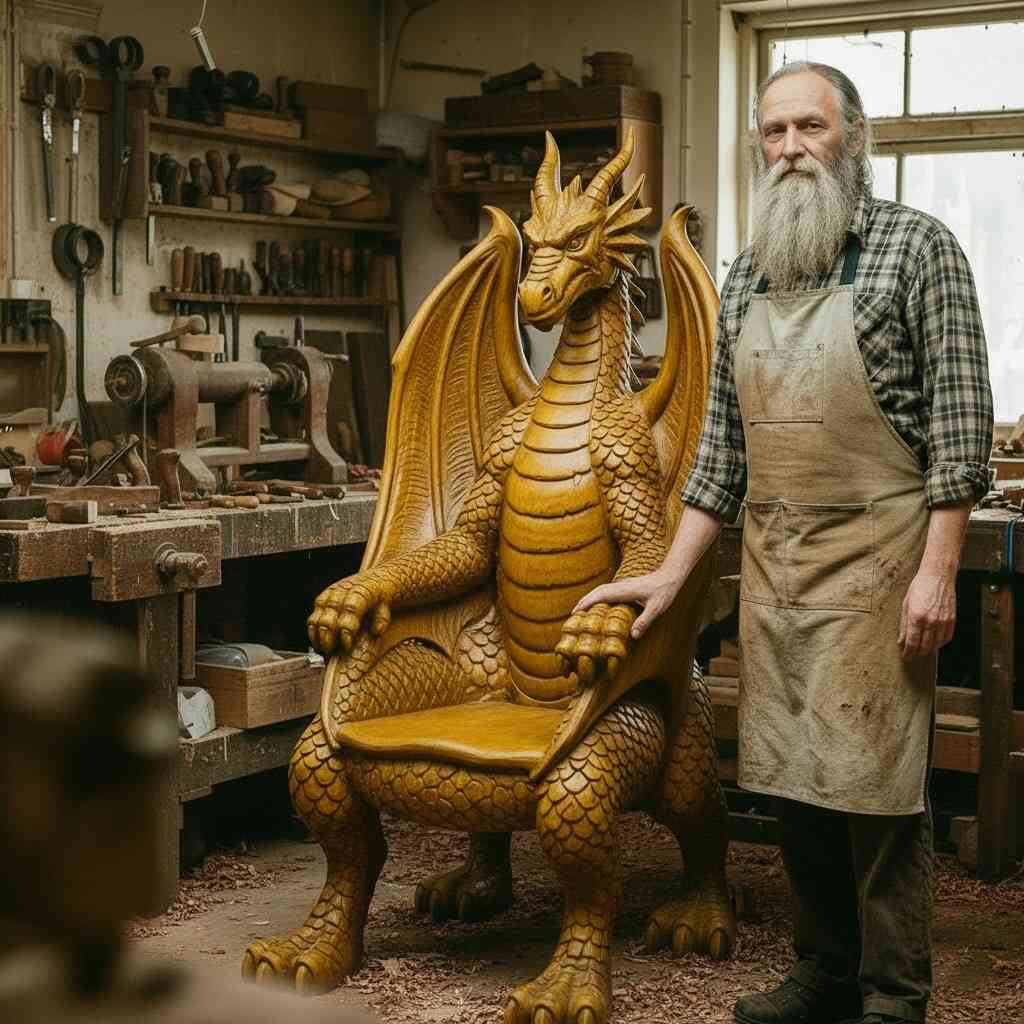
A master carver may spend weeks—sometimes months—on a single chair. The process is incremental, meditative. There are no “undo” commands. A slip of the chisel cannot be reversed; it must be absorbed, transformed. This demands humility. The wood dictates as much as the design. Knots become cloud formations; grain shifts dictate the dragon’s musculature. The artisan learns to listen—to the rasp of the gouge, to the whisper of the wood, to the silence between breaths.
This slowness is sacred. In carving the dragon’s eye, the artisan often leaves the final detail—the pupil—for last. In Chinese tradition, this “opening of the eyes” (dian jing) is a ceremonial act, believed to animate the figure. Until then, the dragon is latent; afterward, it sees. The chair, once inert, becomes vigilant. It is no longer object, but presence.
The Imperfections That Sanctify
Machine-made replicas strive for flawless symmetry. The hand-carved Dragon Themed Wooden Chair embraces asymmetry—not as error, but as life. One scale may be slightly larger; one claw less acute. These are not failures, but fingerprints of humanity. They echo the Daoist ideal of ziran—“self-so,” spontaneous naturalness. A perfect dragon is a dead one. A living dragon breathes unevenly.
Even the finish honors this ethos. Traditional lacquering—using raw qi tree sap—requires dozens of hand-rubbed layers, each sanded with sharkskin or bamboo fiber. The final surface is not glossy plastic, but deep, liquid, breathing wood—matte in shadow, luminous in light. With time, it darkens, deepens, softens. The chair ages with its keeper, accumulating quiet histories in its patina.
A Seat for the Soul’s Dialogue
Ultimately, the Dragon Themed Wooden Chair is designed for encounter. Not for lounging, but for presence. Place it in a study, and it invites reflection. In a meditation room, it becomes an altar of stillness. In a hall, it stands as a silent elder—bearing witness.
To sit upon it is to feel the dragon’s spine rise along your own. To trace its coils with your fingers is to relearn the language of symbols. To gaze at its pearl is to remember: wisdom is not seized, but cradled.
This chair does not decorate a room. It consecrates space. It asks not for admiration, but for recognition—of the dragon within: the untamed, the wise, the ascending self.
Conclusion: The Eternal Coil — A Chair That Sits With You
The Dragon Themed Wooden Chair is a paradox: it is simultaneously ancient and alive, static and kinetic, personal and universal. It carries the weight of dynasties yet speaks to the individual seeker. It is carved from wood—finite, earthly—yet gestures toward the eternal.
In a world of disposability, it insists on permanence—not of material, but of meaning. In an era of mass replication, it affirms the irreplaceable value of the handmade—the slight tremor in a line, the warmth of human touch locked in grain, the decades of apprenticeship behind a single scale.
This chair is not owned. It is entrusted. To possess one is to join a lineage—not of consumption, but of custodianship. You become its current guardian, responsible for preserving not just its form, but its spirit—the breath of the dragon, the memory of the craft, the silence between the strokes of the chisel.
Long after trends shift and styles fade, the Dragon Themed Wooden Chair remains: a throne for contemplation, a vessel of myth, a testament to the truth that the most profound power does not shout—it coils, waits, watches, and, in perfect time, rises.