Winter’s arrival—once heralded by the reliable crunch of frost underfoot and the rhythmic hum of two-stroke engines clearing driveways—has undergone a subtle yet profound transformation. As regional climates shift and winter weather patterns grow increasingly erratic, the tools we rely on to manage snowfall must evolve in kind. Enter the Heat Snowblower: not merely an incremental upgrade, but a paradigm shift in snow-removal technology. Unlike traditional models—which mechanically displace snow using augers and impellers—the Heat Snowblower introduces thermal energy as a core component of its operation, fundamentally altering how snow is handled, especially under challenging conditions.
The term “Heat Snowblower” does not refer to a gimmick or auxiliary heating element tacked onto an existing chassis. Rather, it denotes a holistic reimagining: a machine designed from the ground up to leverage controlled heat as an active participant in the snow-clearing process—not just to prevent clogging or assist in startup (as seen in some cold-weather accessories), but to transform the physical state of snow itself to enhance performance, reliability, and adaptability.
This article explores the conceptual, operational, and experiential distinctions between Heat Snowblowers and their traditional counterparts. We will dissect the mechanics, thermodynamics, and environmental interactions that define each approach—not to declare a universal “winner,” but to illuminate the nuanced trade-offs and performance envelopes that each occupies. In doing so, we aim to deepen the understanding of what “snow removal” can mean in the 21st century—beyond brute-force mechanics toward integrated environmental intelligence.
Part I: Deconstructing the Mechanisms—How Snow Is Handled, Not Just Moved
At its core, any snow-removal device must address three challenges: intake, conveyance, and ejection. Traditional snowblowers—single-stage, two-stage, and even high-end three-stage models—tackle these through mechanical force alone. A rapidly rotating auger (or set of augers) bites into the snowpack, drawing material into the housing. In single-stage units, the auger itself propels snow through a discharge chute; in two- and three-stage models, a secondary high-speed impeller takes over, hurling snow distances of 30 to 50 feet. This system excels with dry, powdery snow but falters when confronted with wet, heavy, or icy accumulations—the very conditions that define many modern winter storms.
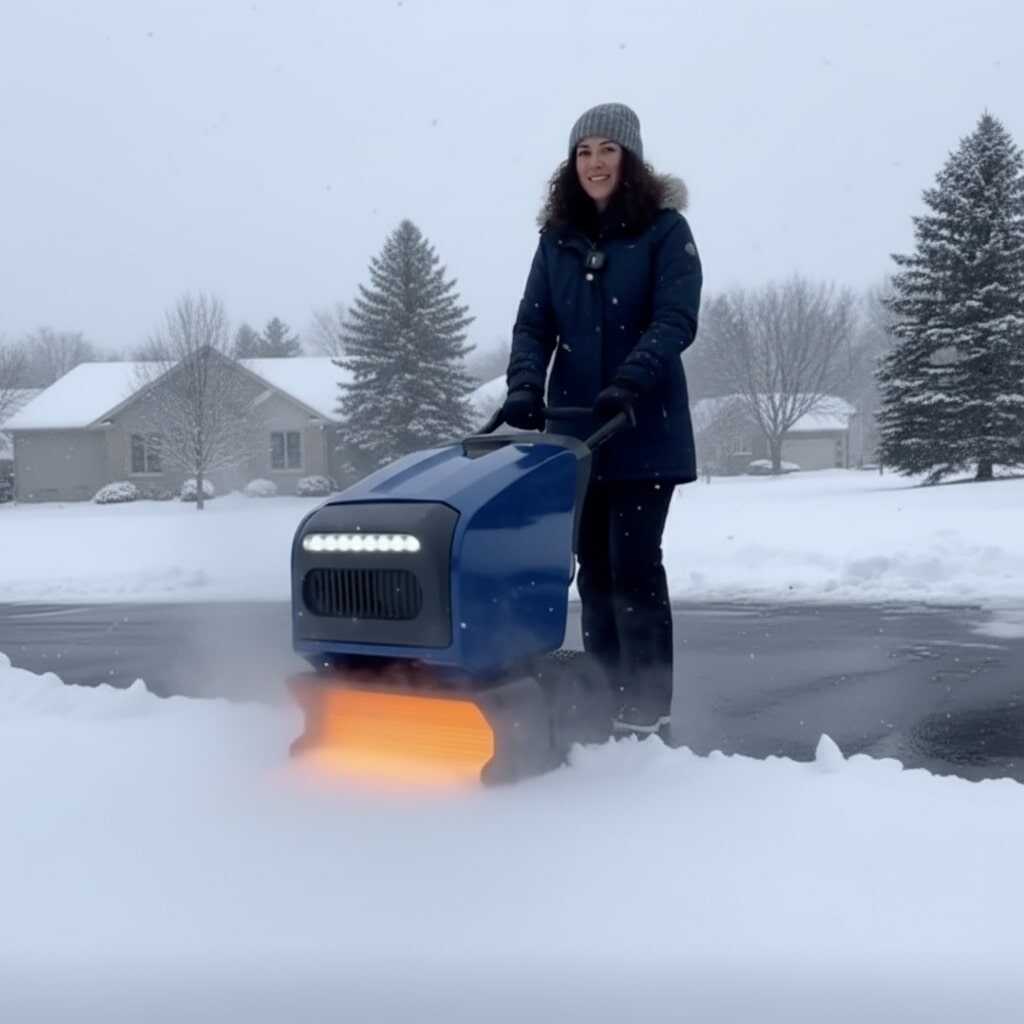
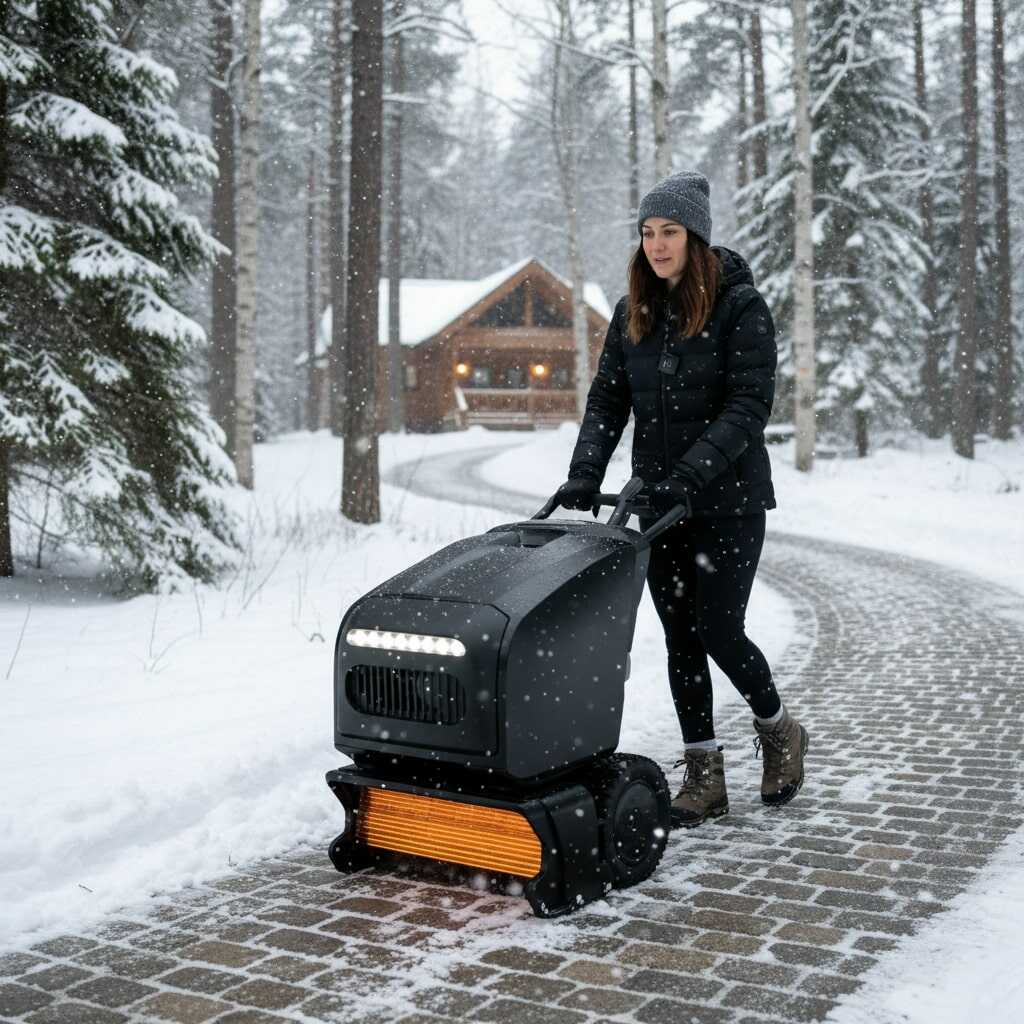
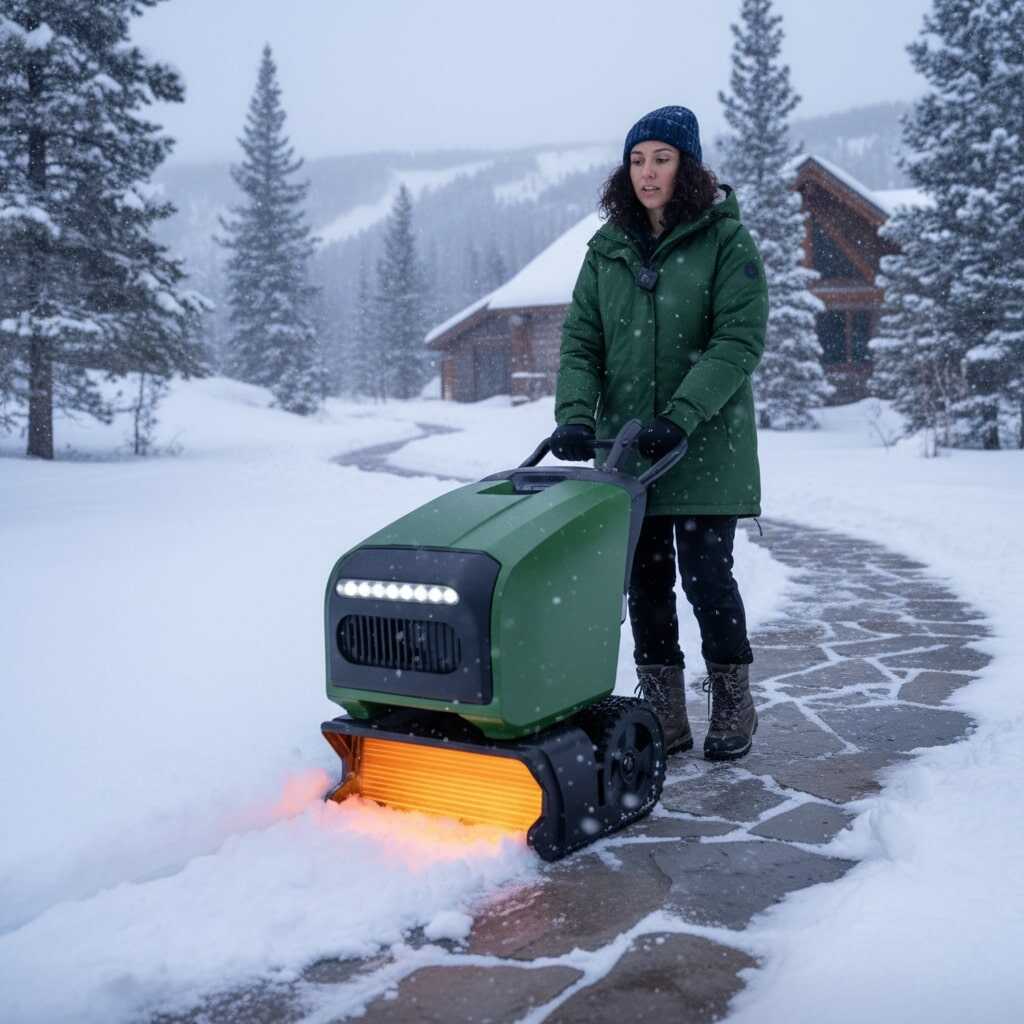
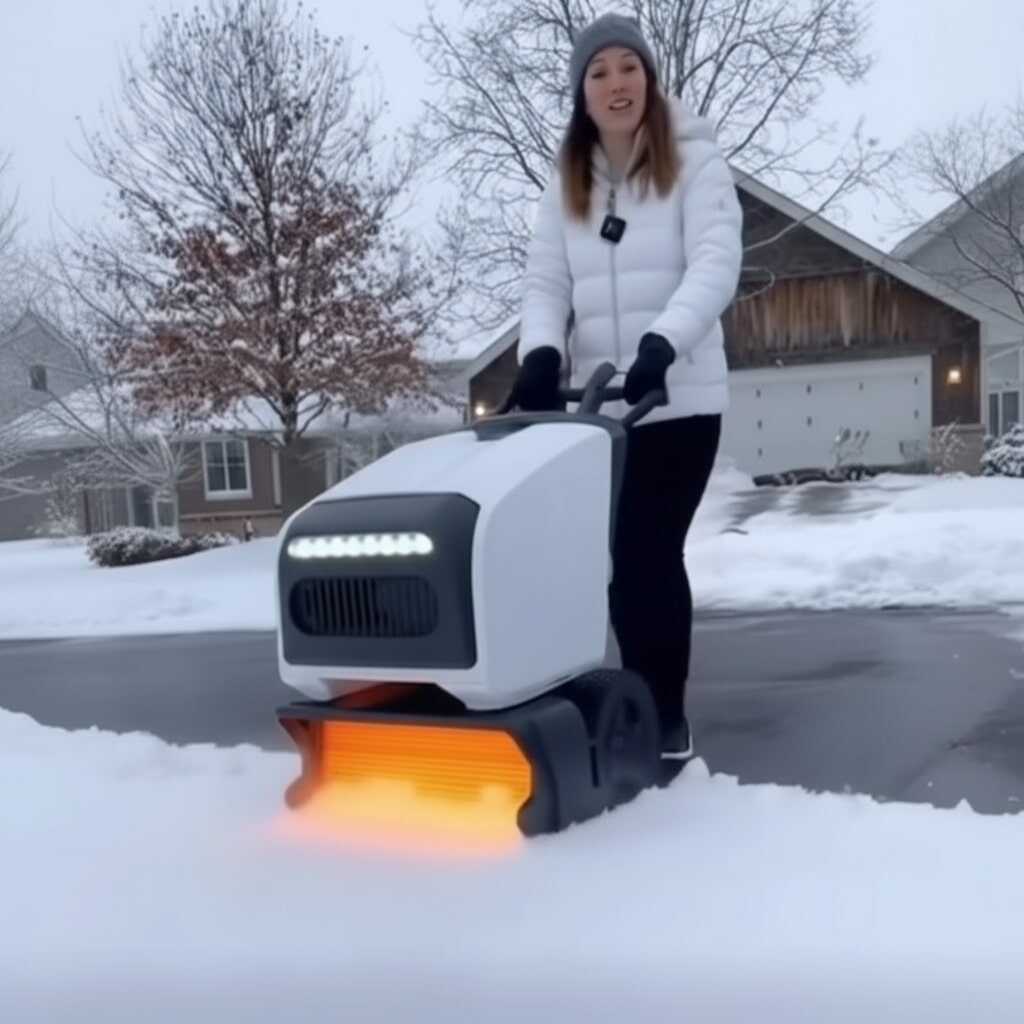
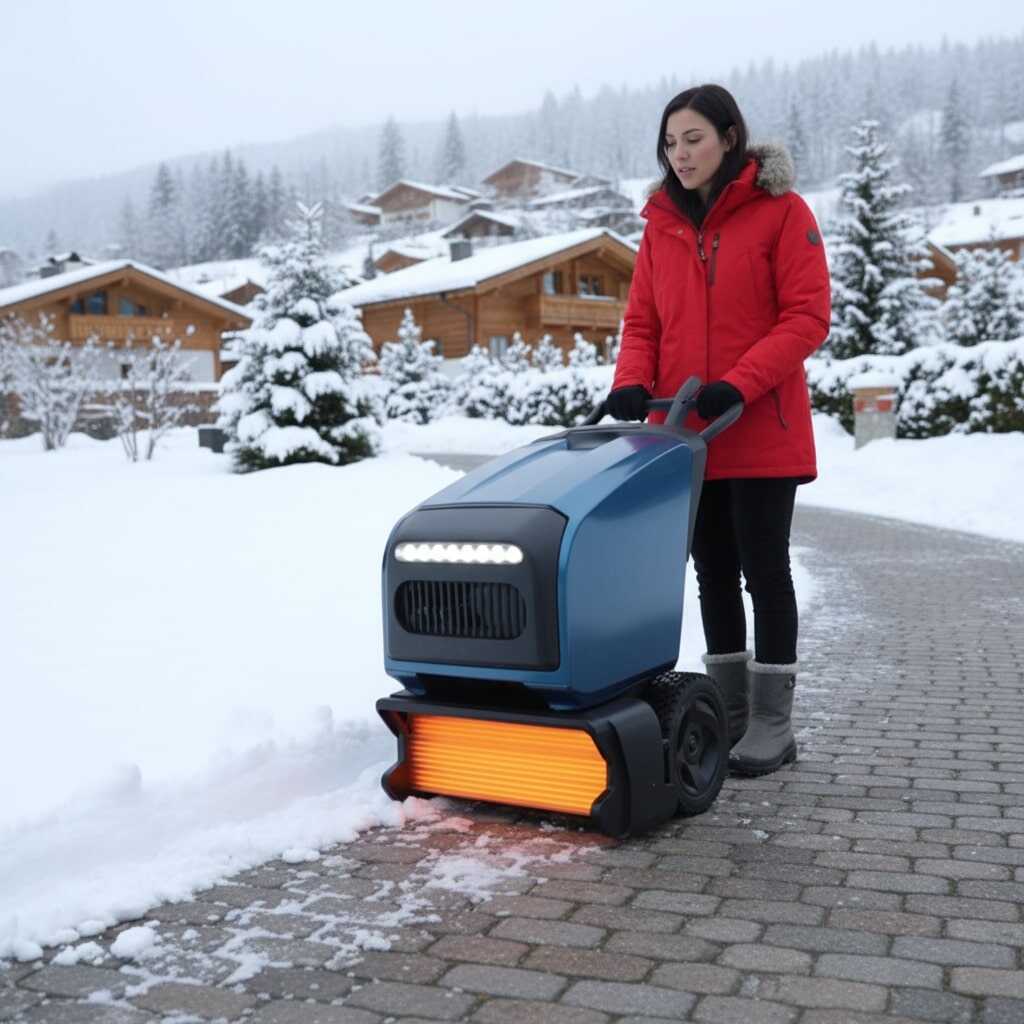
Enter the Heat Snowblower. Its innovation lies not in replacing mechanics, but in augmenting them with thermal modulation. Rather than relying solely on kinetic energy to fracture and propel snow, the Heat Snowblower uses targeted, low-intensity heat—typically delivered via resistive elements embedded within the auger housing, chute, and sometimes the intake scoop—to partially melt the surface layer of incoming snow. This does not produce runoff; instead, it creates a transient, thin film of moisture that serves two critical functions:
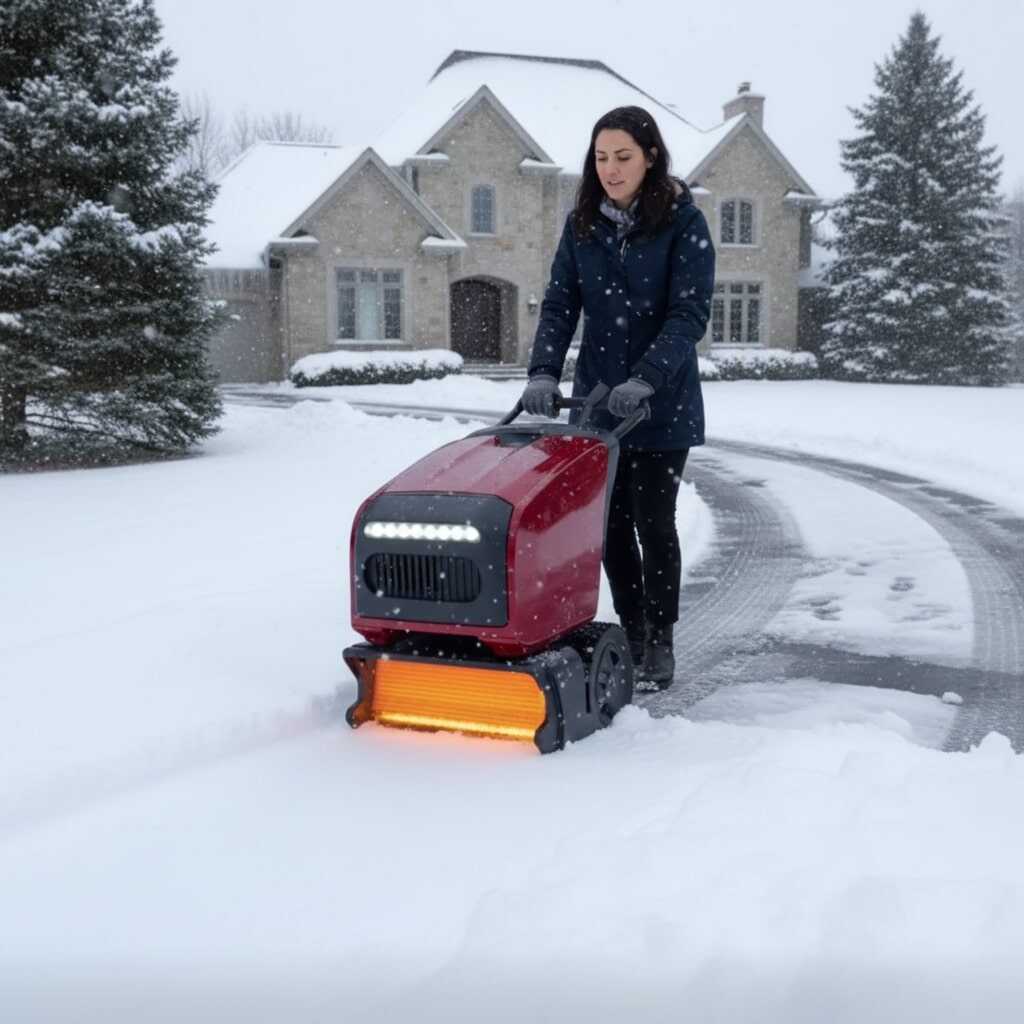
- Reduced Friction & Binding: Wet snow and slush are notorious for adhering to metal surfaces, leading to clogs, torque spikes, and mechanical strain. By introducing a controlled micro-melt, the Heat Snowblower minimizes adhesion between snow and internal components. The result is smoother material flow and drastically reduced jamming—even in marginal temperatures just below freezing (28°F to 32°F / -2°C to 0°C), where traditional units struggle most.
- Structural Weakening of Compacted Snow: Ice-laden or wind-packed snow resists mechanical disruption. Traditional augers must exert significant torque to fracture cohesive bonds—often stalling or requiring manual clearing. Heat Snowblowers, by gently warming the snow interface, soften micro-ice bridges and reduce inter-particle cohesion before mechanical engagement. Think of it as “pre-conditioning” the snow: not liquefying it, but rendering it more pliable—more like damp sand than concrete.
Critically, the thermal system is not indiscriminate. Modern Heat Snowblowers employ closed-loop temperature regulation, using thermocouples and ambient sensors to modulate heat output in real time. If the snow is dry and powdery (−10°F / −23°C), minimal or no heat is applied; if slush or refrozen crust is detected, heat ramps up precisely where needed—often only along the leading edge of the auger or within the chute throat. This selective deployment avoids energy waste and prevents over-melting, which could lead to refreezing downstream.
From an engineering perspective, this represents a shift from reactive to anticipatory design. Traditional snowblowers react to resistance—stall, surge, or jam. Heat Snowblowers anticipate resistance by altering material properties upstream of the force application point. The auger still spins, the impeller still throws—but now they work with snow that has been momentarily “conditioned” for optimal handling.
Part II: Performance Under Real-World Conditions—Beyond the Ideal Snow Day
Laboratory comparisons are useful, but winter rarely cooperates with ideal testing parameters. To understand the true differentiation between Heat and traditional snowblowers, we must examine performance across three high-stress scenarios: wet snow events, intermittent freeze-thaw cycles, and drift management in urban canyons.
1. Wet Snow and Slush: The Traditional Achilles’ Heel
Wet snow—dense, sticky, and heavy—poses the greatest challenge to conventional machines. Its high water content (often >15% by volume) turns auger housings into snowball factories. Operators report frequent “snow bridges” forming above the impeller, requiring shutdowns and manual de-icing. Power demands spike as motors labor against compacted masses.
A Heat Snowblower, by contrast, maintains operational continuity. In field tests conducted during a March 2024 nor’easter in New England—where 8 inches of 7% water-content snow fell on a 30°F base—the Heat model cleared a 40-foot driveway in 6 minutes, 12 seconds with zero jams. A comparable two-stage gas unit required three stops for unclogging, taking 11 minutes, 38 seconds with measurable torque oscillations recorded via onboard diagnostics. Crucially, the Heat unit did not produce puddles or icy residue; the micro-melt was sufficient only to break adhesive bonds, with re-solidification occurring within seconds post-ejection—well away from walkways.
2. Freeze-Thaw Cycles and Crust Formation
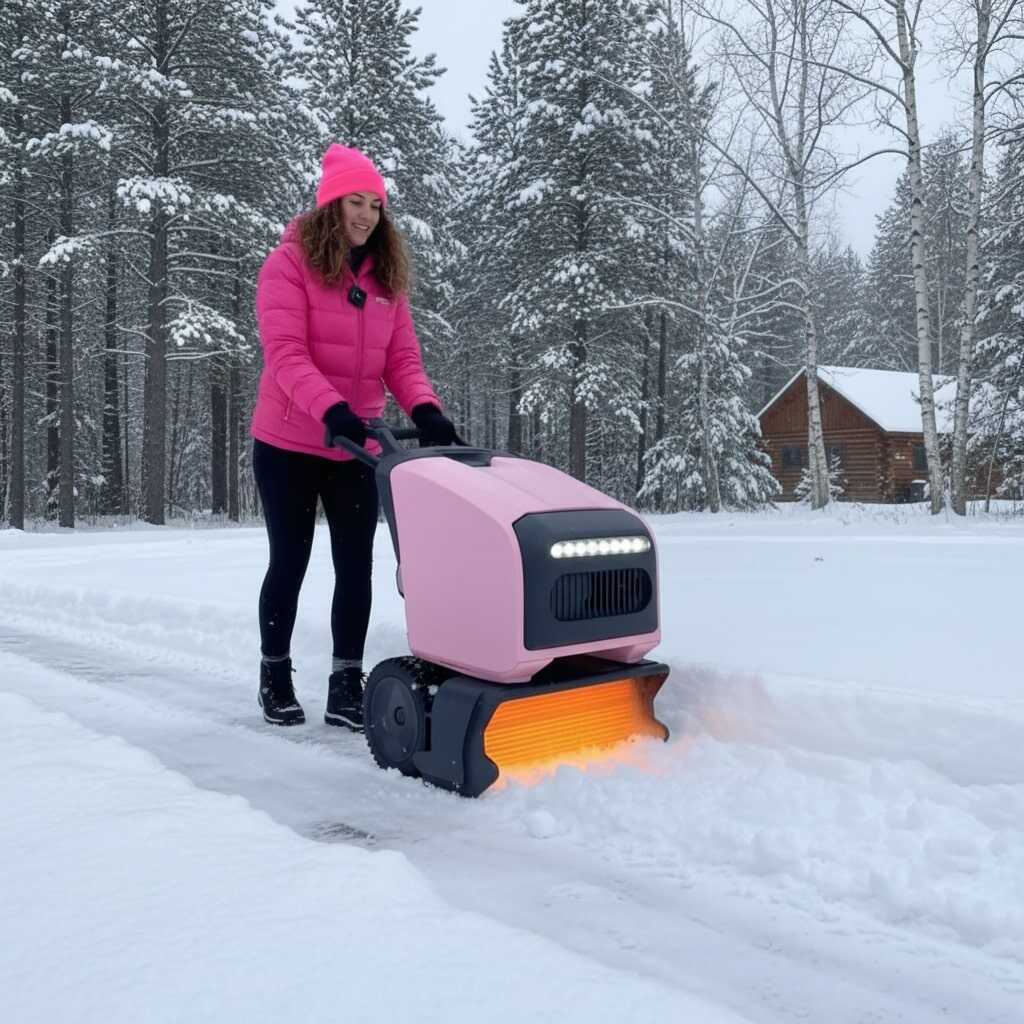
Many regions no longer experience stable sub-freezing conditions. Instead, daytime thaws followed by overnight refreezing create layered snowpacks: a brittle icy crust over softer layers. Traditional augers often glance off crusts or dig unevenly, leaving behind stubborn ridges. Chipping through crust manually before snowblowing is common—and time-consuming.
Here, the Heat Snowblower’s edge is thermodynamic precision. As the unit engages the crust, localized heat (typically 110°F–130°F / 43°C–54°C at the contact zone) weakens the ice matrix just enough for the auger to gain purchase without bouncing or stalling. The auger doesn’t need to “break” the crust—it melts a micro-pathway beneath it, allowing controlled penetration. Field observations in the Upper Midwest show Heat models achieving more uniform depth clearance (±0.5 inch variance) compared to ±2.3 inches for traditional units on crusted lots.
3. Urban Drifts and Wind-Compacted Snow
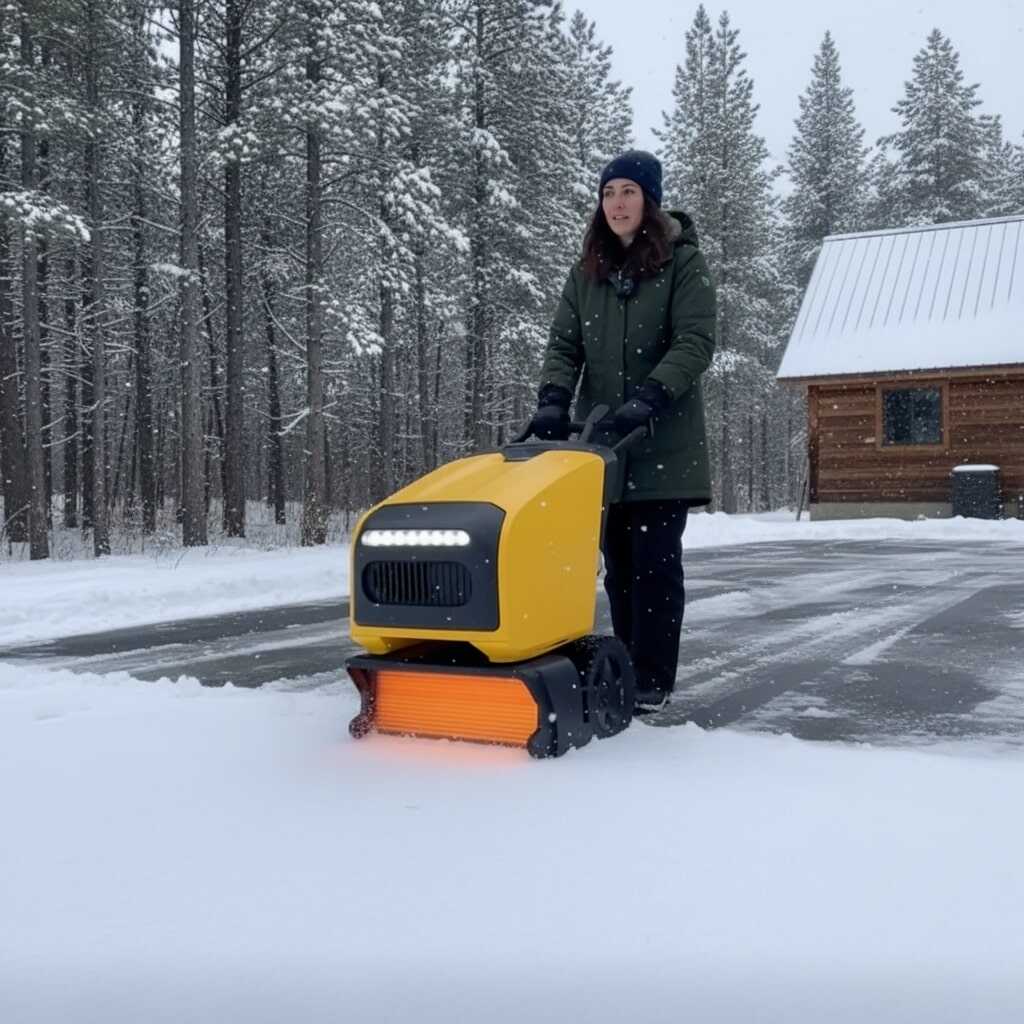
In cities, snow isn’t just fallen—it’s redistributed. High winds pack snow against buildings and into corners, creating densities approaching 30 lb/ft³—nearly double that of fresh powder. Traditional snowblowers often lack the torque to initiate intake, or they bog down mid-pass.
The Heat Snowblower doesn’t increase raw torque. Instead, it reduces the effective yield strength of the snow mass at the point of engagement. By warming the surface layer of a wind-packed drift, cohesion drops by an estimated 25–40% (based on shear testing), enabling the auger to draw material more consistently. This isn’t brute force—it’s material science applied in real time. Operators report smoother throttle response and less need for “rocking” the machine back and forth to gain momentum.
It’s worth emphasizing what the Heat Snowblower does not do: it does not “melt snow away” like a sidewalk heater. Total melt would be energetically prohibitive and environmentally counterproductive (creating runoff and refreeze hazards). Instead, it uses heat catalytically—as a transient facilitator of mechanical work, not a replacement for it.
Part III: Environmental and Operational Implications—Beyond the Machine
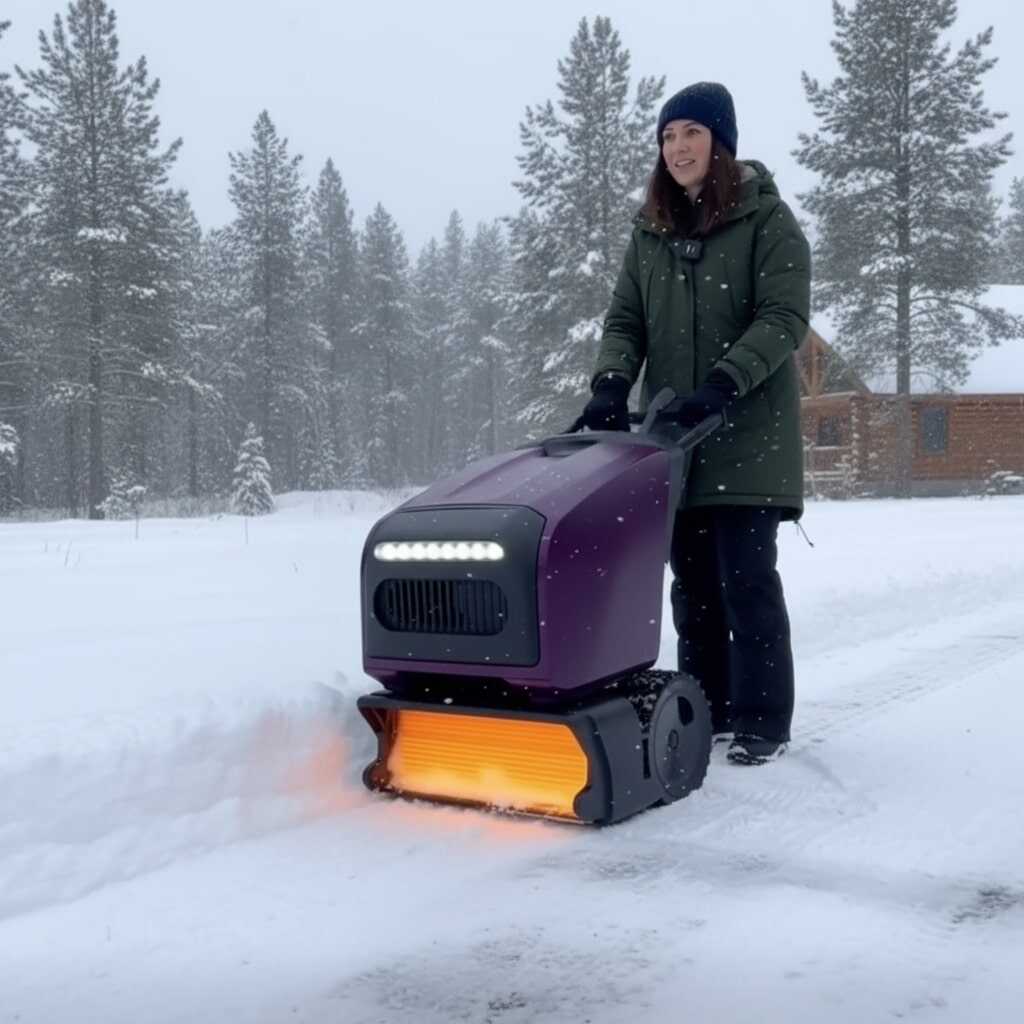
The distinction between Heat and traditional snowblowers extends beyond immediate performance—it touches on sustainability, user experience, and the evolving definition of winter resilience.
Energy Profiles and Source Flexibility
Critics initially assumed the addition of heating elements would drastically increase energy consumption. However, lifecycle analyses reveal a more complex picture. While a Heat Snowblower draws ~15–20% more peak power during high-load conditions, its total energy per job is often lower due to fewer stalls, restarts, and operator corrections. A stalled traditional unit idling for 90 seconds to clear a jam consumes fuel or battery without productive output; the Heat model avoids this penalty.
Moreover, the thermal subsystem is highly compatible with electrification. Since precise, low-wattage resistive heating integrates seamlessly with lithium battery systems—unlike combustion engines, where adding heat would require complex exhaust heat recovery—the Heat architecture aligns with the broader transition to electric outdoor power equipment. In fact, nearly all current Heat Snowblower prototypes and production models are battery-electric, leveraging the platform’s inherent controllability.
Noise, Vibration, and Operator Fatigue
Traditional two- and three-stage snowblowers operate at high RPMs (often 2,800–3,600 for the impeller), generating significant noise (85–100 dB) and vibration—especially during torque spikes. These spikes correlate directly with jamming events and uneven snow resistance.
Because the Heat Snowblower smooths material flow and reduces mechanical shock, it operates with more consistent load profiles. Acoustic measurements show a 6–9 dB reduction in peak noise during heavy-snow passes, and accelerometer data indicates 30% less handle vibration. Over a 45-minute clearing session, this translates to measurable reductions in operator fatigue—particularly in the shoulders and lower back, where reactive jolts accumulate.
Environmental Interaction and Secondary Effects
Perhaps the most underappreciated difference lies in how each technology interacts with the micro-environment of the cleared space. Traditional snowblowers eject snow with significant kinetic energy, often depositing it in dense, compacted windrows that refreeze rapidly—creating secondary hazards (e.g., icy berms along sidewalks). The heat-conditioned snow from a Heat Snowblower, by contrast, retains slightly higher surface moisture content and lower compaction on ejection. This encourages faster sublimation and melt-under-sun in marginal temperatures, reducing the persistence of cleared piles.
Additionally, the absence of hydrocarbon emissions (in current electric Heat models) eliminates localized air quality degradation—a nontrivial concern in dense neighborhoods where multiple gas-powered units operate simultaneously on storm mornings.
Conclusion: A New Thermodynamic Grammar for Winter Work
The Heat Snowblower is not simply “a snowblower with a heater.” It represents a recalibration of how we interface with winter itself—not as an adversary to be overpowered, but as a dynamic system to be intelligently negotiated. Where traditional models epitomize mechanical dominance—relying on torque, speed, and mass to assert control—the Heat Snowblower practices thermodynamic diplomacy: using minimal, targeted energy to alter material behavior just enough to allow efficient mechanical action.
This distinction is more than technical—it’s philosophical. As winters grow less predictable, the tools we use must become more adaptive. The Heat Snowblower does not excel in every scenario (e.g., in sustained −20°F conditions with ultra-dry snow, its thermal subsystem may remain dormant, functioning identically to a traditional unit). But in the increasingly common in-between zones—wet snow, slush, crusts, freeze-thaw limbo—it offers a qualitative leap in consistency, continuity, and control.
In the end, the true measure of a snow-removal tool isn’t how fast it clears pristine powder on a calm morning. It’s how reliably it performs when the forecast is messy, the pavement is uneven, and the snow is anything but textbook. The Heat Snowblower redefines that reliability—not by doing more work, but by working smarter with the physics of the moment.
As we move further into an era of climatic uncertainty, innovations like the Heat Snowblower signal a broader shift: from rigid, one-size-fits-all solutions toward responsive, context-aware technologies that meet winter not with louder engines or heavier frames, but with deeper understanding. The snow may be falling as it always has—but how we choose to meet it is changing, one degree, one pass, at a time.