In the evolving narrative of contemporary interior architecture, the staircase is no longer just a functional conduit between floors—it has become a statement piece, a sculptural centerpiece that defines spatial rhythm and aesthetic identity. Among the most captivating innovations in this domain is the epoxy river shaped staircase—a design concept that fuses structural precision with the organic, meandering grace of a natural watercourse. More than a trend, it represents a philosophical shift: architecture, once rigid and rectilinear, now embraces fluidity, impermanence, and the poetic language of nature.
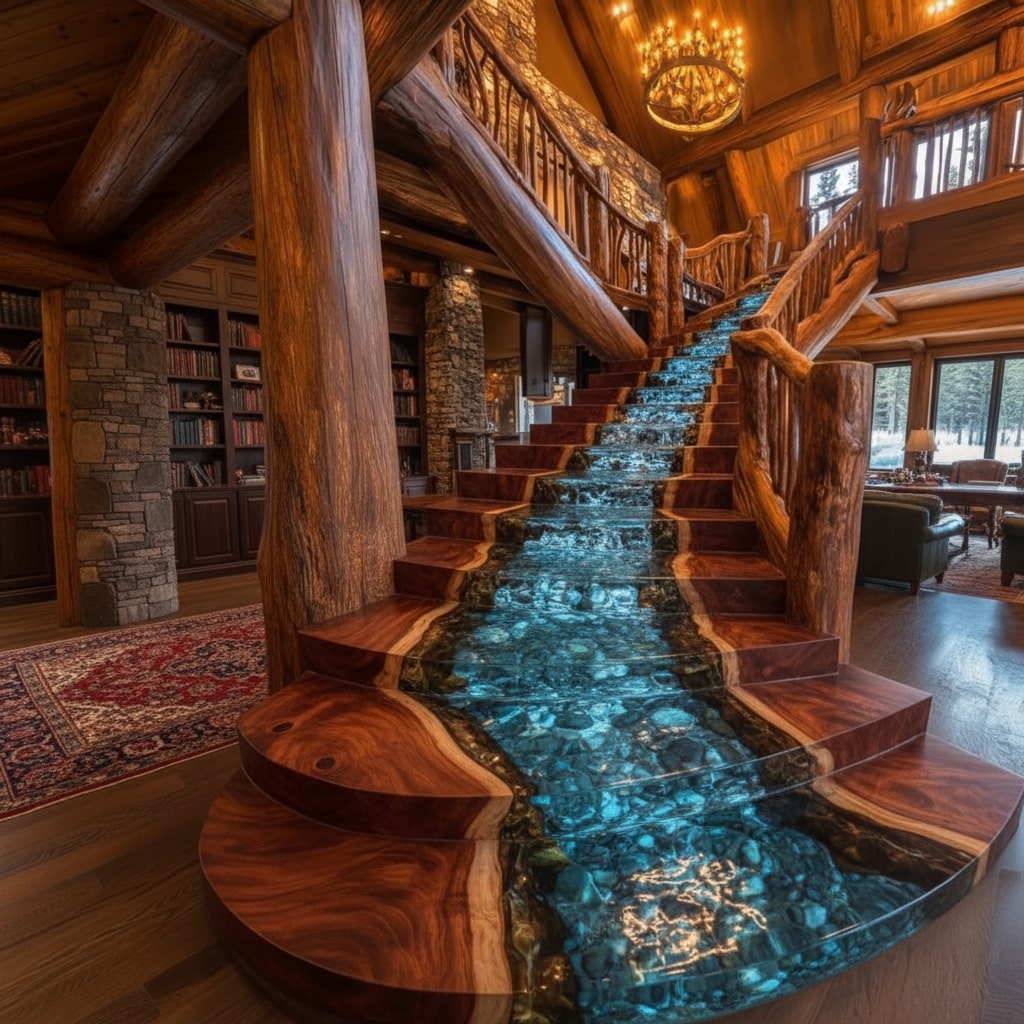
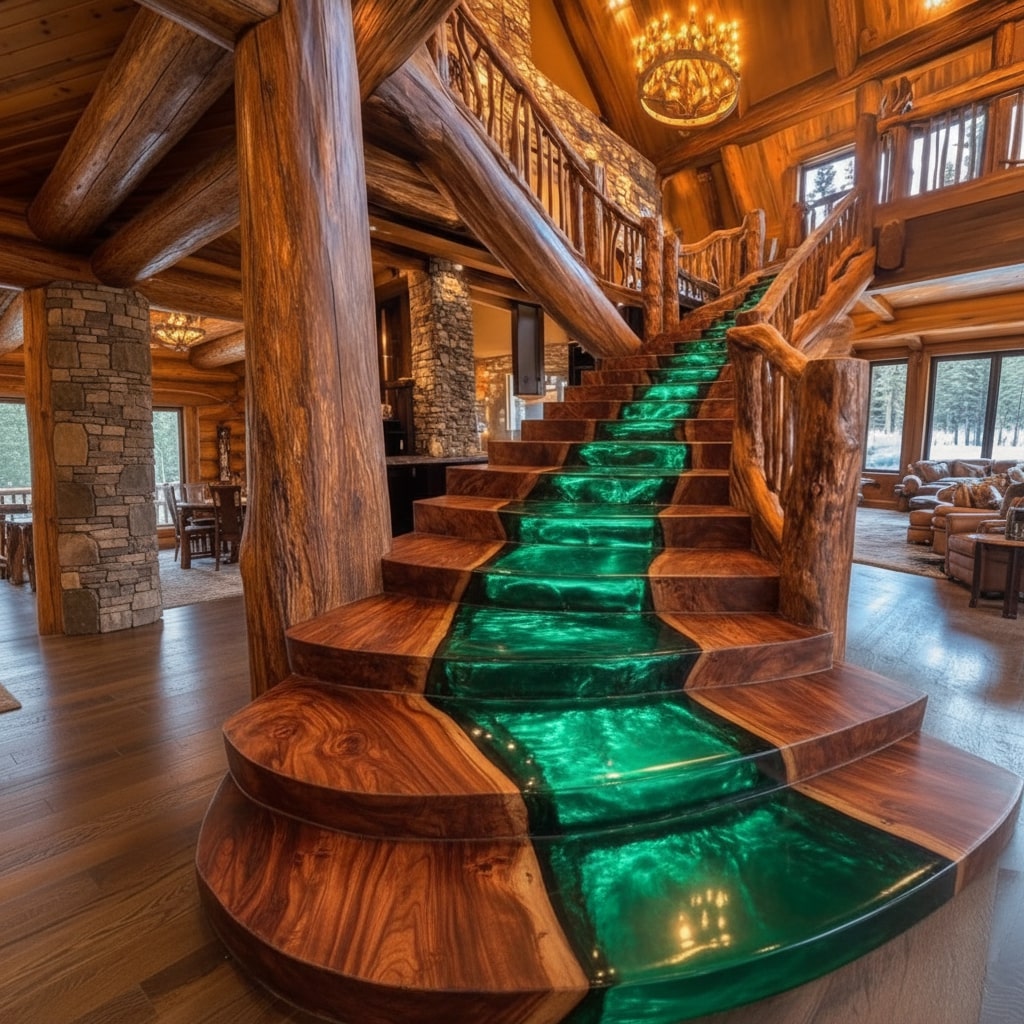
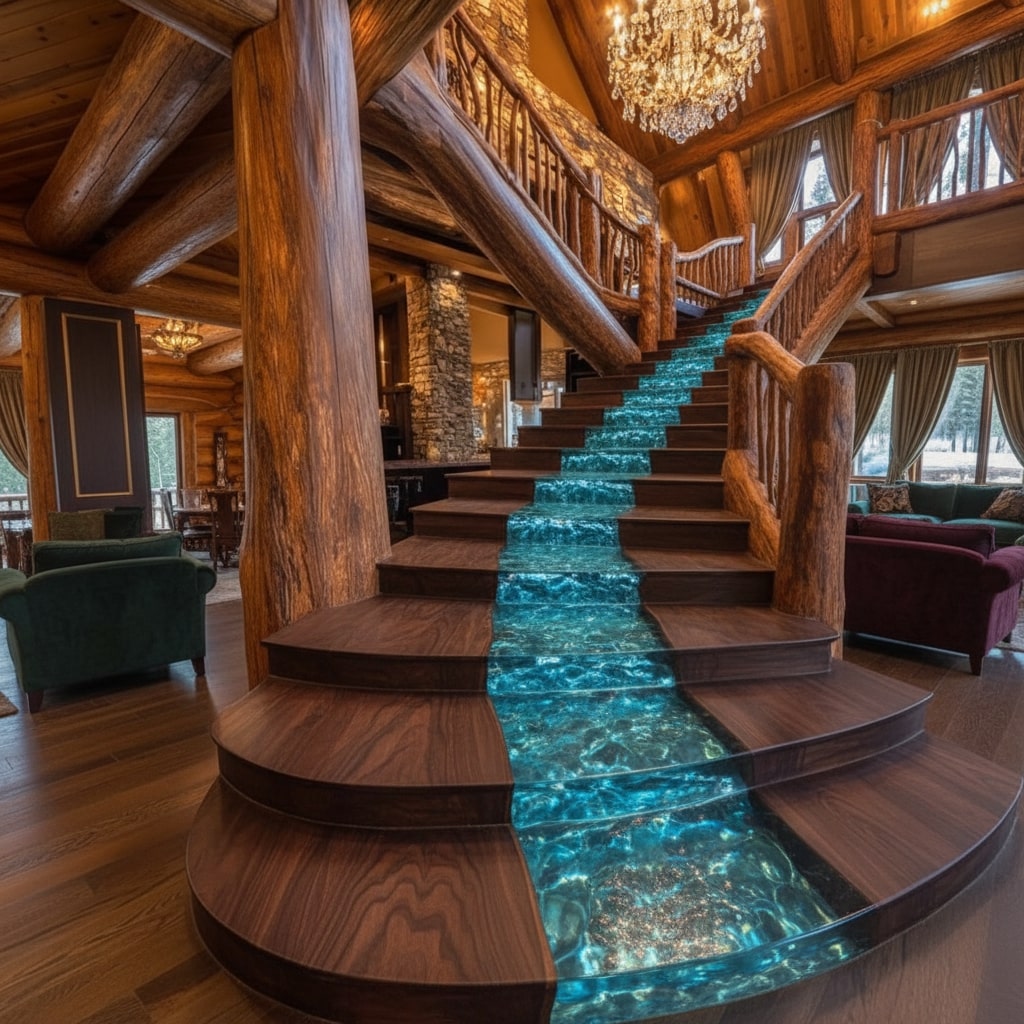
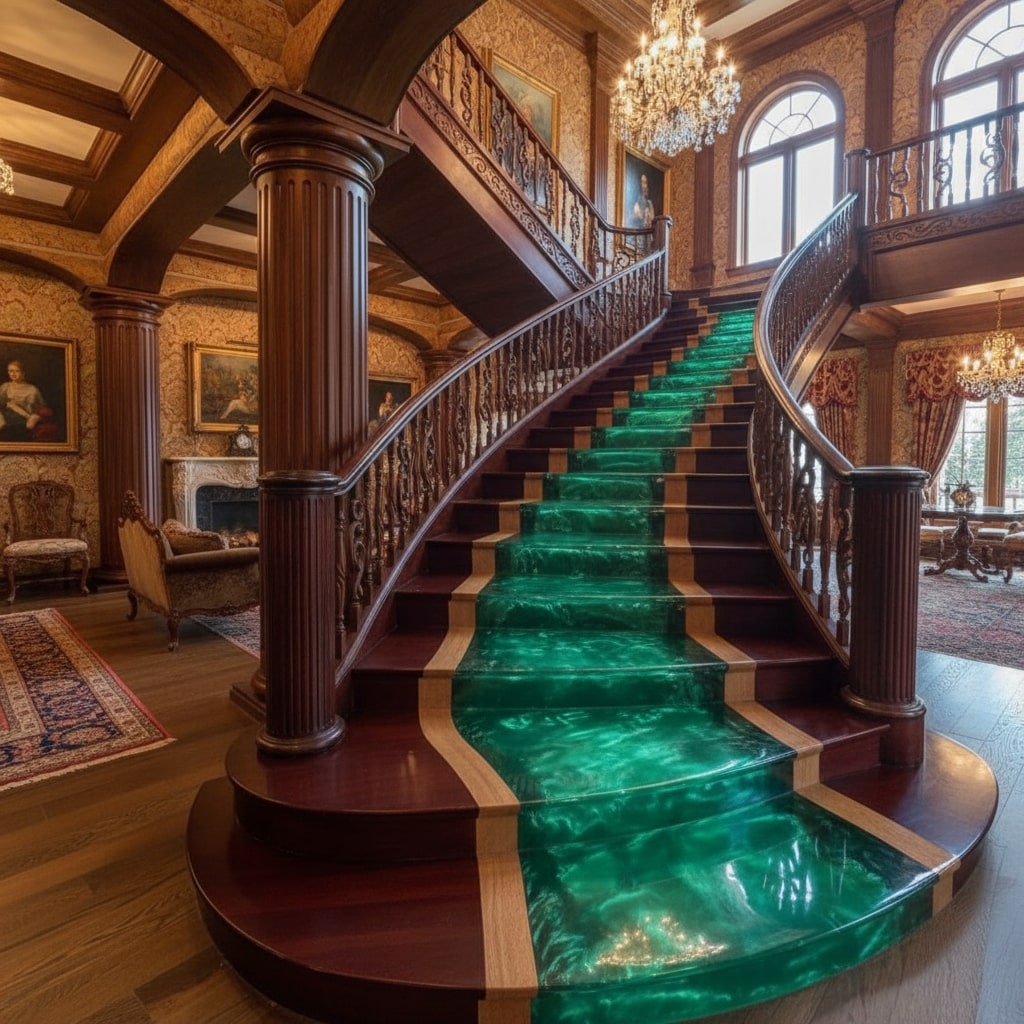
An epoxy river shaped staircase is characterized by its central “river” motif: a sinuous, uninterrupted channel of translucent or pigmented epoxy resin flowing through the heart of the treads, often flanked by natural wood, stone, or metal. This river does not merely sit on the staircase—it is the staircase’s soul. It winds, pools, branches, and glows—sometimes lit from beneath—evoking the quiet dynamism of real rivers carving through landscapes over millennia. The result is a hybrid form: part furniture, part art installation, part geological formation.
This article explores the aesthetic, conceptual, and spatial dimensions of the epoxy river shaped staircase, offering rich design ideas and visual inspiration for those seeking to integrate this evocative feature into modern interiors. Rather than prescribing formulas, we invite a contemplative engagement with how such staircases reframe our relationship with movement, materiality, and memory within architectural space.
Part I: Conceptual Foundations—Why the River? Why Epoxy?
The Symbolism of the River in Architectural Thought
Rivers have long held symbolic resonance across cultures: as metaphors for time, transformation, continuity, and life itself. Heraclitus famously observed that “no man ever steps in the same river twice”—a truth equally applicable to our experience of architecture. A staircase, too, is inherently temporal: it is traversed, not static. By embedding a river motif into its structure, the epoxy river shaped staircase literalizes this temporal dimension. Each ascent or descent becomes a ritual passage—not over water, but with it—inviting mindfulness and kinetic poetry into daily life.
In modern interior design, where minimalist rectilinearity often dominates, the river-shaped form introduces deliberate irregularity. It disrupts the grid. It resists symmetry not out of chaos, but out of reverence for natural morphology—the fractal branching of tributaries, the soft erosion of banks, the way light fractures on a moving surface. This is biomimicry not as imitation, but as interpretation: architecture learning to breathe.
Epoxy Resin as a Medium of Transformation
The choice of epoxy resin is neither incidental nor purely technical—it is deeply conceptual. Epoxy, in its uncured state, is liquid, malleable, responsive. It captures air bubbles, suspended pigments, even fragments of dried botanicals or metallic leaf, freezing ephemeral moments in geological time. Once cured, it becomes glass-like: durable, translucent, radiant. It can be poured in layers to suggest depth—or stirred with interference pigments to shift color with viewing angle, much like sunlight on a real river at dawn.
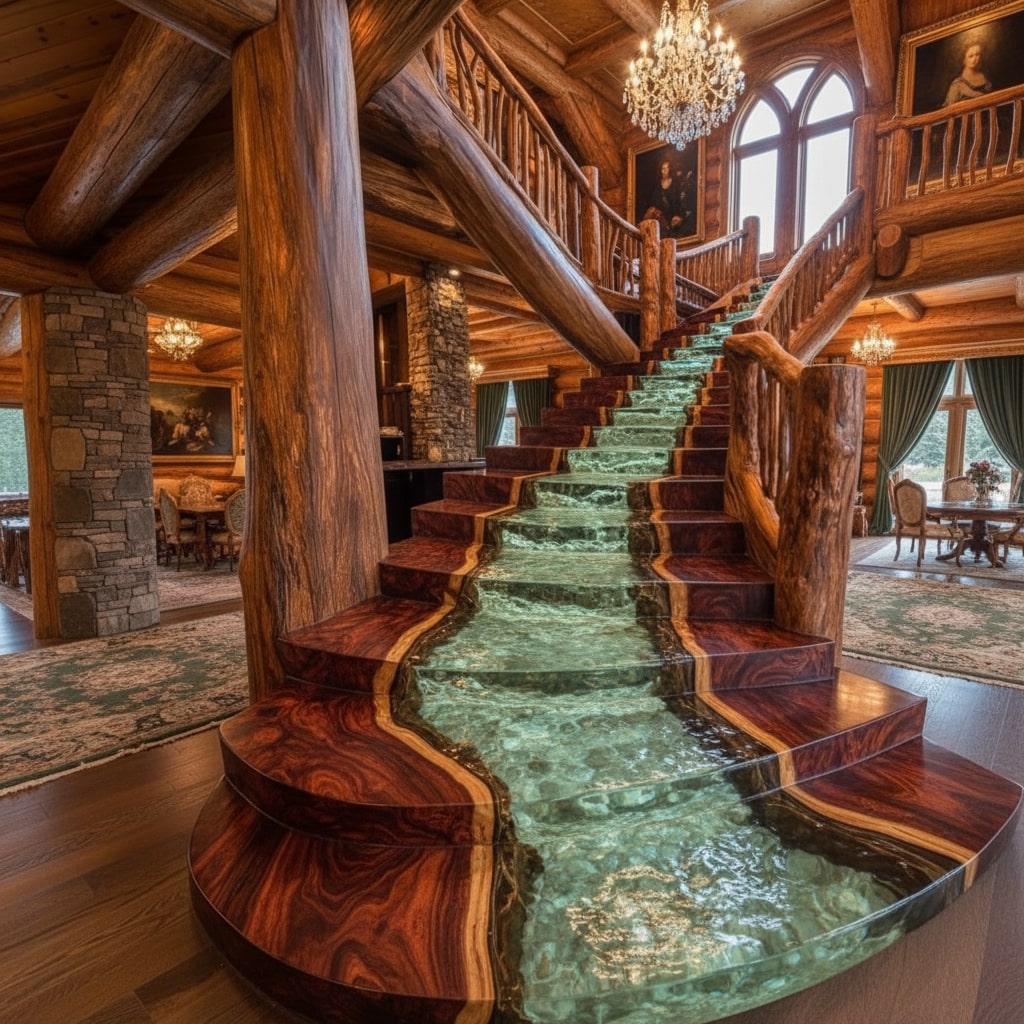
Unlike traditional inlays (e.g., marble or tile), epoxy doesn’t sit within the structure—it becomes part of it. When poured into CNC-milled channels in solid wood treads, the resin chemically bonds with the substrate, creating a monolithic composite. Cracks in reclaimed timber? Rather than repaired, they are celebrated, filled with glowing blue or amber resin—transforming flaw into feature, wound into luminous seam.
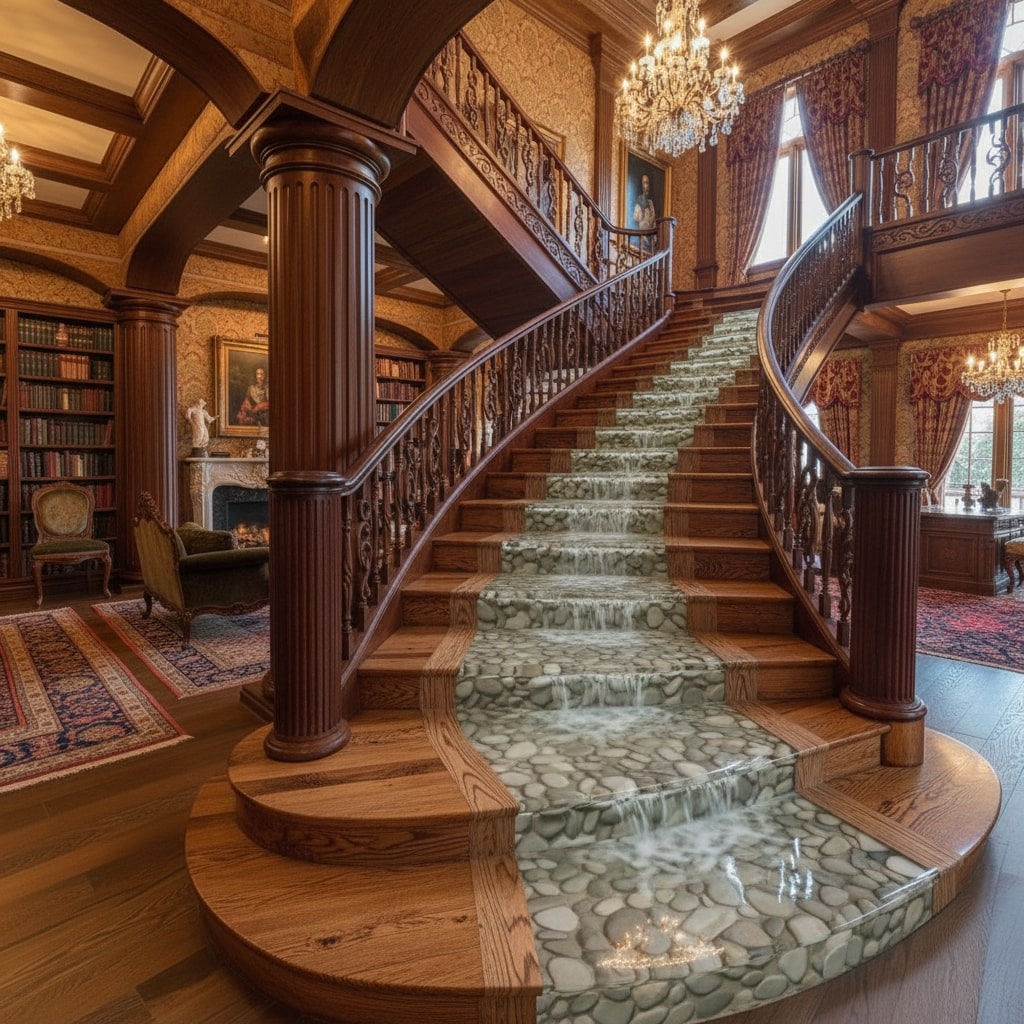
Critically, epoxy allows for continuity. A true epoxy river shaped staircase isn’t a series of disconnected treads with individual resin accents; it is one unbroken ribbon, flowing from the base of the stairs to the landing—or even continuing along a wall or floor as a “tributary.” This continuity reinforces the sense of journey, of narrative unfolding in space.
Part II: Design Interpretations—Variations on a Liquid Theme
The epoxy river shaped staircase is not a singular design but a versatile typology. Below are key interpretations, each offering distinct spatial and emotional resonances.
1. The Meandering Path: Organic Contours in Open Plans
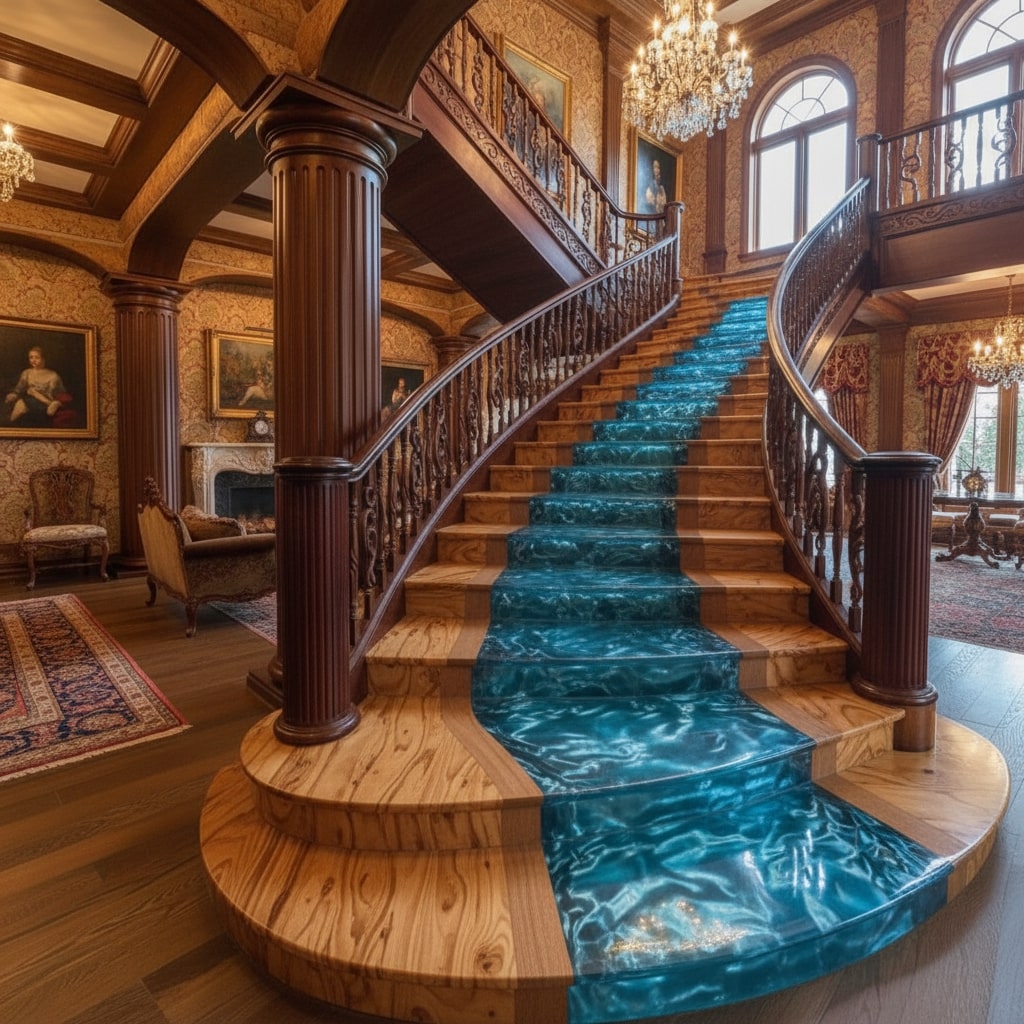
In loft-style or double-height living spaces, where volume and sightlines dominate, the staircase often becomes the room’s organizing spine. Here, the epoxy river shaped staircase shines in its most literal form: treads crafted from wide-plank oak or walnut, sanded to reveal grain and texture, with a central channel carved in soft, non-repeating curves—like an aerial view of the Mississippi or the Amazon.
Design nuance lies in the scale of meander. Gentle, sweeping bends evoke calm and contemplation; tighter, more frequent undulations suggest energy and playfulness. Some designers introduce “oxbow loops”—where the resin river briefly doubles back on itself—creating pockets of negative space that can house integrated lighting or potted mosses, blurring the boundary between architecture and landscape.
Visual inspiration: Imagine descending such a staircase at dusk. The epoxy river, backlit with warm LED strips, emits a soft bioluminescence. Shadows from the wooden treads ripple across the wall like reflections on water. You are not just moving—you are inhabiting a landscape.
2. The Geologic Stratification: Layered Resin and Mineral Inclusions
For interiors inspired by earth sciences or desert modernism, the epoxy river shaped staircase can be reimagined as a cross-section of the planet’s crust. Here, the “river” becomes a deep fissure—not of water, but of time. Multiple pours of tinted epoxy—ochre, iron red, slate gray—are layered with crushed quartz, mica flakes, or even fragments of meteorite dust, suspended mid-flow like sedimentary strata.
The treads themselves may be cut from raw-edge bluestone or sandstone slabs, their fissures aligned to channel the resin. In this iteration, the staircase is less a river and more a canyon—a testament to erosion, pressure, and the slow artistry of geologic forces. The effect is primal, grounding, almost sacred.
This approach pairs beautifully with interiors featuring rammed earth walls, raw steel balustrades, and minimal ornamentation—spaces that honor weight, texture, and silence.
3. The Celestial Current: Luminescent and Chromatic Play
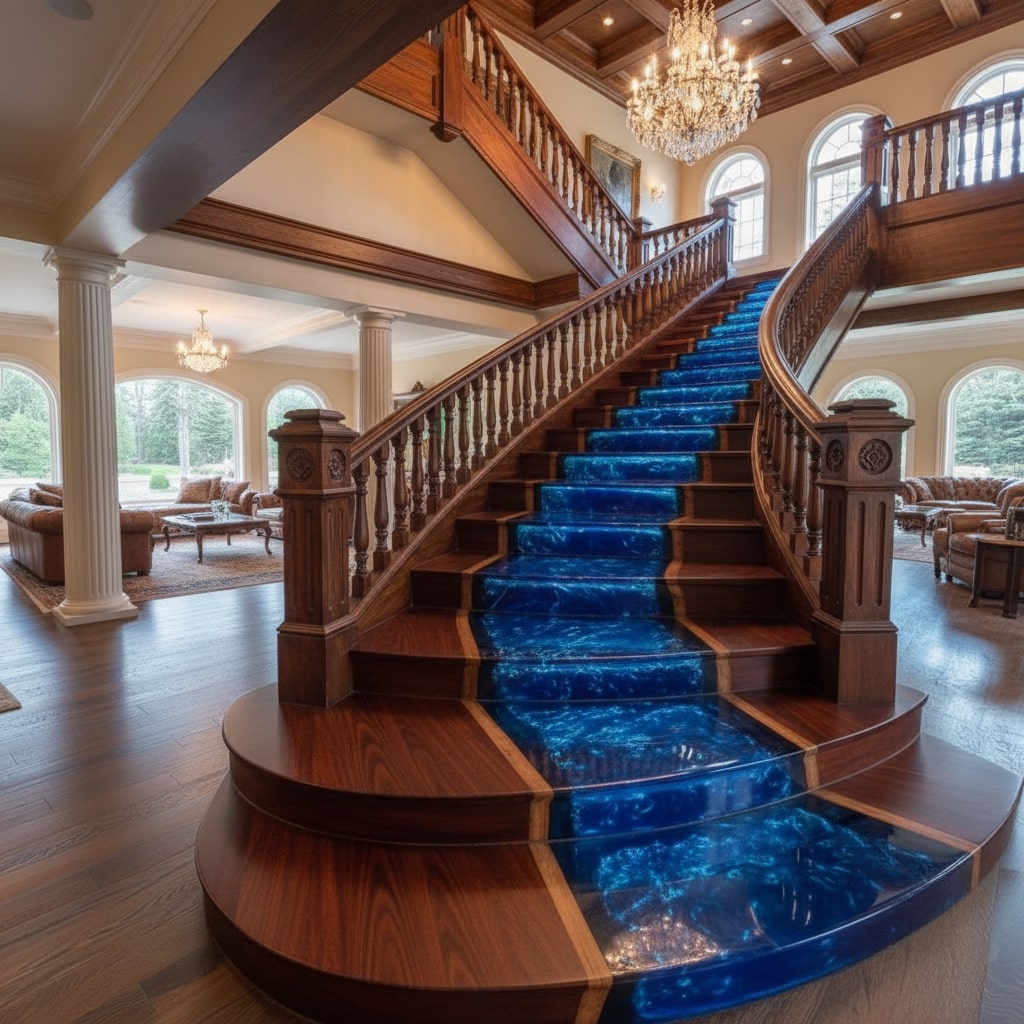
Pushing the medium further, some designers treat the epoxy river as a canvas for light-based phenomena. By embedding dichroic film or phosphorescent pigments, the resin shifts hue depending on ambient light: cool cerulean by day, ethereal violet at twilight, soft turquoise under moonlight simulation.
In high-contrast modernist homes—think white concrete, blackened steel, floor-to-ceiling glazing—the epoxy river shaped staircase becomes a dynamic light source. At night, with overhead lights dimmed, the staircase glows like a tributary of liquid starlight. Chromatic gradients may run vertically (deep indigo at the base, fading to silver at the top), symbolizing ascent—not just in elevation, but in consciousness.
This interpretation leans into futurism without coldness; it is technological poetry, where chemistry and optics collaborate to create emotional resonance.
4. The Urban Tributary: Industrial Meets Organic
In adaptive reuse projects—former factories, warehouses, or printing houses—the epoxy river shaped staircase can mediate between industrial heritage and contemporary softness. Here, treads are forged from reclaimed steel grating or corten plate, their angularity juxtaposed with the sinuous resin channel. The epoxy might be tinted a deep, murky green—recalling urban waterways like the Chicago River—or a stormy gray, echoing rain-slicked streets.
Rivets along the tread edges, exposed weld seams, and asymmetrical balusters made from blackened rebar intensify the dialogue between handcraft and machine precision. The river, in this context, is not idyllic but resilient—a reminder of nature’s persistence within the urban fabric.
This version appeals to those who cherish narrative depth: every scratch on the metal, every trapped bubble in the resin, tells a fragment of the building’s history.
Part III: Integration & Spatial Dialogue—Beyond the Staircase Itself
A powerful epoxy river shaped staircase does not exist in isolation. Its impact multiplies when thoughtfully integrated into the broader spatial ecosystem.
Continuity of Motif
The most compelling installations extend the river beyond the stairs. The epoxy channel may spill onto the floor as a “floodplain”—a low, resin-filled trench embedded with smooth river stones, guiding movement toward a reading nook or fireplace. Or it may climb the adjacent wall as a vertical “cascade,” fed by a minimalist spout (non-functional, purely visual) at the landing.
In multi-story homes, the river can reappear on upper levels—perhaps as a resin-inlaid coffee table, or a bathroom vanity with a miniature “estuary” flowing around the sink basin. This serial repetition creates a leitmotif, unifying disparate spaces through a shared symbolic language.
Light as Co-Author
Lighting design is inseparable from the epoxy river shaped staircase. While under-tread LEDs are common, more subtle strategies yield greater sophistication. Consider grazing light from a cove above: the angled beam catches the resin’s surface tension ridges, casting rippling shadows. Or use fiber optics embedded within the epoxy—tiny points of light that mimic stars reflected in still water.
Natural light, too, plays a vital role. Positioning the staircase near a north-facing window ensures cool, even illumination that enhances resin clarity without UV degradation. A skylight directly above transforms the river into a sundial: the band of light migrates across its surface through the day, marking time in liquid gold.
Acoustics and Tactility
Often overlooked, the sensory experience extends beyond the visual. The sound of footsteps changes across materials: the hollow thud of wood, the crisp tap of metal, the faint, resonant ping when a heel strikes near the resin channel (due to epoxy’s higher density). Designers can modulate this—thickening the wood near the river’s edge to muffle sound, or leaving sections exposed for acoustic liveliness.
Tactile contrast is equally evocative. Running a hand along the balustrade—warm, porous wood—then brushing the cool, flawless surface of the epoxy river creates a moment of embodied awareness. It is in these micro-interactions that architecture becomes intimate.
Conclusion: The Staircase as Living Topography
The epoxy river shaped staircase is more than an object; it is an attitude toward space—one that resists rigid categorization and embraces fluid coexistence. It acknowledges that interior environments need not be sterile or static, but can pulse with organic energy, memory, and metaphor.
In a time when digital saturation threatens to detach us from physical experience, such staircases re-anchor us in materiality: in the grain of ancient timber, the viscosity of poured resin, the path of light across a curved surface. They remind us that movement through space can be meditative, that structure can be lyrical, and that design—when rooted in deep observation of the natural world—can elevate the everyday into the realm of the sublime.
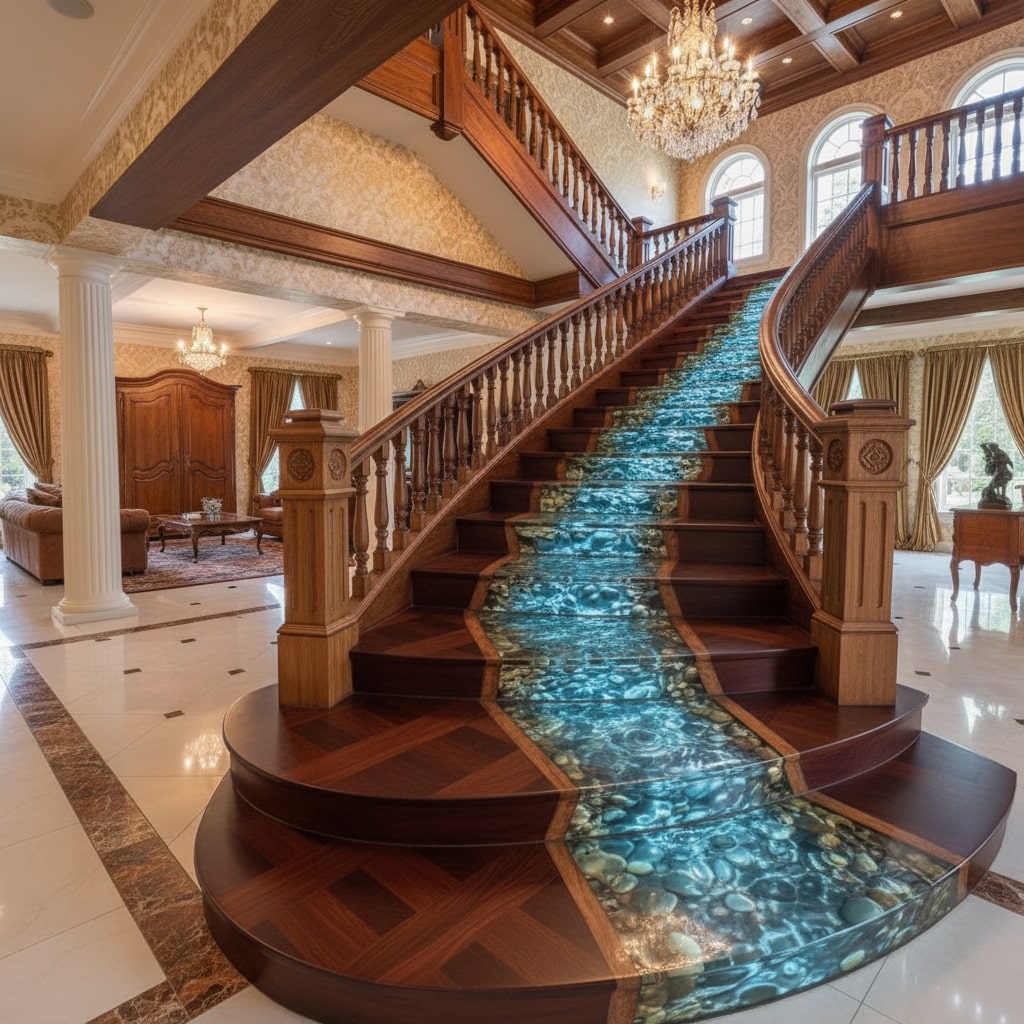
To commission or conceive an epoxy river shaped staircase is to invite a dialogue—not only between designer and client, but between human and landscape, between built form and geological time. It is to say: Let our homes carry rivers within them. Let ascent be a journey downstream and upstream, simultaneously. Let the house breathe, flow, remember.
What emerges is not just a staircase, but a living topography—quietly revolutionary in its insistence that beauty lies not in perfection, but in the elegant irregularity of a river finding its way home.