The Mythic Resonance of Form and Fabric
In the vast and evocative language of costume art, few motifs carry the symbolic weight and aesthetic magnetism of the dragon. A creature of paradox—simultaneously feared and revered, destructive and protective, chthonic and celestial—the dragon has served as a vessel for human mythmaking across continents and millennia. Within the realm of high-concept costume design, the dragon scale shape dress emerges not merely as an ornamental trend, but as a profound convergence of archetypal storytelling, material innovation, and embodied symbolism. This singular garment archetype reconfigures the human silhouette through an interplay of texture, geometry, and movement that evokes the very essence of draconic presence: armored yet fluid, commanding yet graceful, ancient yet timelessly modern.
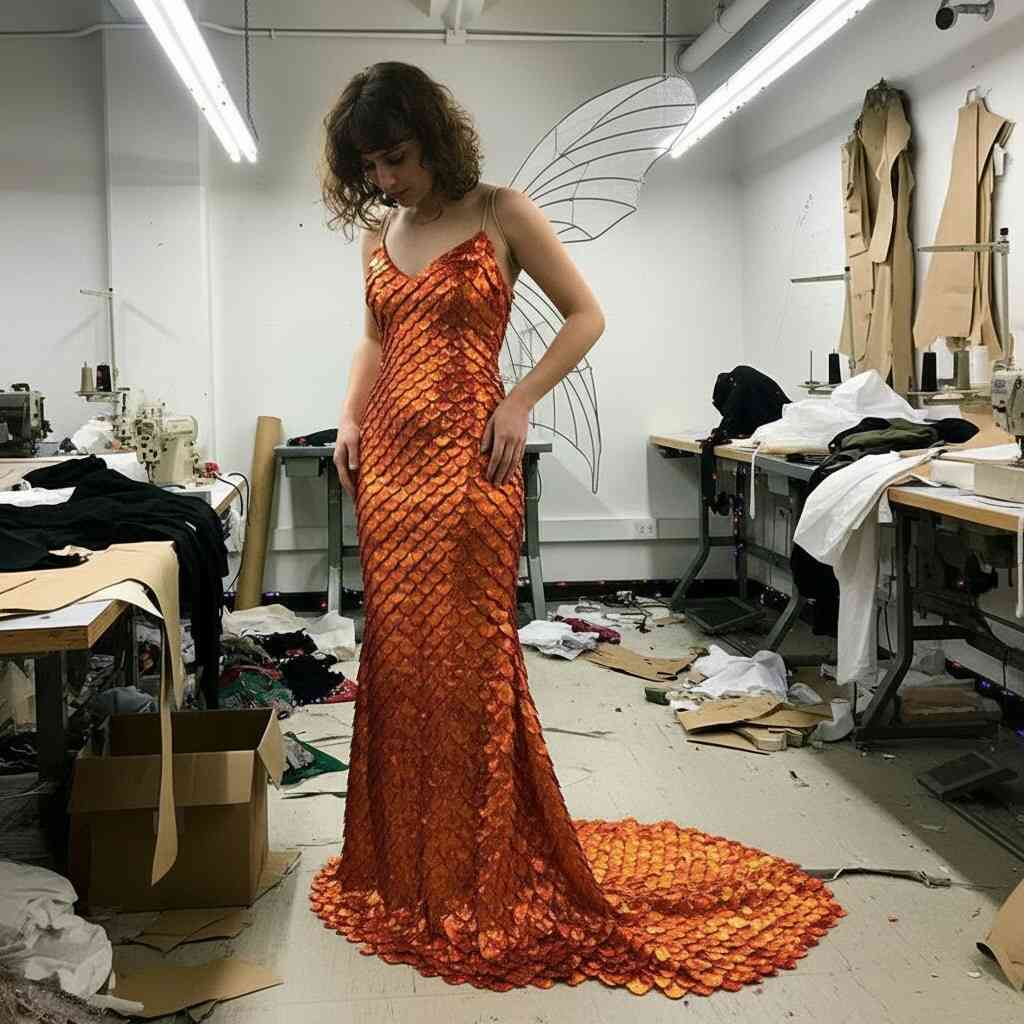
To wear a dragon scale shape dress is not simply to don a garment—it is to inhabit a mythos. Through meticulous craftsmanship and conceptual rigor, designers transform textile into talisman, invoking the dragon’s legendary attributes: sovereignty, resilience, transformation, and arcane wisdom. More than a decorative flourish, the dragon scale motif is deployed as a structural philosophy—each overlapping element a deliberate echo of evolutionary armor, ritual regalia, and metaphysical protection. This article explores how the dragon scale shape dress synthesizes raw power and refined elegance, revealing its deep resonance in contemporary costume art as both aesthetic triumph and symbolic invocation.
Part I: The Anatomy of Power — Structural Symbolism in Scale Construction
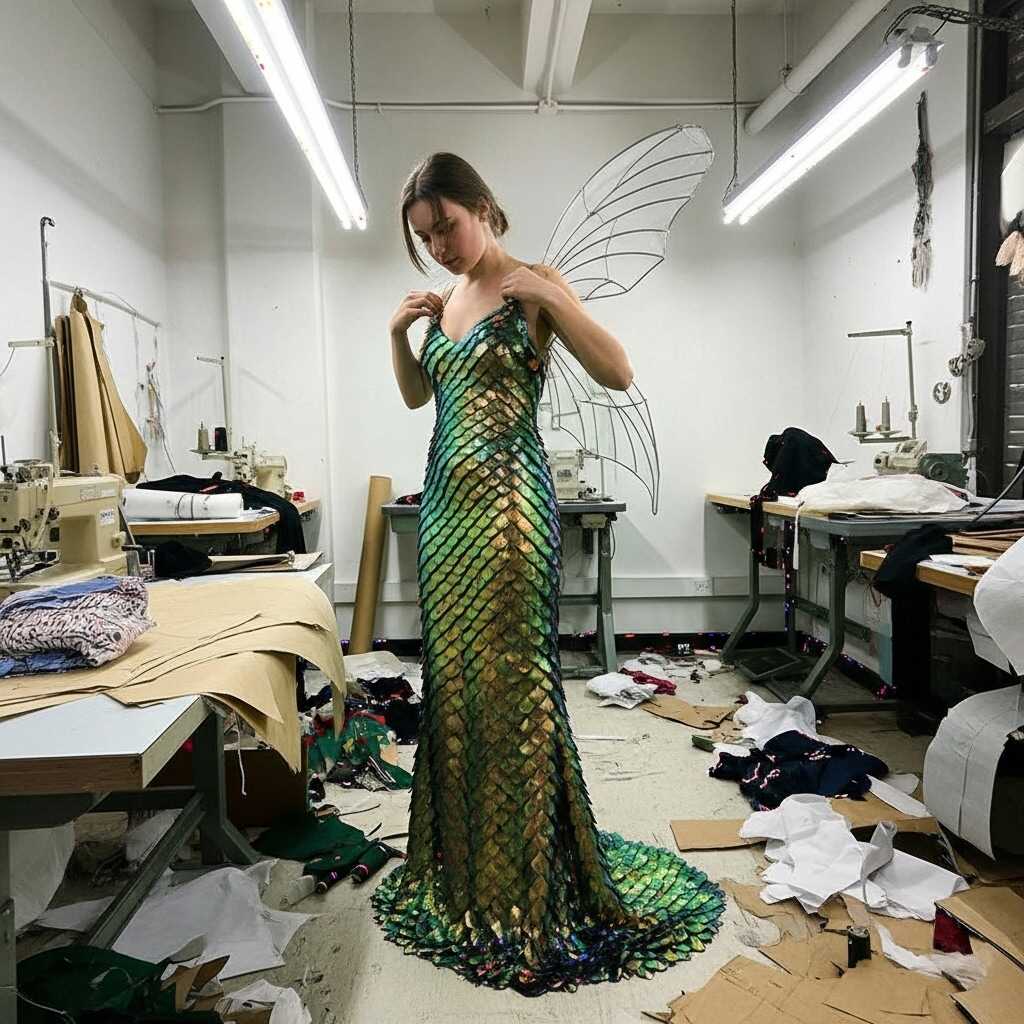
The foundational strength of the dragon scale shape dress lies in its architectural intelligence. Unlike surface-level embellishments—sequins, embroidery, or appliqués—true dragon scale construction integrates form and function at the level of patterning and assembly. Each scale is not applied onto the dress but constitutes the dress, forming a modular exoskeleton that moves with the wearer rather than constraining her.
Historically, scale armor—whether lamellar, brigandine, or lorica squamata—was engineered for protection without sacrificing mobility. Ancient warriors from Scythian horsemen to Roman legionaries relied on the interlocking geometry of metal or hardened leather scales to deflect blows while preserving agility. Contemporary costume artists draw knowingly from this martial lineage, adapting its principles to express psychological and spiritual fortitude rather than physical defense.
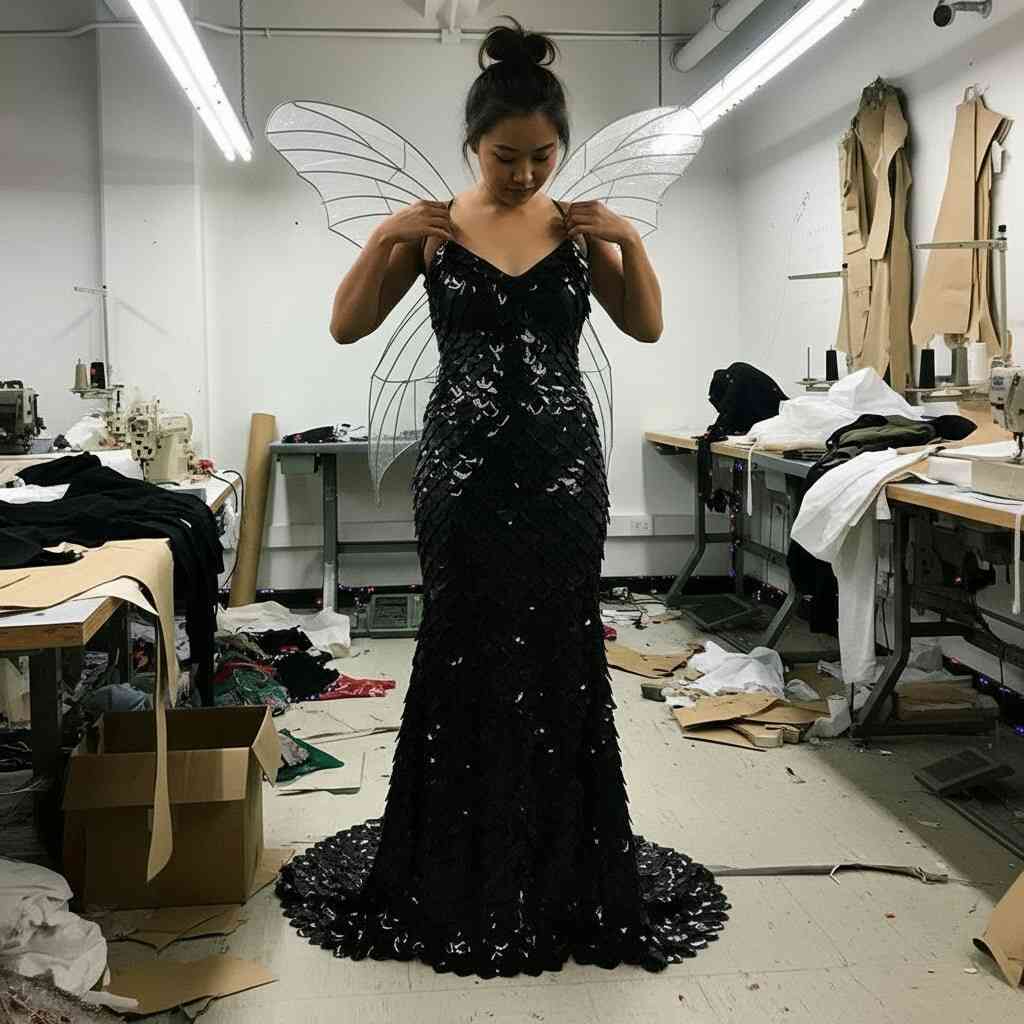
In the dragon scale shape dress, the scale is rarely uniform; its size, curvature, and density shift across the body to articulate zones of emphasis and vulnerability. Larger, more rigid scales often cluster at the shoulders, spine, or hips—areas associated with strength, stability, and lineage—while smaller, more pliable ones cascade over joints and curves, suggesting controlled vulnerability and adaptive grace. This gradation mimics the natural variation found in reptilian integument, where dorsal scales thicken for defense while ventral ones remain supple for locomotion.
Materially, designers experiment with a spectrum of substrates to achieve both visual impact and kinetic authenticity. Laser-cut acrylic or thermoformed polymer yields high-gloss, iridescent scales that catch light like molten obsidian or polished jade—direct references to dragons in East Asian iconography, where the creature is a celestial guardian associated with water, wisdom, and imperial authority. In contrast, oxidized copper, blackened steel, or hand-hammered brass evoke the Western wyrm: subterranean, fire-breathing, and bound to alchemical transformation. Even organic interpretations—scales carved from horn, molded from resin-infused bark, or 3D-printed with biodegradable filaments—speak to ecocritical reinterpretations of the myth, positioning the dragon not as a hoarder of gold but as a custodian of elemental balance.
Critically, the overlapping arrangement of scales generates a dynamic interplay of shadow and reflection. As the wearer moves, light skitters across the surface like sparks dancing over hot coals, producing a kinetic shimmer that mimics the flicker of flame or the ripple of water under moonlight. This visual instability—simultaneously solid and ephemeral—mirrors the dragon’s dual nature: a being of immense physical presence yet elusive metaphysical essence. The dragon scale shape dress, in this light, becomes a living palimpsest: its surface inscribed with layers of myth, memory, and movement.

Part II: The Poetics of Elegance — Fluidity, Line, and Embodied Grace
Power without elegance risks devolving into brute spectacle. What distinguishes the dragon scale shape dress as a pinnacle of costume art is its ability to transmute raw potency into sublime refinement—achieving majesty not through excess, but through restraint, proportion, and harmony. Elegance here is not synonymous with delicacy; it is the disciplined articulation of force.
Consider the silhouette. Many dragon scale shape dresses employ elongated vertical lines—scales aligned in columns that draw the eye upward, elongating the figure like the sinuous coils of a serpentine dragon ascending a temple pillar. Others embrace asymmetry: one shoulder armored in tiered, shield-like plates while the opposite reveals a sweep of bare skin or sheer underlayer, evoking the tension between concealment and revelation, defense and vulnerability. This asymmetry is not arbitrary; it echoes the asymmetrical balance found in traditional Chinese dragon robes, where the creature’s body winds dynamically across the fabric, never static, always in motion.

The elegance of the dragon scale shape dress also manifests in its relationship to the body’s natural topography. Rather than flattening the form beneath rigid carapace, the best designs follow anatomical contours—scales contouring the ribcage like vertebrae, flaring at the iliac crest like wing joints, tapering at the wrist like the articulation of a claw. This biomimicry creates a second skin that amplifies, rather than masks, the wearer’s physicality. When the arm lifts, the scales separate incrementally, revealing glimpses of the interior—a flash of crimson silk, a network of gold-threaded mesh—suggesting hidden depths, much like the dragon’s reputed hoard, not of mere treasure, but of esoteric knowledge.
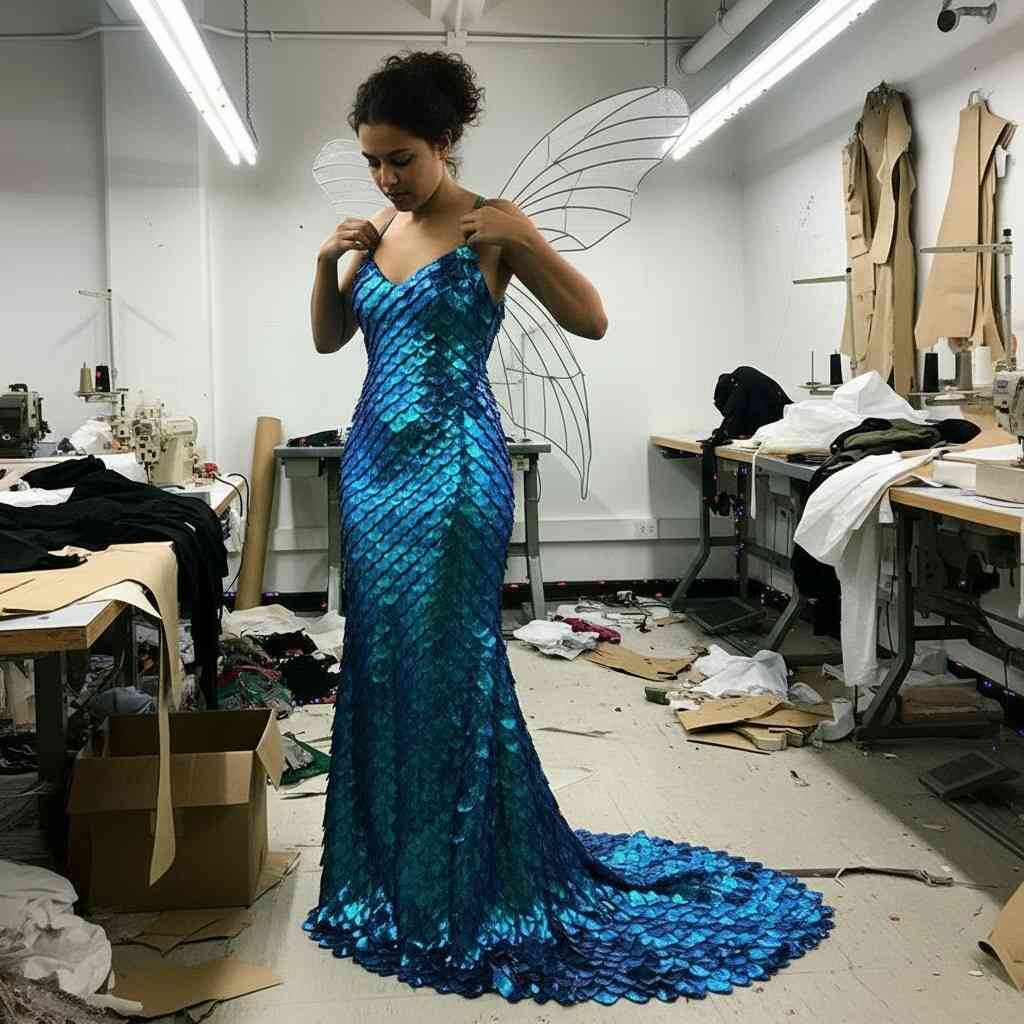
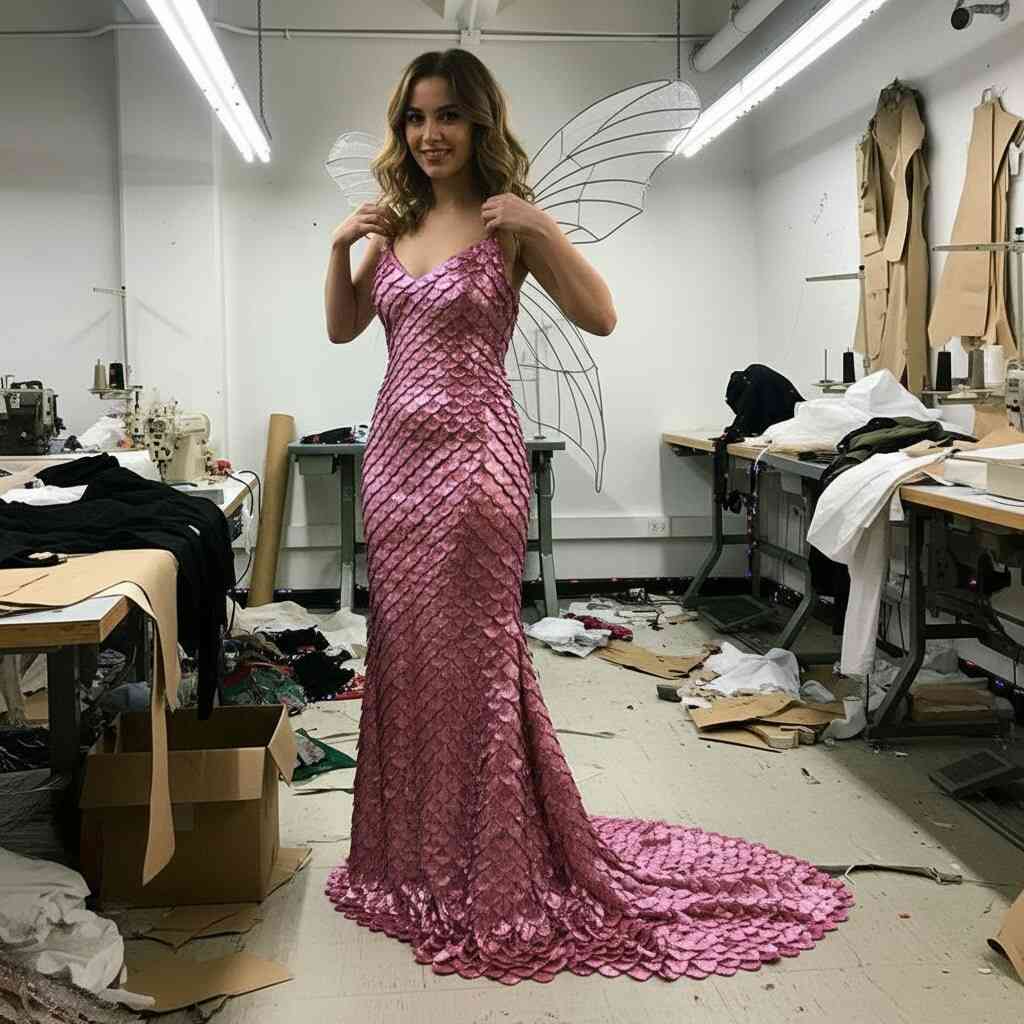
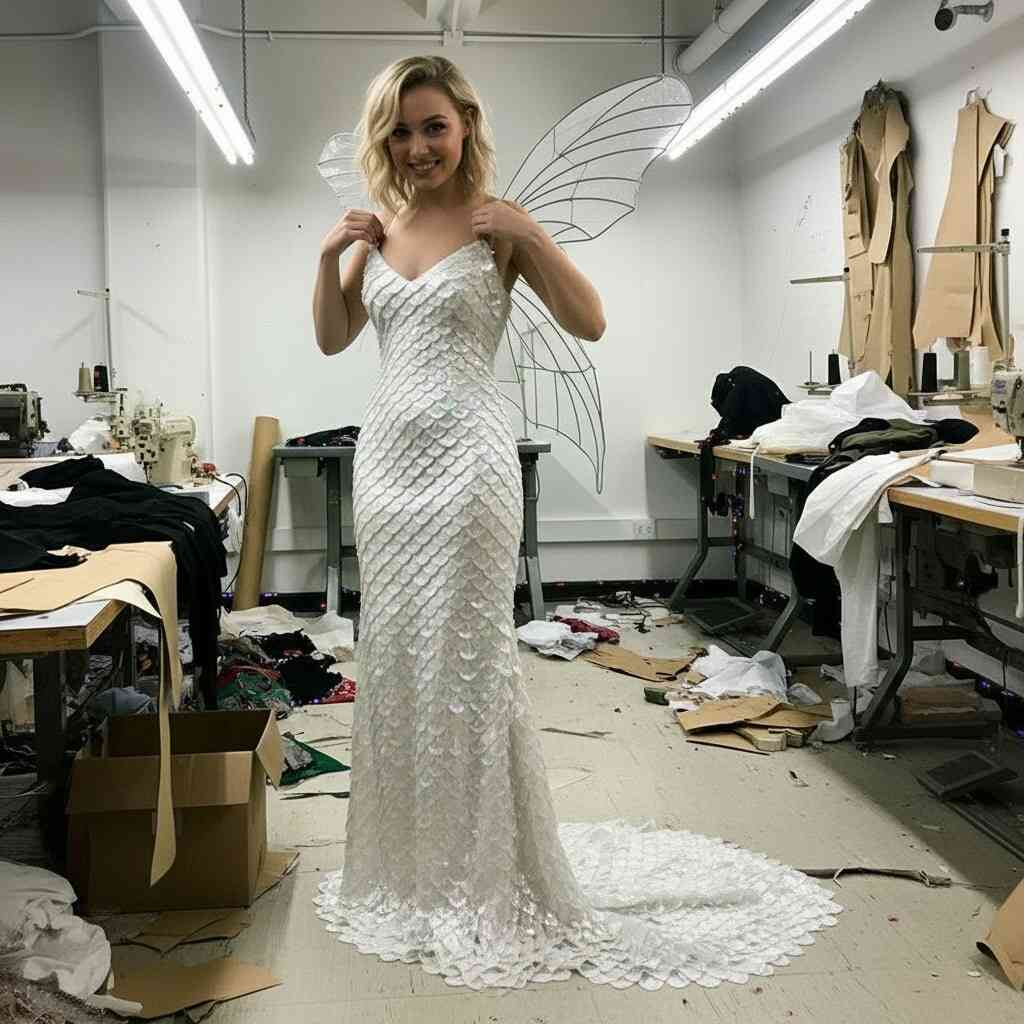
Color and finish further refine this elegance. While popular imagination equates dragons with fire and fury—reds, oranges, blacks—the dragon scale shape dress often embraces subtler palettes: deep indigos reminiscent of midnight oceans where sea dragons dwell; pearlescent whites evoking cloud-wyrms in Daoist cosmology; iridescent greens shifting from emerald to peacock, nodding to the dragon’s association with spring, renewal, and the vital qi that animates all life. Finishes too are calibrated for sophistication: matte metallics avoid gaudiness; brushed textures diffuse glare; translucent resins create depth through layered translucency. Even the edges of scales may be hand-beveled or flame-polished to eliminate harshness, ensuring that light glides rather than fractures upon the surface.
Movement, ultimately, is where elegance is most fully realized. A dragon scale shape dress must breathe. Designers employ articulated hinges, flexible backing fabrics (such as silk noil or fine chainmail mesh), and strategic negative space to ensure that the garment flows rather than clanks. In performance contexts—ballet, avant-garde theater, or ritual installation—the dress becomes an extension of choreography. A slow turn causes scales to cascade like falling water; a sharp gesture makes them snap into rigid alignment, a visual exclamation point. This duality—fluid when yielding, unyielding when asserted—is the very definition of elegant power: not domination through force, but sovereignty through presence.
Part III: Mythic Embodiment — The Dress as Ritual Vessel and Archetypal Interface
Beyond aesthetics and engineering, the dragon scale shape dress functions as a conduit for mythic embodiment. Costume, at its highest expression, is never merely decorative—it is transformative. It facilitates what anthropologist Victor Turner termed liminality: a threshold state in which the wearer steps outside ordinary identity and accesses symbolic roles—goddess, warrior, oracle, ancestor. The dragon scale shape dress is explicitly designed for such transcendence.
In many global traditions, dragons are not monsters to be slain, but liminal guardians—beings that mediate between realms. In Chinese cosmology, the dragon (lóng) is a yang force, ascending from earth to heaven, bridging the human and the celestial. It is associated with the emperor not as a tyrant, but as the Son of Heaven, whose virtue ensures cosmic harmony. To wear a dragon scale shape dress in this context is to assume a mantle of responsibility: to channel wisdom, to balance opposing forces, to protect the integrity of community and cosmos.
Conversely, in European alchemical symbolism, the dragon represents the prima materia—the chaotic, undifferentiated substance from which gold (enlightenment) is forged. In the Chymical Wedding of Christian Rosenkreutz, the dragon must be tamed, dismembered, and resurrected—a metaphor for spiritual purification. Here, the dragon scale shape dress becomes armor for the initiate: protective during the ordeal, radiant upon rebirth. Its scales are not just defense, but integument of transformation—the hardened shell from which the new self emerges.
Contemporary artists and performers harness this archetypal resonance with deliberate intention. Consider the work of designer Iris van Herpen, whose “Crystallization” and “Magnetic Motion” collections feature scale-like tessellations inspired by reptilian morphology and fluid dynamics. Her pieces are less garments than wearable sculptures—techno-organic hybrids that question the boundary between body and environment, human and mythic. Similarly, costume designer Sandy Powell’s dragon-inspired ensembles for fantasy epics are meticulously researched, drawing on medieval bestiaries and East Asian textile archives to ensure that every scale placement, every curl of a “spine ridge,” serves narrative truth.
Even in non-narrative contexts—museum installations, fashion art exhibitions, ceremonial performances—the dragon scale shape dress functions as an objet rituel. It invites contemplation. Viewers do not simply observe; they encounter. The dress’s imposing scalework demands spatial respect; its reflective surfaces deflect and return the gaze, implicating the observer in the mythic exchange. In this way, the garment becomes a threshold object: not representing the dragon, but mediating its presence.
This is the apex of costume art—not illusion, but invocation. The wearer, through disciplined collaboration with designer, fabricator, and choreographer, becomes a temporary vessel for the dragon’s attributes: unshakable composure (elegance), unassailable integrity (power), and transformative vision (wisdom). She does not play a dragon; she participates in the dragon archetype, allowing its ancient resonance to resonate through modern form.
Conclusion: The Enduring Flame — Why the Dragon Scale Shape Dress Transcends Trend
The dragon scale shape dress is not a passing aesthetic—it is a cultural palimpsest, layered with millennia of symbolic inscription. Its power stems from its fidelity to mythic truth: dragons were never merely beasts, but expressions of humanity’s deepest yearnings—for protection, for transcendence, for the reconciliation of opposites. Its elegance arises from the precision with which it channels this weight without collapse, balancing monumental scale with intimate detail, ferocity with grace, antiquity with innovation.
In an era increasingly dominated by digital avatars and virtual identities, the dragon scale shape dress reaffirms the primacy of the embodied symbol. It requires presence. It demands movement. It thrives in the interplay of light, shadow, and kinetic energy—phenomena stubbornly resistant to full digitization. To witness such a dress in motion is to experience a rare synthesis: the ancient thrill of myth made tangible, the intellectual rigor of design made visceral.
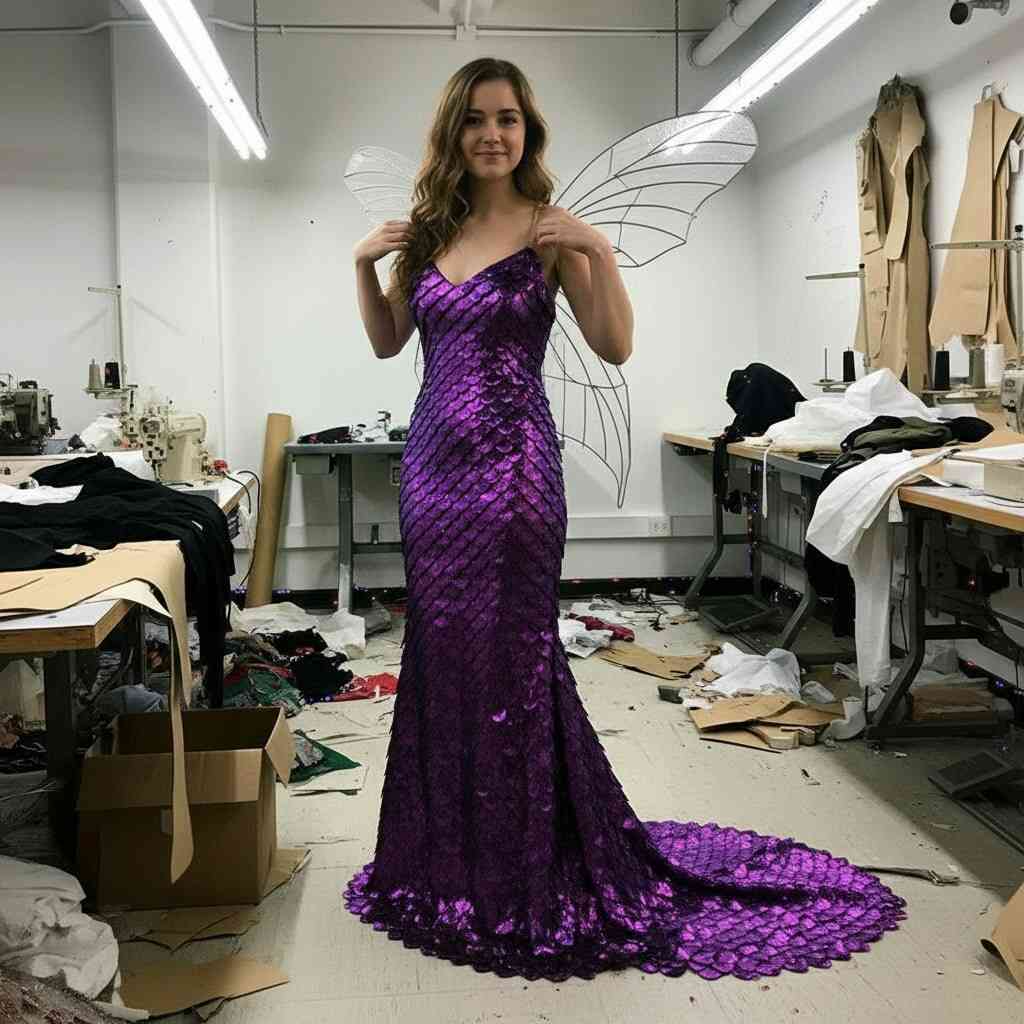
Moreover, the dragon scale shape dress quietly subverts reductive binaries. It refuses the false choice between strength and softness, tradition and futurism, ornament and structure. Its scales are both shield and signature; its silhouette both commanding and harmonious; its lineage both Eastern and Western, ancient and avant-garde. In this, it models a more integrated vision of identity—one that holds complexity without fracture.
As costume art continues to evolve—responding to ecological urgency, technological possibility, and renewed interest in mythic literacy—the dragon scale shape dress stands as a testament to what the discipline can achieve at its most ambitious. It is not costume as camouflage, but as clarification: a means of making visible the invisible forces that shape us—courage, resilience, transformation, reverence.
The dragon, after all, does not hoard gold for its own sake. It guards the threshold. And the dragon scale shape dress? It is the key—not forged in fire alone, but tempered in imagination, crafted in reverence, and worn as an act of sacred alignment. When the scales catch the light, they do not merely glitter. They remember. They remember the mountains the dragon coils around, the rivers it commands, the stars it navigates by. And in remembering, they invite the wearer—and all who witness her—to rise, armored in elegance, radiant with power, and fully, unapologetically, mythically alive.